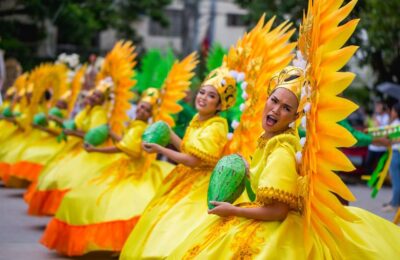
Every September, something changes in Calbayog City.
The streets become busier. Drums and chants start filling public spaces. Dancers rehearse elaborate routines. Costumes, props and cultural symbols begin appearing around the city. At the same time, churches prepare for one of Calbayog’s most important religious celebrations of the year.
At the center of all of this is Hadang Festival.
If you’ve been researching Philippine festivals for a while, however, the name might cause some confusion. You may remember seeing “Sarakiki Festival” or “Sarakiki-Hadang Festival” in older travel guides.
You’re not imagining it.
For many years, Calbayog’s September celebration was known as the Sarakiki-Hadang Festival. But in 2025, the city formally declared Hadang Festival as its official festival, dropping the combined name and putting greater emphasis on the older cultural tradition behind hadang itself.
That change makes the story of Hadang particularly interesting.
This isn’t simply another street-dancing festival created for tourism. Its central idea reaches back to pre-colonial practices involving ritual offerings, thanksgiving, healing and protection. Today, those traditions are interpreted through music, choreography, costumes, storytelling and a citywide celebration that coincides with Calbayog’s September 8 fiesta.
So what exactly is Hadang Festival? What does “hadang” mean? And what happened to Sarakiki?
Here’s the full story.
Content
Hadang Festival at a Glance
| Details | Information |
|---|---|
| Festival | Hadang Festival |
| Location | Calbayog City, Samar |
| Region | Eastern Visayas |
| Usual festival period | First week of September |
| Main fiesta date | September 8 |
| Religious celebration | Nativity of the Blessed Virgin Mary |
| Festival character | Cultural, historical and religious |
| Signature attraction | Hadang ritual-inspired street dancing and grand showdown |
| Former name | Sarakiki-Hadang Festival |
| Official city festival since | 2025 |
What Is Hadang Festival?
Hadang Festival is the official cultural festival of Calbayog City in Samar.
It is celebrated in connection with the city’s annual September fiesta, which culminates on September 8, the Feast of the Nativity of the Blessed Virgin Mary.
The festival takes its name from hadang, an old ritual offering associated with the pre-colonial traditions of the area. According to the Philippine Information Agency, hadang involved ritual offerings to spirits when people sought blessings such as a good harvest, healing or protection from harm.
That origin is important because it explains why the festival is more than a dance competition.
At its core, Hadang is about people asking for blessings, expressing gratitude and recognizing forces believed to affect everyday life.
In the modern festival, those ideas are presented through performance.
There are drums, chanting, street dancing, large groups of performers, elaborate costumes and dramatic storytelling. But behind those performances is a cultural concept that existed long before modern festival competitions became common in the Philippines.
Calbayog’s own development plans have treated HADANG as a Samar Island cultural-tourism festival and have separately supported research and development involving the Hadang ritual, showing that the city views it as part of its cultural heritage rather than simply an entertainment event.
What Does “Hadang” Mean?
This is the most important word to understand if you want to appreciate the festival.
Hadang refers to an ancient ritual offering.
Historically, the ritual was associated with requests for blessings or intervention from spirits. People might perform or offer a hadang in connection with a good harvest, recovery from illness, protection or other important concerns affecting the community.
Think about life before modern hospitals, weather forecasts, crop insurance and many of the systems we rely on today.
A successful harvest could mean the difference between having enough food and experiencing hardship.
Illness could threaten an entire family.
Violence or conflict could put communities at risk.
Nature itself could be unpredictable.
Rituals became one way communities expressed their hopes, fears, gratitude and relationship with the spiritual world around them.
Hadang came from that context.
And while today’s festival is obviously different from an ancient ritual conducted generations ago, its creators and performers continue to draw from those older ideas.
That’s why themes of thanksgiving, courage, protection, faith and community frequently appear in Hadang performances.
Is Hadang Festival the Same as Sarakiki-Hadang Festival?
Yes and no.
They are part of the same evolving festival tradition, but Hadang Festival is now the official name.
For years, Calbayog’s September festival was widely promoted as the Sarakiki-Hadang Festival. You’ll still find that name in old tourism publications, videos, photos, government planning documents and travel blogs.
The Tourism Promotions Board, for example, historically listed Sarakiki Festival as a September 1-8 celebration in Calbayog featuring street dancers with rooster-inspired costumes and movements.
Older Calbayog government documents also referred to the annual event as the Sarakiki-Hadang Festival.
That officially changed in 2025.
Calbayog enacted Ordinance No. 2025-27-658, declaring Hadang Festival the official festival of the city and instituting its annual celebration. The measure was passed by the city council on August 27, 2025 and signed by Mayor Raymund Uy on September 1.
So if you’re writing about the festival today, Hadang Festival is the appropriate current name.
But Sarakiki remains an important part of its history.
So What Was Sarakiki?
Sarakiki gave earlier versions of the festival some of their most recognizable movements.
Traditional descriptions associate sarakiki with the movements of a rooster, particularly when it is courting a hen or challenging another rooster.
That explains many old photographs of the festival.
Dancers would imitate roosters through quick footwork, lowered wings or arms, circling movements and dramatic gestures. Some performances included costumes that made the connection with chickens and roosters very obvious.
The Tourism Promotions Board’s older description even characterized the festival as featuring dancers dressed as cocks moving to traditional Samareño music.
For people who attended Calbayog’s festival years ago, that rooster imagery may be what they remember most.
Hadang, meanwhile, represented the deeper ritual tradition involving offerings and appeals for blessings.
For years, the two ideas were combined under one festival name:
Sarakiki-Hadang.
The modern decision to use only Hadang doesn’t erase that earlier chapter. It simply gives the city’s official festival a clearer cultural identity.
Why Did Calbayog Change the Festival Name to Hadang?
The name change was more significant than simply shortening a festival title.
City leaders wanted the festival to have a clearer historical and cultural foundation.
When Hadang Festival was officially institutionalized in 2025, local officials emphasized the need for a framework that could guide future celebrations and preserve the festival’s cultural identity. Reports surrounding the ordinance also described long-running discussions about representation and authenticity in the old Sarakiki-Hadang branding.
In other words, Calbayog wasn’t trying to invent an entirely new festival.
It was looking backward.
The idea was to place greater attention on hadang—the older ritual tradition—and build the city’s festival identity around something that local cultural advocates viewed as more deeply connected with Calbayog’s pre-colonial heritage.
I think this distinction is worth explaining because travelers can otherwise get the wrong impression.
If you search YouTube or Google for older editions, you’ll see Sarakiki-Hadang everywhere.
If you search current Calbayog announcements, you’ll increasingly see Hadang Festival.
Both belong to the festival’s story.
The Religious Side of Hadang Festival
Hadang Festival also takes place during Calbayog City’s annual Catholic fiesta.
The main celebration falls on September 8, the Feast of the Nativity of the Blessed Virgin Mary.
Calbayog City government records identify September 8 as the feast day of the Nativity of Our Lady and trace the area’s Christian history back to Jesuit missionary activity in Samar beginning in the late 1500s. The parish itself was established in 1785.
This creates one of those cultural combinations you see in many Philippine festivals.
On one side, Hadang looks back toward pre-colonial beliefs and ritual traditions.
On the other, the modern celebration happens alongside a Catholic patronal fiesta honoring the Blessed Virgin Mary.
These traditions come from different historical periods, yet both now form part of Calbayog’s September celebrations.
During fiesta season, religious observances may include novena prayers, Masses and other church activities leading toward September 8.
And that religious side shouldn’t be treated as an afterthought.
For many Calbayognons, the fiesta remains first and foremost an important celebration of faith.
The street dancing is one part of a much larger occasion.
Hadang Festival Street Dancing
For visitors, however, the street-dancing competition will probably be the most visually memorable part of Hadang.
This is where the festival’s cultural concepts are transformed into movement.
Large contingents move through the streets accompanied by percussion, chants and music. Instead of simply walking in a parade, dancers perform choreographed sequences designed to tell a story.
You may see formations representing rituals, conflict, prayer, celebration or community life.
And the performances can be intense.
Hundreds of individual movements have to line up. Dancers have to stay synchronized while moving through public streets. Musicians must maintain the rhythm. Props have to appear at exactly the right moment.
Then the entire presentation usually builds toward the grand showdown, where groups can perform a more complete theatrical routine in front of judges and spectators.
This is where Hadang becomes particularly interesting.
The inspiration may be old, but the way the story is presented is very modern.
From Ritual to Festival Performance
It’s important not to confuse today’s competitive street dancing with a completely unchanged ancient ritual.
They’re not the same thing.
Hadang Festival takes historical and cultural ideas and transforms them into contemporary performance.
Choreographers use music, costumes, formations, props and theatrical storytelling to interpret themes associated with the ritual.
A good example came from Calbayog’s Hadang contingent competing at the 2025 Tandaya Festival of Festivals.
That performance incorporated Pintados-inspired body designs, red costumes symbolizing courage and the pudong headband as a symbol of victory. The choreography combined ritual themes with modern stage presentation.
Those specific designs can change from year to year.
That’s part of festival competition.
Each choreographer wants to create something visually different while still presenting a story connected with the festival’s identity.
So don’t expect every edition of Hadang to look exactly the same.
The concepts remain.
The interpretation evolves.
The Sound of Hadang
You might see photos of Hadang first, but when you’re actually standing near a festival route, sound becomes just as important.
Drums establish the pace of the performance.
Chants create tension.
Percussion can signal transitions from one scene to another.
Sometimes the music feels ceremonial. At other moments, the rhythm becomes fast and almost confrontational.
That progression works particularly well with Hadang because the performances are telling stories rather than simply displaying costumes.
You don’t necessarily need to know the complete narrative beforehand.
The music usually tells you when something important is about to happen.
Hadang Festival Costumes
Costumes are another major part of the presentation.
Unlike festivals that have one highly standardized costume repeated every year, Hadang allows plenty of room for artistic interpretation.
Recent performances have drawn from pre-colonial warrior imagery, earth-toned materials, woven-looking textures, body markings, grass and agricultural elements, headpieces and ritual-inspired accessories.
But those designs shouldn’t automatically be interpreted as literal replicas of what ancient Calbayognons wore.
Festival costumes are theatrical.
Their job is partly historical storytelling and partly visual impact.
A costume may use a certain color to represent courage, another material to suggest harvest or agriculture, or a headpiece to communicate status or victory.
When hundreds of performers wear coordinated versions of those designs, the entire street becomes part of the visual story.
The Grand Showdown
If you only have enough time to watch one cultural event during Hadang, the grand showdown is usually the one I’d prioritize.
Street dancing gives you the energy of the festival moving through Calbayog.
The showdown gives you the complete story.
This is where performers can use larger formations, more complicated props and carefully timed scenes.
A contingent may begin with a ritual.
A conflict develops.
The performers ask for protection or blessings.
The music changes.
Then the performance moves into celebration or thanksgiving.
Not every year’s storyline follows exactly that format, of course, but this type of narrative approach is common in Philippine festival competitions.
And because Hadang itself comes from a ritual tradition, storytelling feels especially appropriate here.
Hadang’s Growing Reputation in Samar
Hadang has also become one of Samar’s stronger festival competition contingents.
Calbayog’s team won the Tandaya Festival of Festivals for three consecutive years from 2023 through 2025, sharing the championship with Catbalogan’s Manaragat Festival in 2025.
That matters because Tandaya brings together festival contingents from around Samar.
Winning once is impressive.
Remaining competitive over several years suggests that Calbayog has built a serious cultural performance program involving dancers, choreographers, costume designers, musicians and the wider community supporting them.
But the bigger value isn’t the trophy.
Events like these give younger performers a reason to learn the stories behind local traditions.
If Hadang existed only as a paragraph in a history book, fewer young people would probably encounter it.
When it becomes something you rehearse for, dance, design costumes around and perform in front of your entire city, cultural heritage becomes much harder to ignore.
Hadang Festival and Calbayog Identity
That may be Hadang Festival’s most important role.
It gives Calbayog a story of its own.
The Philippines has hundreds of festivals, and many use the same ingredients: street dancing, drums, colorful costumes, pageants and parades.
What makes a festival memorable isn’t simply having those things.
It’s having a reason for them.
Hadang has that reason.
Its central concept comes from an old ritual tradition associated with people’s relationship with the spiritual world and their desire for harvest, health and protection.
The city’s modern Catholic fiesta adds another layer of faith.
The old Sarakiki tradition adds another chapter involving rooster-inspired movement and Waray dance culture.
And the contemporary festival turns all of these influences into something that can be shared with today’s audience.
That’s a much richer story than “there is street dancing every September.”
What Happens During Hadang Festival?
The exact program changes each year, so there isn’t one permanent schedule that applies forever.
Generally, however, the first week of September develops into a wider city celebration.
Street dancing and the Hadang grand showdown are major attractions, while recent programs have also included festival pageants, cultural presentations, concerts, art activities, community competitions, carnival-style attractions and religious events leading toward September 8.
Miss Hadang Festival Queen has also become one of the recurring components of the celebration. The Calbayog City Government says the competition was first held in 2015 and has been used as a platform for promoting the city’s culture and tourism.
If you’re planning specifically for one activity, always wait for that year’s official calendar from the City Arts and Culture Office.
Festival schedules can change substantially from one year to another.
When Is Hadang Festival Celebrated?
The safest date to remember is September 8.
That is Calbayog City’s main fiesta day and the Feast of the Nativity of the Blessed Virgin Mary.
The broader Hadang Festival normally takes place during the days leading toward September 8, traditionally covering roughly the first week of September.
Older national tourism listings gave September 1 to 8 as the Sarakiki festival period, while current Hadang celebrations continue to culminate around the September 8 fiesta.
For travelers, I would plan to be in Calbayog before September 8 rather than arriving on the fiesta day itself.
That gives you a much better chance of catching the major cultural events.
Experiencing Hadang Festival for the First Time
If this is your first festival trip to Calbayog, don’t treat it like a single two-hour parade.
Give yourself time.
Arrive before the biggest events.
Walk around the city.
Watch performers preparing.
Visit the church.
Try local food.
And notice how festival week changes ordinary city life.
Some of the most interesting moments happen outside the formal competition.
You might see children practicing dance steps along a side street or performers adjusting costumes before they join the parade.
Families come into the city center.
Food stalls become busier.
Former residents return home for the fiesta.
That everyday community side of Philippine festivals is something television coverage rarely captures.
How to Get to Calbayog City
Calbayog is accessible by air, sea and overland transportation.
The city government maintains travel information covering flights, ferries, buses, vans and private vehicles. Because schedules and operators change, I wouldn’t plan a future trip based on an old timetable copied from a blog post. Check current schedules before departure.
Calbayog Airport provides the most direct option for travelers using available air services.
Travelers already elsewhere in Samar or Eastern Visayas can also reach Calbayog overland.
Sea connections are another possibility from selected ports.
During festival week, booking earlier than usual is a good idea, particularly if your travel dates fall immediately before September 8.
Where to Stay During Hadang Festival
If your priority is street dancing and evening activities, staying somewhere convenient to the city proper usually makes festival travel much easier.
Road closures can affect transportation during major events.
A hotel that looks only a short drive away on an ordinary day can become much less convenient once parade routes close.
Book early if possible.
Calbayog receives visitors for business and government activities throughout the year, and festival week adds returning residents, performers and tourists to the normal demand.
What Else Can You Do in Calbayog?
One reason Hadang makes an interesting festival trip is that Calbayog isn’t only about the fiesta.
The city is particularly known for its natural attractions, including waterfalls, beaches, rivers and hot springs.
Calbayog’s official tourism planning documents list numerous waterfalls and coastal attractions as well as cultural and historical sites.
So if you’re traveling a long way for Hadang, consider adding another day or two rather than leaving immediately after September 8.
That gives you a chance to experience a side of Calbayog that looks completely different from the crowded festival streets.
Tips for Visiting Hadang Festival
Festival days can be hot, crowded and unpredictable.
Comfortable footwear matters more than dressing up. Bring water, sun protection and something to protect your phone or camera if it rains. Keep cash in smaller denominations because food stalls and small vendors may not all offer digital payment.
Arrive early for street dancing.
Once spectators fill the main route, finding a good viewing position becomes difficult.
And don’t assume you can simply move your vehicle from one side of the city to another during the parade. Street closures are part of festival day.
Most importantly, treat Hadang as a cultural and religious celebration rather than simply a background for photos.
Enjoy the performances, but take a little time to understand why those performances exist.
It completely changes how you see the festival.
Hadang Festival Frequently Asked Questions
Where is Hadang Festival celebrated?
Hadang Festival is celebrated in Calbayog City in the province of Samar, Eastern Visayas.
When is Hadang Festival?
The festival is associated with Calbayog’s annual September celebration and generally takes place during the first week of the month, culminating around September 8.
September 8 is the Feast of the Nativity of the Blessed Virgin Mary and Calbayog’s principal fiesta date.
What does Hadang mean?
Hadang refers to an old ritual offering associated with seeking blessings from spirits for concerns such as a good harvest, healing and protection.
What is Hadang Festival famous for?
Hadang is best known today for ritual-inspired street dancing, large cultural performances, percussion, chants, costumes and its grand festival showdown.
Is Hadang Festival the same as Sarakiki Festival?
Hadang Festival grew from the celebration previously known as Sarakiki-Hadang Festival.
In 2025, Calbayog formally declared Hadang Festival its official city festival and ended official use of the combined Sarakiki-Hadang name.
Why was Sarakiki removed from the festival name?
The change was part of an effort to give the festival a clearer cultural identity centered on Hadang and its historical ritual roots. City officials described the ordinance as providing a framework for preserving and sustaining the festival.
What was Sarakiki?
Sarakiki was associated with movements inspired by a rooster courting a hen or confronting another rooster. This influenced the dancing and imagery used during older versions of Calbayog’s festival.
Older Tourism Promotions Board material described Sarakiki street dancers as wearing rooster-inspired costumes and moving to traditional Samareño instruments.
Is Hadang Festival religious?
Hadang has both cultural and religious dimensions.
Its name comes from a pre-colonial ritual tradition, while today’s festival coincides with Calbayog’s Catholic fiesta honoring the Nativity of the Blessed Virgin Mary.
Who is the patroness of Calbayog City Fiesta?
The annual September 8 fiesta honors the Nativity of the Blessed Virgin Mary.
Is Hadang Festival worth visiting?
If you’re interested in Philippine festivals beyond the country’s most famous celebrations, Hadang is a strong choice.
What makes it interesting isn’t only the street dancing. It’s the combination of pre-colonial cultural memory, Waray traditions, Catholic devotion and modern festival performance.
You get the spectacle of a major street festival, but there is also a real story underneath it.
Hadang Festival 2026
Although this guide is meant to remain useful beyond a single year, travelers planning a September 2026 trip already have several confirmed details.
The 2026 Hadang Festival runs through the first week of September and culminates with Calbayog’s fiesta on Tuesday, September 8. This year’s program includes the Hadang ritual street-dancing competition and grand showdown along with pageantry, cultural activities, entertainment and other fiesta events.
September 8, 2026 has also officially been declared a special non-working day in Calbayog City in observance of Hadang Festival.
The City Arts and Culture Office has likewise confirmed the return of Miss Hadang Festival Queen for the 2026 celebration.
Anyone traveling for a particular competition, parade or evening program should still check the final announcements from the Calbayog City Government and City Arts and Culture Office before leaving, since event times and venues can be adjusted.

Final Thoughts
Hadang Festival is at an interesting point in its history.
For years, many Filipinos knew Calbayog’s September celebration as Sarakiki-Hadang—a festival remembered for rooster-inspired dancing, elaborate costumes and busy streets during fiesta season.
Today, the city is telling that story a little differently.
By officially centering the celebration on Hadang, Calbayog is drawing attention to something older: a ritual tradition connected with harvest, healing, protection, gratitude and people’s relationship with the spiritual world.
The festival has changed, of course.
What once belonged to a very different cultural setting is now interpreted through enormous dance contingents, choreographed performances, drums, costumes, competitions and public celebrations.
But that transformation is exactly what makes Hadang fascinating.
Culture doesn’t survive only because something is kept untouched.
Sometimes it survives because a new generation finds a way to tell the old story again.
And every September in Calbayog, that story returns to the streets.