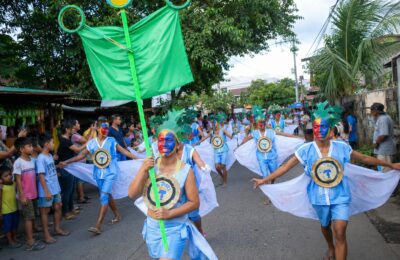
Every September, one object becomes almost impossible to miss in Tacurong City: the hat.
Not just an ordinary hat, either.
During the Talakudong Festival, dancers lift beautifully decorated native headgear above their heads, spin them through choreographed routines, carry them through the streets and turn them into one of the most recognizable symbols of Tacurong.
That is why Talakudong is often called the city’s “festival of hats.”
But the celebration is about much more than colorful headwear.
Talakudong Festival tells the story of Tacurong itself—from a small settlement in what was once the vast province of Cotabato to a multicultural community and eventually a component city of Sultan Kudarat.
The connection runs so deep that even the name “Tacurong” is believed to have developed from “Talakudong,” the old name of the settlement and a word referring to the traditional head covering worn by early residents.
Today, all of those stories come together every September through street dancing, bamboo and drum music, elaborate costumes, trade fairs, food, competitions and community events.
And on September 18, the celebration reaches its biggest moment as Tacurong marks the anniversary of its cityhood.
Here is a closer look at what makes Talakudong Festival one of the distinctive September festivals of Mindanao.
Content
Talakudong Festival at a Glance
| Details | Information |
|---|---|
| Festival | Talakudong Festival |
| Location | Tacurong City, Sultan Kudarat |
| Region | SOCCSKSARGEN / Region XII |
| Main date | September 18 |
| Type of festival | Historical, cultural and civic |
| Celebration | Tacurong Cityhood Anniversary |
| Main symbol | Talakudong or kudong, a traditional head covering |
| Major attraction | Street dancing and field demonstration |
| Signature event | Lumbayag sa Dalanon kag Kiay-Kiay sa Talakudong |
| Popular nickname | Festival of Hats |
What Is Talakudong Festival?
Talakudong Festival is Tacurong City’s annual cultural celebration held every September, culminating on September 18.
Unlike many Philippine September festivals connected primarily with a patron saint’s feast day, Talakudong is principally a civic and historical celebration.
September 18 is particularly significant because it was on that date in 2000 that Tacurong residents ratified the conversion of their municipality into a component city through a plebiscite.
The city government describes Talakudong as a historical and cultural spectacle built around the talakudong or kudong, the native head covering traditionally worn by early settlers and still associated particularly with farmers.
And once you see the street dancing, you’ll understand why the hat became the obvious symbol of the festival.
Dancers don’t simply wear their kudong.
They use it.
The hats become part of the choreography as performers lift, turn, tilt and arrange them into patterns while dancing through the streets.
That makes Talakudong visually different from many other Philippine festivals.
What Does “Talakudong” Mean?
The name comes from a type of traditional headgear.
Tacurong’s official history explains that the place was originally called Pamasang, after a creek flowing through the area.
At some point, the name was changed to Talakudong, referring to the head covering worn by early settlers.
Over time, “Talakudong” was shortened or changed to “Tacurong.”
Interestingly, the city government itself says the exact circumstances explaining why the settlement became associated with the headgear can no longer be determined with certainty.
What is clear is the linguistic connection:
Pamasang → Talakudong → Tacurong.
So the festival isn’t simply using a hat because someone thought it would make an attractive costume.
The talakudong is connected with the very name and identity of the city.
That’s what makes the symbol work so well.
Why Is Talakudong Called the Festival of Hats?
You only need to watch a few minutes of the street-dancing competition to get the answer.
Hats are everywhere.
Some are circular and relatively traditional-looking. Others are enormous, brightly colored festival creations decorated with geometric patterns, beads, fabric, tassels and other materials.
During performances, dancers may wear the kudong normally, hold it in front of their bodies, raise it above their heads or combine dozens of hats into synchronized formations.
Tacurong’s tourism office has promoted Talakudong as a celebration where intricately decorated kudongs take center stage during cultural performances and the city’s major street-dancing competition.
And because the festival is competitive, costume designers and choreographers continually find new ways of incorporating the headgear into their routines.
That has transformed what was originally an everyday practical object into one of Tacurong’s strongest cultural symbols.
History of Talakudong Festival
To understand Talakudong Festival, it helps to know a little about Tacurong’s history.
The area was once a barangay of Buluan in what was then the Empire Province of Cotabato.
Its original name was Pamasang.
During the 1940s, its strategic position made the community a stopping point for travelers, land survey teams and Oblate missionaries moving across Cotabato.
The community eventually became known as Talakudong and later Tacurong.
From Barangay to Municipality
Tacurong separated from Buluan and became an independent municipality through Executive Order No. 462 signed by President Elpidio Quirino on August 3, 1951.
The town continued to develop as migration brought new residents from other parts of the Philippines, including Panay and Negros.
That migration helps explain another important characteristic of modern Tacurong:
It is a multicultural city.
Different ethnolinguistic and cultural communities eventually made the area home, adding layers to the city’s identity.
From Municipality to City
Almost five decades later came another major milestone.
Republic Act No. 8805 converted the Municipality of Tacurong into a component city of Sultan Kudarat.
The law was approved in August 2000, and residents confirmed cityhood in a plebiscite held on September 18, 2000.
That is why September 18 became the most important date of Talakudong Festival.
The festival celebrates the journey that led Tacurong to cityhood.
Is Talakudong Festival a Religious Festival?
Not primarily.
This is an important distinction because many major Philippine festivals are tied directly to Catholic fiestas.
Talakudong Festival is principally a historical, cultural and civic celebration commemorating Tacurong’s cityhood.
Tacurong does have a separate patronal fiesta connected with Nuestra Señora de la Candelaria, celebrated in February, while Talakudong centers on the city’s September 18 charter anniversary.
That doesn’t mean religious activities are completely absent from Talakudong.
Thanksgiving Masses and other faith-related activities can form part of a particular year’s festival program.
But Talakudong’s main story is about Tacurong—its people, history, culture and development.
Lumbayag sa Dalanon kag Kiay-Kiay sa Talakudong
Now we get to the part most visitors come to see.
The centerpiece of the celebration is traditionally known as:
Lumbayag sa Dalanon kag Kiay-Kiay sa Talakudong.
This is the festival’s major street-dancing and field-demonstration competition.
Tacurong’s city government consistently identifies it as one of Talakudong’s main highlights.
The competition combines several elements:
dance, live percussion, costumes, storytelling, synchronized formations and, of course, the kudong.
Street Dancing
Contingents first perform along designated streets.
This is usually where spectators get closest to the dancers.
Large groups move together to the sound of drums and other instruments while manipulating their hats as part of the choreography.
And the performances can get intense.
A hat that looks relatively simple when held in someone’s hand becomes completely different when hundreds of dancers move them simultaneously.
From one angle, you might see a wall of color.
Seconds later, all of the hats rise above the dancers.
Then the formation breaks apart and changes again.
That’s the kind of visual movement Talakudong is known for.
Field Demonstration
The contingents also present more structured routines in a performance area.
This is where choreography becomes more theatrical.
Groups can tell stories about Tacurong’s history, early communities, agriculture, cultural diversity, struggle and development.
Tacurong’s tourism office specifically describes the performances as depicting the city’s transformation from a barrio of Buluan into a multicultural municipality and eventually a progressive city.
So while the hats attract attention first, the performances are really trying to tell the story behind them.
The Sound of Talakudong
You can’t properly describe this festival using photographs alone.
Sound is a huge part of it.
The city government notes that Talakudong performances traditionally use bamboo and drums, while past contingents representing Tacurong in other festival competitions have also incorporated instruments such as gongs and kulintang.
The percussion gives the street performances their energy.
There’s something completely different about standing beside a festival route and hearing a contingent approaching before you can see it.
First, you hear the drums.
Then the chants become clearer.
Eventually the dancers and hundreds of colorful kudongs come into view.
That build-up is part of what makes Philippine street festivals so enjoyable in person.
The Kudong as More Than a Costume
What I particularly like about Talakudong is that the festival symbol is something simple.
A hat.
No complicated explanation is necessary.
Early settlers wore head coverings. Farmers still need hats for protection from the intense Mindanao sun. And the city’s own name is believed to trace back to that headgear.
In the festival, however, the object becomes something else entirely.
It represents heritage.
It becomes a dance prop.
It becomes art.
It becomes a symbol of Tacurong.
And because festival participants redesign the kudong each year, an ordinary everyday object becomes increasingly elaborate without completely losing the connection to where it came from.
Talakudong Festival Costumes
Although the kudong receives most of the attention, the rest of the costumes can be just as elaborate.
Expect bright colors.
Lots of them.
Depending on the contingent and theme, dancers may wear combinations of yellow, red, purple, green, blue, orange, gold and other colors.
Patterns can reference local culture, indigenous-inspired artistic motifs, farming communities or the broader multicultural identity of Mindanao.
Costumes also have to work with the hats.
A beautifully designed kudong wouldn’t have nearly the same impact if it looked completely disconnected from everything else performers were wearing.
So designers usually create the headgear, clothing, accessories and props as one complete visual system.
And when dozens—or hundreds—of dancers enter formation together, you see the complete design.
A Celebration of Tacurong’s Multicultural Identity
One of the recurring themes in Talakudong is multiculturalism.
That makes sense when you consider Tacurong’s development.
Migrants from other Philippine regions settled in the area over the decades, while indigenous and Muslim communities form part of the broader cultural landscape of Central Mindanao.
The city today sits at an important crossroads serving communities across Sultan Kudarat and neighboring areas.
Tacurong’s official profile describes it as a commercial, financial and educational center strategically positioned along routes connecting major Mindanao cities.
Talakudong performances often reflect this history.
Instead of presenting Tacurong as belonging to only one cultural tradition, the festival celebrates the way different groups have contributed to what the city eventually became.
That makes the festival’s story especially appropriate for a place known as the “City of Goodwill.”
What Happens During Talakudong Festival?
September 18 is the highlight, but Talakudong has long been much more than a one-day event.
Some editions have lasted several weeks.
Activities change each year, but previous celebrations have included food and trade fairs, agricultural exhibits, cultural competitions, art activities, sports tournaments, concerts, photography competitions, pageants, livelihood fairs and community-service programs.
Food and Trade Fairs
Festival season gives local entrepreneurs and producers an opportunity to showcase what they make.
Food fairs naturally become popular gathering places, especially in the evening.
Agricultural and trade exhibitions also make sense considering Tacurong’s role as a commercial center serving surrounding farming communities.
Cultural Competitions
Dance remains central to Talakudong.
Apart from the traditional street-dancing competition, different editions have introduced folk dancing, contemporary dance, hip-hop and other performance contests.
This creates a nice balance.
The festival preserves its traditional symbol while giving younger Tacurongnons plenty of ways to participate.
Arts and Photography
Talakudong has also included visual-art and photography activities over the years.
That’s hardly surprising.
From a photographer’s perspective, the combination of hundreds of colorful hats, dancers, live percussion and synchronized formations provides endless possibilities.
The city’s Igpat Sang Kamera photography activities have appeared repeatedly in Talakudong programs.
Pageants and Community Events
Beauty and cultural pageants have also formed part of past celebrations, alongside programs for different sectors of the community.
The exact lineup changes each year, which is why travelers should always check the latest city-issued calendar rather than relying on an old festival schedule.
Why September 18 Is Important in Tacurong
If you remember only one date from this guide, make it September 18.
That’s the anniversary of the plebiscite that confirmed Tacurong’s conversion into a city in 2000.
It is also traditionally the day when Talakudong’s biggest cultural events take place.
In past years, the street dancing and field demonstration have been staged on September 18, turning the cityhood anniversary into the visual climax of the festival.
That connection is important.
Talakudong isn’t simply scheduled in September because the weather or tourism calendar happens to work.
The date is part of Tacurong’s history.
Talakudong Festival vs. Other Philippine Festivals
Talakudong shares some familiar features with other major Philippine celebrations.
There are competing contingents.
There are colorful costumes.
There are drums.
There are huge group formations and street performances.
But its strongest distinguishing feature is obvious:
the kudong.
Very few Philippine festivals build so much of their visual identity around a head covering.
Talakudong dancers don’t simply wear their signature object—they make it part of the choreography.
That gives the festival an immediately recognizable look.
Even if you removed every banner saying “Tacurong,” those hats would still tell you what festival you’re probably watching.
Talakudong Beyond Tacurong
The festival’s performance style has occasionally traveled beyond Sultan Kudarat.
Tribu Talakudong, for example, has represented Tacurong at outside cultural events, including performances connected with Iloilo’s Dinagyang Festival.
A Tacurong government account of one such appearance described the contingent using drums, gongs and kulintang while manipulating their trademark hats during the performance.
Those appearances help introduce Talakudong to audiences who might otherwise know little about Tacurong.
And that’s one of the underrated roles festivals play.
They become ambassadors for their cities.
Visiting Talakudong Festival
If you’re planning your first Talakudong trip, I would avoid arriving only on the morning of September 18.
Come earlier if possible.
You’ll have more time to understand the city, check the final parade route and enjoy activities taking place before the main celebration.
How to Get to Tacurong City
Tacurong sits in central Mindanao and functions as an important transport crossroads.
The city government places it about 92 kilometers from General Santos City and 96 kilometers from Cotabato City, with road connections also linking the area with Davao and other parts of Mindanao.
For travelers coming from farther away, major gateways such as General Santos can be used before continuing overland to Tacurong.
Actual bus, van and flight schedules change, so check current transportation options shortly before traveling rather than relying on old schedules.
Where to Stay During Talakudong
Because Talakudong attracts additional visitors, performers and returning residents, booking ahead is a good idea.
If your main reason for visiting is street dancing, choose accommodation that gives you relatively easy access to central Tacurong.
Major events can lead to temporary road closures.
Being within walking distance—or at least relatively close to festival venues—can save you a lot of inconvenience on September 18.
What Else to See in Tacurong City
Don’t leave immediately after the festival if you have time.
One of the city’s best-known attractions is Baras Bird Sanctuary.
The Tacurong City Government says the sanctuary attracts thousands of herons and egrets and has become one of the city’s important nature attractions.
It’s a completely different experience from Talakudong.
One day you’re surrounded by drums, dancers and crowds.
The next, you’re looking up at trees filled with birds.
That contrast can make a Tacurong trip more interesting.
Tips for First-Time Talakudong Visitors
Wear comfortable shoes because festival days involve much more walking than you expect.
Bring drinking water and sun protection. Considering the entire celebration revolves around hats, bringing your own practical hat isn’t a bad idea either.
Arrive early for street dancing if photography matters to you. Once spectators pack the streets, moving between viewing areas becomes difficult.
Bring some cash in smaller denominations for food stalls and small vendors.
And pay attention to traffic advisories released before September 18. A route that normally takes only a few minutes can become inaccessible once festival roads close.
Most importantly, don’t watch only the costumes.
Look at how the dancers use their hats.
That’s where you really see what makes Talakudong different.
Talakudong Festival Frequently Asked Questions
Where is Talakudong Festival celebrated?
Talakudong Festival is celebrated in Tacurong City, Sultan Kudarat, in the SOCCSKSARGEN region of Mindanao.
When is Talakudong Festival?
The main date is September 18, although festival activities can begin days or even weeks earlier.
September 18 marks Tacurong’s cityhood anniversary.
Why is Talakudong Festival celebrated?
Talakudong Festival commemorates Tacurong City’s history and cityhood while celebrating its culture and multicultural identity.
Tacurong’s conversion into a component city was ratified through a plebiscite on September 18, 2000.
What does Talakudong mean?
Talakudong refers to traditional headgear associated with the early settlers of the area.
Tacurong itself is believed to have derived its name from Talakudong.
What is a kudong?
A kudong is a native head covering or hat. Similar practical headwear continues to be associated particularly with farmers who need protection from the sun.
During Talakudong Festival, the kudong becomes much more elaborate and forms a major part of the dancers’ costumes and choreography.
Why is Talakudong called the Festival of Hats?
Because decorated kudongs are the festival’s signature visual symbol.
Dancers wear and manipulate the hats during street dancing and field demonstrations, producing large synchronized patterns and formations.
What is the main event of Talakudong Festival?
The major cultural attraction is traditionally the Lumbayag sa Dalanon kag Kiay-Kiay sa Talakudong, featuring street dancing and field demonstrations.
Is Talakudong a religious festival?
Talakudong is primarily a cultural and civic festival commemorating Tacurong’s cityhood rather than a patronal feast.
Tacurong has separate religious celebrations associated with its patronal fiesta.
What instruments are used during Talakudong Festival?
Drums and bamboo instruments are strongly associated with the festival performances, while some Tacurong contingents have also incorporated gongs and kulintang.
Is Talakudong Festival worth visiting?
Yes, particularly if you’re interested in Philippine street festivals that aren’t as heavily promoted internationally as Sinulog, Ati-Atihan or Dinagyang.
Talakudong has a clear visual identity, an interesting connection to Tacurong’s name and history, and one of the more unusual festival symbols in the country.
Talakudong Festival 2026 Schedule
This guide is designed to remain useful year after year, but travelers heading to Tacurong in 2026 already have a festival calendar to work with.
The main festivities build through September, with the biggest Talakudong cultural events scheduled for September 18.
Among the published 2026 highlights are:
| Date | 2026 Activity |
|---|---|
| Sept. 1–18 | Eats Talakudong Food Fair |
| Sept. 1–18 | Agri / Trade Fair and Flea Market |
| Sept. 13 | Talakudong Fun Run |
| Sept. 13–18 | Bugal Sang Tacurong Livelihood Fair |
| Sept. 14 | Civic Parade and Drum & Lyre Parade |
| Sept. 14 | Thanksgiving Mass |
| Sept. 14 | Talakudong Beat Drum & Lyre Competition |
| Sept. 16 | Talakudong Street Jam Battle 5.0 |
| Sept. 17 | Talakudong Aero-Marathon 3.0 |
| Sept. 18 | Festival Parade and Lumbayag sa Dalanon kag Kiay-Kiay sa Talakudong Street Dancing |
| Sept. 18 | Festival Program and Field Demonstration |
| Sept. 18 | Culmination Night |
For the September 18 highlight, the published 2026 schedule lists the festival parade and street dancing at 6:00 a.m., followed by the field demonstration and festival program at 9:00 a.m. at the City Hall Grounds.
As always, anyone traveling specifically for the festival should check the latest Tacurong City announcements shortly before the event because times, venues and routes can still be adjusted.

Final Thoughts
There are Philippine festivals where the symbol takes a little explaining.
Talakudong isn’t one of them.
The moment you see the streets filled with hundreds of dancers carrying enormous decorated hats, you immediately understand what makes this festival different.
But the hat becomes much more interesting once you know the story behind it.
Talakudong was once the name of the settlement that eventually became Tacurong. It refers to headgear associated with its early residents. The modern festival then takes that simple object and uses it to tell the much larger story of a community that grew from a barrio into a municipality and eventually a city.
That’s why Talakudong Festival works.
It’s colorful enough to attract visitors and photographers. The street dancing is energetic enough to fill Tacurong’s roads with crowds every September.
But underneath the spectacle is something unmistakably local.
A hat became a name.
The name became a city.
And every September 18, Tacurong puts the hat back at the center of the story.