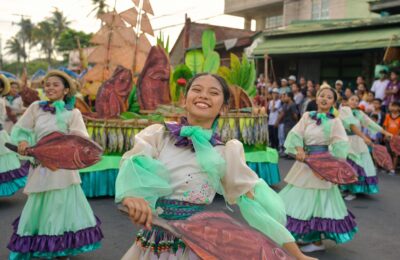
If you’re looking for a Philippine festival that offers something beyond the usual colorful street dancing and grand parades, the Helobung Festival in Lake Sebu, South Cotabato, is definitely worth discovering.
Imagine visiting a beautiful mountain town surrounded by lush forests, peaceful lakes, and waterfalls. Then, suddenly, the quiet streets come alive with the sounds of traditional gongs, indigenous music, and people wearing colorful handwoven clothing decorated with intricate beadwork.
This is the beauty of Helobung Festival.
Unlike some of the country’s larger festivals that focus on massive floats and elaborate modern productions, Helobung celebrates something deeply connected to the identity of its community: the traditions, music, craftsmanship, and way of life of the T’boli people.
It’s a celebration where visitors can witness traditional dances, appreciate the artistry of T’nalak weaving, discover indigenous musical instruments, and learn about the cultural heritage that makes Lake Sebu one of the most fascinating destinations in Mindanao.
And what makes the experience even more special is the location itself.
Lake Sebu is already famous for its natural attractions and beautiful scenery. Add a cultural festival that brings together local artists, traditional performers, and community members, and you have a celebration that offers visitors a meaningful glimpse into South Cotabato’s rich heritage.
In this guide, we’ll explore everything you need to know about the Helobung Festival, including its history, meaning, schedule, traditional activities, cultural significance, and practical tips for visiting Lake Sebu.
Content
What Is Helobung Festival?
Helobung Festival, also sometimes written as Helubong Festival, is a cultural celebration held in the municipality of Lake Sebu, South Cotabato, Philippines.
The festival highlights the rich traditions, artistic heritage, and cultural identity of the T’boli people, one of the Indigenous communities of southern Mindanao.
It’s one of the pioneering cultural festivalsin the SOCCSKSARGEN Region, also known as Region XII.
The celebration has historically been associated with Lake Sebu’s foundation anniversary, although the festival schedule has changed over the years.
What makes Helobung particularly interesting is its strong emphasis on Indigenous culture.
Instead of focusing entirely on entertainment, the festival provides a platform for traditional musicians, dancers, weavers, artisans, cultural workers, and community elders to share their knowledge and skills.
Visitors can expect cultural presentations featuring traditional costumes, Indigenous music, dance performances, handicraft demonstrations, and various community activities.
Depending on the year’s program, celebrations may also include street dancing, parades, traditional games, exhibitions, food activities, and tourism-related events.
The overall atmosphere is festive, but the cultural meaning goes far beyond the performances.
For the T’boli community, Helobung is an opportunity to celebrate traditions that have been preserved and passed down through generations.
Helobung Festival: Quick Facts
| Details | Information |
|---|---|
| Festival Name | Helobung Festival, also known as Helubong Festival |
| Location | Lake Sebu, South Cotabato |
| Region | SOCCSKSARGEN (Region XII) |
| Island | Mindanao |
| Main Cultural Focus | T’boli Indigenous heritage |
| Meaning | Never-ending joy |
| Traditional Festival Month | November |
| Recent Festival Month | May |
| Main Activities | Cultural dances, music, Indigenous arts, weaving, parades and community celebrations |
| Local Organizer | Municipal Government of Lake Sebu and participating cultural organizations |
| Major Cultural Highlight | T’boli traditions and artistic heritage |
What Does Helobung Mean?
The word Helobung is commonly translated as “never-ending joy” in the T’boli language.
It’s a fitting name for a celebration that brings communities together through music, dancing, storytelling, and cultural activities.
But the meaning also reflects something important about the festival.
Helobung is not simply about having fun. It’s about celebrating the identity, resilience, creativity, and cultural achievements of the T’boli people.
The community has a rich heritage that includes weaving, brass casting, traditional music, oral literature, dance, and spiritual traditions connected to the natural environment.
Through the festival, these practices are introduced to younger generations and shared with visitors.
Another interesting detail is that Helobung is also associated with a community-based cultural organization dedicated to preserving T’boli performing arts.
The Helobung Community Dance Troupe has helped promote traditional music and dance through local and international performances.
Although the cultural organization and the municipal festival are not exactly the same thing, they share a commitment to preserving and celebrating T’boli heritage.
History of Helobung Festival
Helobung Festival grew from the desire to preserve and celebrate the cultural traditions of Lake Sebu’s Indigenous communities.
Lake Sebu has long been recognized as an important center of T’boli culture in South Cotabato.
For generations, the T’boli people have developed artistic traditions closely connected to their natural surroundings, community life, beliefs, and oral histories.
Among their most recognized cultural achievements is T’nalak weaving, a traditional textile-making practice involving abaca fibers and intricate designs.
Traditional music and dance also occupy an important place in T’boli cultural life.
As Lake Sebu developed into a municipality and gradually became an important tourism destination, local celebrations created opportunities to showcase these traditions.
Helobung eventually emerged as one of the area’s signature cultural festivals.
The Festival’s Early Celebrations
Helobung has been celebrated for decades.
The 28th edition took place in 2024, showing how the festival has become an established part of the local cultural calendar.
Earlier celebrations were traditionally held in November, coinciding with Lake Sebu’s foundation anniversary.
During these events, local communities participated in cultural parades, dances, Indigenous music presentations, and various traditional activities.
The streets were decorated with colorful patterns inspired by T’boli textiles.
Performers wore traditional clothing, while community members gathered to celebrate their heritage.
Unlike some festivals that developed primarily around religious patronal feasts, Helobung has maintained a particularly strong connection to Indigenous identity and cultural expression.
The Role of T’boli Cultural Organizations
The preservation of T’boli traditions has also been supported by community cultural organizations.
According to the Philippine Information Agency, an all-T’boli cooperative of artisans associated with Helubong was established in 1986 by young community members who recognized the importance of preserving their heritage.
The cooperative’s cultural work eventually became associated with initiatives involving traditional dance, music, crafts, education, and community development.
The Helobung Community Dance Troupe has represented T’boli culture through performances in the Philippines and abroad.
Its work includes cultural education, performances, and the transmission of Indigenous knowledge to younger generations.
It’s important to distinguish this organizational history from the history of the annual festival itself. The 1986 founding refers to the cultural cooperative, not a verified founding date for the festival.
How the Festival Has Evolved
Over the years, Helobung has expanded beyond traditional dance performances.
More recent celebrations have incorporated cultural exhibitions, fashion presentations, traditional games, community activities, and programs recognizing outstanding Indigenous artists.
Some editions have also included tourism and adventure-related events that highlight Lake Sebu’s natural attractions.
One particularly significant development was the increased recognition of local cultural masters.
In 2024, the festival placed special emphasis on Lake Sebu’s Manlilikha ng Bayan, or National Living Treasures.
These are traditional artists recognized for their exceptional skills and contributions to preserving the Philippines’ intangible cultural heritage.
By celebrating these individuals, Helobung reinforces an important message: Indigenous culture is a living tradition that continues to be practiced, taught, and developed.
When Is Helobung Festival Celebrated?
One important thing travelers should know is that Helobung Festival does not have a permanently fixed celebration date.
Historically, it was associated with the second week of November and Lake Sebu’s foundation anniversary.
However, more recent editions have taken place in May.
For example, the 2024 festival was celebrated from May 29 to 31, while the 2025 celebration opened on May 29.
This means that older festival calendars listing November may not reflect the schedule of newer celebrations.
The official dates are determined by the organizers, and the program can change from one edition to another.
If you’re planning to visit Lake Sebu specifically for Helobung, I recommend checking announcements from the Municipal Government of Lake Sebu and local tourism authorities before booking your trip.
Where Is Helobung Festival Held?
Helobung Festival is celebrated in Lake Sebu, a highland municipality in South Cotabato, Mindanao.
The town is known for its natural scenery, peaceful lakes, waterfalls, and strong Indigenous cultural heritage.
Lake Sebu is especially associated with the T’boli people, although other communities also live in the municipality.
Festival activities can take place at different public venues, including the municipal gymnasium, community spaces, and designated streets used for parades.
Cultural activities and demonstrations may also be organized in participating cultural centers.
The exact venues depend on the year’s official program.
For visitors, the location makes Helobung particularly appealing.
You can spend part of your trip experiencing T’boli cultural traditions and another part enjoying Lake Sebu’s natural attractions.
What Happens During Helobung Festival?
The festival features a combination of cultural performances, community celebrations, and activities that highlight the local way of life.
Although the program changes between editions, several traditions remain closely associated with the celebration.
1. Traditional T’boli Dance Performances
One of the biggest highlights of Helobung Festival is the performance of traditional T’boli dances.
These presentations showcase movements, music, and clothing connected to the community’s cultural heritage.
Dancers often wear colorful traditional garments decorated with intricate patterns, beadwork, and ornaments.
The performances may be accompanied by indigenous musical instruments, creating an atmosphere very different from festivals that rely entirely on modern recorded music.
Traditional T’boli dances can reflect aspects of daily life, community relationships, oral traditions, and cultural beliefs.
Some incorporate carefully controlled movements, while others feature more energetic choreography.
For visitors, these performances offer an opportunity to see how dance serves as a form of cultural expression.
And perhaps more importantly, they remind us that traditional dance is more than entertainment.
It’s one of the ways communities preserve and communicate their heritage.
2. Street Dancing and Cultural Parades
Helobung has also featured street dancing and cultural parades.
During these activities, performers wearing traditional T’boli clothing move through designated streets as residents and visitors gather to watch.
You may notice the striking colors and geometric patterns commonly associated with T’boli textiles.
Red, black, white, and other carefully combined colors create beautiful visual displays.
Unlike large commercial festivals that depend on enormous floats, Helobung’s appeal often comes from the authenticity of its traditional clothing, music, and community participation.
The exact parade routes and schedules vary.
Not every edition necessarily features the same street-dancing activities, so travelers should check the official festival program.
3. Indigenous Music and Traditional Instruments
Music is an important part of T’boli cultural identity.
During Helobung, traditional performances may feature Indigenous musical instruments that have been used by community musicians for generations.
Among the instruments associated with T’boli traditions are the hegelung, a two-stringed lute, the kumbing, a bamboo jaw harp, and the k’lintang, a set of small gongs.
These instruments produce distinctive sounds that accompany cultural performances, storytelling, and other traditional activities.
For visitors unfamiliar with Indigenous music, hearing these instruments can be one of the most memorable parts of the festival.
Their sounds are closely connected to the community’s artistic practices and cultural expressions.
4. T’nalak Weaving Demonstrations
If there’s one cultural tradition that Lake Sebu is especially famous for, it’s T’nalak weaving.
T’nalak is a traditional textile created using abaca fibers.
The process involves preparing the fibers, arranging the designs, dyeing the materials, and carefully weaving the finished cloth.
What makes T’nalak particularly fascinating is its connection to the spiritual and artistic traditions of T’boli weavers.
Some designs are associated with dreams, which is why the artisans are often called “dreamweavers.”
The finished textiles feature intricate patterns that carry cultural meaning.
During cultural exhibitions and community activities, visitors may have opportunities to learn about the weaving process and meet local artisans.
It’s worth remembering that authentic T’nalak is not simply a decorative souvenir.
The textiles hold cultural significance, and their production requires considerable skill, patience, and knowledge.
If you’re interested in purchasing T’nalak, buying directly from recognized local weavers or community enterprises is a meaningful way to support the craft.
5. Traditional Handicrafts and Indigenous Art
Apart from weaving, Lake Sebu is known for other forms of Indigenous craftsmanship.
These include traditional beadwork, brass casting, embroidery, and the creation of cultural ornaments.
Some pieces are used in traditional clothing, while others have ceremonial, decorative, or practical purposes.
During Helobung, cultural exhibitions may feature locally produced crafts and demonstrations.
It’s a wonderful opportunity to appreciate the skills involved in making these objects.
And when you understand the work behind them, you begin to see why preserving traditional craftsmanship is so important.
Many of these skills require years of learning and experience.
6. Traditional Games and Community Activities
Helobung is also a community celebration.
Depending on the official program, activities may include traditional games, friendly competitions, educational presentations, and gatherings involving local residents.
These events encourage participation from different generations.
For younger community members, the festival can provide opportunities to learn traditional practices directly from elders and cultural bearers.
For visitors, these activities offer another perspective on the cultural life of Lake Sebu.
Rather than simply watching a performance, you may get to see how community traditions are practiced and shared.
7. Recognition of Indigenous Cultural Masters
Another important aspect of recent Helobung celebrations is the recognition of exceptional traditional artists.
Lake Sebu is home to several individuals recognized for their contributions to Indigenous arts and cultural preservation.
These include Manlilikha ng Bayan awardees whose skills involve traditional weaving, music, and brass casting.
Special festival activities may honor these artists and highlight their work.
This recognition helps introduce their achievements to younger generations and encourages continued interest in traditional craftsmanship.
It also shows that cultural preservation is not limited to remembering the past.
It’s about supporting the people who continue to practice these traditions today.
The Importance of T’nalak in T’boli Culture
To fully appreciate Helobung Festival, it helps to understand the importance of T’nalak.
This traditional textile is one of the most recognizable cultural symbols associated with the T’boli people.
T’nalak is made from abaca fibers and traditionally features carefully arranged patterns produced through a resist-dyeing and weaving process.
Its designs are often connected to the creative and spiritual experiences of the weavers.
The textile is valued not only for its appearance but also for its cultural significance.
In T’boli society, traditional textiles have been associated with important aspects of community life, identity, and ceremonial practices.
Among the best-known T’nalak weavers was the late Lang Dulay, who received the Gawad sa Manlilikha ng Bayan recognition in 1998.
Her contributions helped bring wider national attention to the artistry and cultural importance of T’boli weaving.
Other recognized cultural masters continue the work of preserving traditional arts and passing their knowledge to future generations.
During Helobung, the celebration of these artistic traditions helps visitors understand why Lake Sebu is often associated with the country’s living cultural treasures.
Why Is Helobung Festival Important?
Beyond the colorful dances and cultural activities, Helobung plays a significant role in the preservation of Indigenous heritage.
Preserving T’boli Traditions
One of the festival’s most important contributions is providing a platform for traditional knowledge.
Music, dance, storytelling, weaving, and craftsmanship are cultural practices that often depend on knowledge passed from one generation to another.
By highlighting these traditions, Helobung helps encourage their continued practice.
Supporting Indigenous Artists
The celebration also provides opportunities for Indigenous performers, artisans, and cultural workers to present their work.
For some artists, cultural events can help create greater awareness of their skills and encourage demand for locally made products.
Supporting artisans directly also helps recognize the value of their expertise.
Promoting Cultural Tourism
Lake Sebu is one of South Cotabato’s major tourism destinations.
While many visitors come for the lakes, waterfalls, and outdoor adventures, Helobung introduces another reason to explore the municipality.
The festival encourages travelers to learn about the cultural communities that call Lake Sebu home.
This is an important distinction because responsible cultural tourism should benefit local people while respecting their traditions.
Encouraging Community Pride
Perhaps one of the festival’s greatest contributions is strengthening pride among T’boli community members.
The celebration provides an opportunity to share traditions with younger generations and visitors.
It’s also a reminder that Indigenous culture remains a living part of contemporary Philippine society.
What Makes Helobung Different From Other Philippine Festivals?
The Philippines has hundreds of festivals, each with its own history and traditions.
Some are religious celebrations, while others revolve around agricultural harvests, local products, or historical events.
Helobung stands out because of its emphasis on Indigenous cultural heritage.
Instead of placing most of the attention on large-scale productions and competitions, the celebration highlights traditional artistic practices and community identity.
This includes the work of T’boli musicians, weavers, dancers, artisans, and elders.
The festival also takes place in a remarkable natural environment.
Lake Sebu’s landscape provides a beautiful setting for a celebration deeply connected to the culture and traditions of the people who live there.
For travelers interested in meaningful cultural experiences, that combination makes Helobung particularly special.
Is Helobung the Same as T’nalak Festival?
No. Although both celebrations are associated with South Cotabato’s cultural heritage, they are different festivals.
Helobung Festival is celebrated in Lake Sebu and focuses strongly on the cultural traditions and identity of the T’boli people.
T’nalak Festival, on the other hand, is a major provincial celebration held in Koronadal City as part of South Cotabato’s foundation anniversary festivities in July.
T’nalak Festival features broader provincial activities, including performances representing different communities in South Cotabato.
Helobung is more closely associated with Lake Sebu’s local identity and Indigenous cultural heritage.
Both celebrations contribute to promoting the region’s cultural diversity, but they have different organizers, venues, and schedules.
How to Get to Lake Sebu for Helobung Festival
Lake Sebu is located in the highlands of South Cotabato in southern Mindanao.
Although it doesn’t have a major commercial airport of its own, the municipality can be reached by road from several regional transportation hubs.
From Manila to Lake Sebu
For travelers coming from Metro Manila, one of the usual options is to fly to General Santos City.
General Santos International Airport serves as a major gateway to the southern part of Mindanao.
From General Santos City, travelers can continue by public transportation or private vehicle toward Lake Sebu.
Public transport commonly travels through the Koronadal and Surallah areas before reaching the municipality.
The journey may involve transfers depending on the available routes.
Since transportation schedules can change, I recommend confirming the available vans, buses, and local connections before your trip.
From General Santos City
General Santos is a practical starting point for travelers visiting Lake Sebu.
Public transportation connections are generally available toward Koronadal, with onward services to the Lake Sebu area through Surallah.
If you’re traveling with a group or carrying luggage, arranging private transportation may be more convenient.
Travel time depends on traffic, road conditions, and the number of transfers.
Allow several hours for the journey, particularly if you’re using public transportation.
From Koronadal City
Koronadal is another convenient gateway.
Travelers can continue toward Lake Sebu through the Surallah area using available public transport services.
For festival visitors, it may be easier to stay overnight in Lake Sebu rather than depend on late-night transportation after the celebrations.
Where to Stay During Helobung Festival
Lake Sebu has a variety of accommodations, including lakeside resorts, small inns, guesthouses, and other locally operated establishments.
One of the best reasons to stay overnight is the opportunity to enjoy the peaceful scenery early in the morning.
The lake can be especially beautiful when mist settles over the water and the surrounding hills.
If you’re attending Helobung Festival, choose accommodation based on your preferred activities.
Staying near the town center may be convenient for attending cultural programs.
Meanwhile, lakeside accommodations may be more appealing if you want to combine the festival with a relaxing nature getaway.
Since the celebration can attract additional visitors, booking early is a good idea once the official festival dates are announced.
Things to Do in Lake Sebu During the Festival
One advantage of attending Helobung is that you can combine your cultural experience with some of South Cotabato’s beautiful natural attractions.
Enjoy a Lake Cruise
A boat ride on Lake Sebu is one of the area’s popular visitor activities.
The lake is surrounded by green hills, local communities, and scenic views.
Some operators offer boating experiences that allow visitors to appreciate the landscape from the water.
Visit the Seven Falls
Lake Sebu is also known for its Seven Falls, a series of waterfalls located within the municipality.
The area is a popular destination for sightseeing and outdoor activities.
Visitors can enjoy views of the waterfalls, while some may choose adventure activities such as ziplining when operating.
Check the latest access arrangements, weather conditions, and activity fees before visiting.
Learn More About Traditional Weaving
If you’re interested in culture, look for opportunities to visit community-run weaving centers or cultural workshops.
Some allow visitors to learn about T’nalak production and other traditional crafts.
Always coordinate visits in advance and respect any restrictions on photography or demonstrations.
Try Local Food
Lake Sebu is especially known for its tilapia, which is produced through local aquaculture.
Grilled tilapia and other fish dishes are common features of the area’s food scene.
Visitors can also ask local restaurants or community hosts about traditional T’boli food experiences.
The availability of specific dishes and cultural dining activities depends on the establishment and community arrangements.
Travel Tips for Attending Helobung Festival
If you’re planning to visit Lake Sebu during Helobung, here are a few practical reminders.
Check the Official Schedule
Because the festival has been held in different months, don’t rely entirely on old festival calendars.
Verify the current dates and activities before traveling.
Bring Comfortable Clothing
Lake Sebu has a generally cooler highland climate compared with many lowland areas of Mindanao.
Comfortable clothes, good walking shoes, and a light jacket can be useful.
Bring rain protection as well, since weather conditions can change.
Bring Cash
Although digital payments are becoming more common, smaller businesses and local vendors may still prefer cash.
Keep small bills available for transportation, food, souvenirs, and entrance fees.
Ask Permission Before Taking Photos
This is particularly important when photographing community elders, artisans, children, or cultural activities.
Some traditional practices may have cultural or spiritual significance.
Always ask permission and follow the instructions of community hosts.
Support Local Artisans
If you’re interested in purchasing traditional crafts, consider buying directly from local makers.
This allows you to learn about the product while supporting the people who preserve these traditions.
Respect Traditional Clothing and Cultural Objects
T’boli garments and ornaments carry cultural meaning.
If you’re invited to wear traditional attire for a cultural activity or photograph, follow the guidance of your hosts.
Avoid treating ceremonial items as ordinary costumes or props.
Allow Time for Cultural Experiences
Don’t rush through every activity just to take photographs.
One of the most rewarding parts of visiting Lake Sebu is learning about the community, its traditions, and the stories behind its artistic practices.
Frequently Asked Questions About Helobung Festival
What Is Helobung Festival?
Helobung Festival is a cultural celebration in Lake Sebu, South Cotabato, highlighting the traditions, music, dances, craftsmanship, and heritage of the T’boli people.
Where Is Helobung Festival Celebrated?
The festival is held in the municipality of Lake Sebu, South Cotabato, in the SOCCSKSARGEN Region of Mindanao.
What Does Helobung Mean?
Helobung is commonly translated as “never-ending joy” in the T’boli language.
Is It Helubong or Helobung Festival?
Both spellings appear in cultural references.
However, Helobung is the spelling commonly used in recent official festival announcements and South Cotabato government reports.
When Is Helobung Festival Celebrated?
Historically, the festival was celebrated in November.
More recent editions have taken place in May.
The exact dates should be confirmed through the current official festival announcement.
What Is the Main Highlight of Helobung Festival?
The main attractions are its cultural performances and presentations highlighting T’boli music, traditional dances, weaving, craftsmanship, and Indigenous heritage.
Is Helobung a Religious Festival?
Helobung is primarily a cultural and community festival rather than a Catholic patronal feast.
However, some T’boli artistic traditions are connected to Indigenous beliefs and spiritual practices.
Is Helobung Festival Free?
Admission arrangements vary depending on the activity and the festival edition.
Some public celebrations may be free, while certain tourism experiences, workshops, or special activities may require payment.
Always check the organizers’ announcements for current details.
What Is Lake Sebu Famous For?
Lake Sebu is known for its beautiful lakes, waterfalls, T’nalak weaving, Indigenous cultural heritage, and locally produced tilapia.
Can Tourists Participate in Helobung Activities?
Visitors can attend public festival activities, and some programs may offer demonstrations or cultural learning experiences.
However, participation in specific workshops, ceremonies, or community activities depends on the organizers and cultural hosts.
How Many Days Should I Spend in Lake Sebu?
A two-day, one-night trip can be enough for selected cultural activities and sightseeing.
However, staying longer may be worthwhile if you want to explore Lake Sebu at a more relaxed pace or attend several days of festival events.
Latest Helobung Festival Schedule and Recent Celebrations
For travelers planning future visits, it’s helpful to look at the festival’s more recent history.
The 28th Helobung Festival was held in May 2024, featuring a three-day celebration that highlighted Lake Sebu’s Indigenous cultural heritage.
The event placed special emphasis on local Manlilikha ng Bayan awardees and promoted the municipality as a home of living cultural treasures.
The 2025 celebration opened on May 29 and featured traditional music, cultural presentations, and community activities.
For 2026, the Lake Sebu School of Living Traditions publicly identified May 29–31 as the festival dates in an early-year announcement.
These recent editions show that Helobung is no longer reliably described as a November-only festival.
As of October 18, 2026, a confirmed schedule for the next edition has not yet been established in the sources reviewed.
Visitors should check the Municipal Government of Lake Sebu, the local tourism office, and participating cultural organizations for official dates, venues, programs, and admission instructions.

Final Thoughts
Helobung Festival is one of those Philippine celebrations that deserves more attention from travelers who enjoy discovering local culture.
What makes it special isn’t simply the colorful costumes, traditional dances, or lively atmosphere.
It’s the opportunity to appreciate the traditions and artistic knowledge that continue to shape the identity of the T’boli people.
From the intricate designs of T’nalak textiles to the distinctive sounds of traditional musical instruments, Helobung celebrates cultural practices that have been preserved across generations.
And the fact that it takes place in Lake Sebu makes the experience even more memorable.
You get to enjoy beautiful natural scenery while learning about the Indigenous communities who have long called this part of Mindanao home.
For me, that’s what makes cultural festivals interesting.
They remind us that traveling isn’t just about seeing beautiful places. It’s also about understanding the people, traditions, and stories that give those places their character.
So if you’re planning a trip to South Cotabato, consider visiting during Helobung Festival.
Whether you’re interested in traditional music, cultural dances, weaving, Indigenous art, or simply discovering a different side of Philippine festivals, Lake Sebu has plenty to offer.
And hopefully, experiences like this will encourage more travelers to appreciate and support the communities working to preserve the country’s rich cultural heritage.
Helobung — a celebration of never-ending joy, cultural pride, and living traditions.