Some festivals are built around harvests.
Others celebrate saints, flowers, local food or an important event in a town’s history.
In Masbate City, one of its most distinctive cultural celebrations was inspired by something much simpler: birds flying and feeding along the coast.
That is the story behind the Lapay Bantigue Dance Festival.
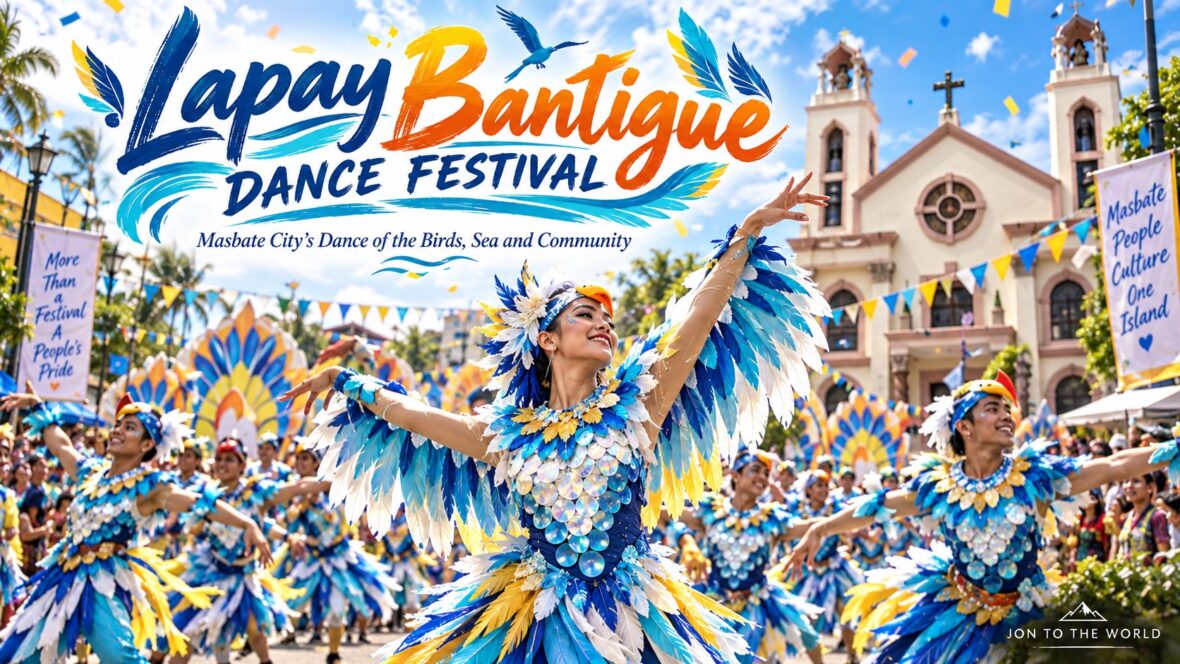
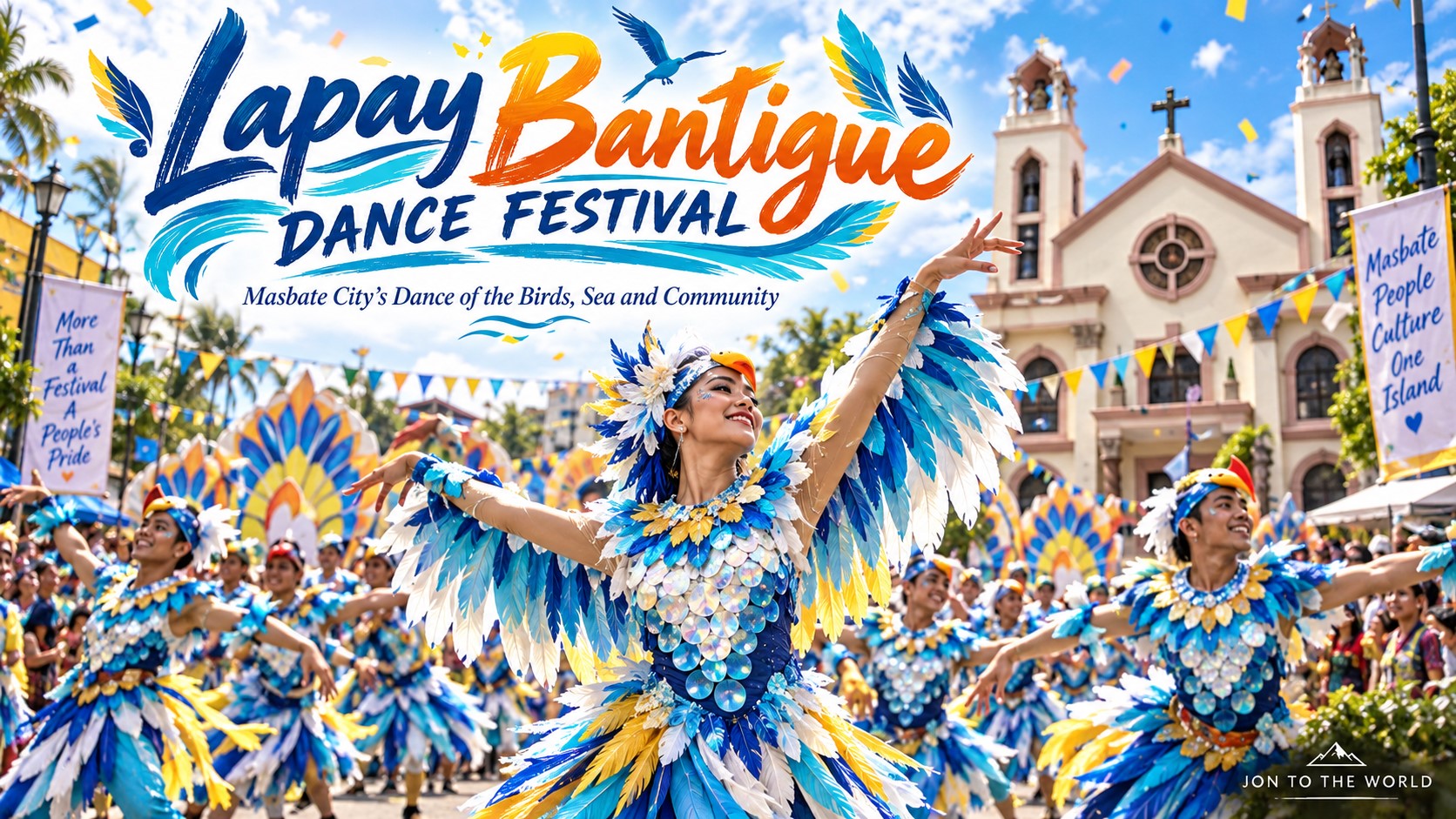
Every September, dancers take over the streets of Masbate City with sweeping arm movements, bird-inspired poses, colorful costumes and choreography rooted in the traditional Lapay Bantigue folk dance.
At first glance, it looks like another colorful Philippine street-dancing festival.
But once you learn where the movements came from, the festival becomes much more interesting.
The dance grew from everyday life in the coastal community of Barangay Bantigue, where residents watched birds locally called lapay move along the shoreline while fishermen returned with their catch. Those movements eventually became a dance, and that dance became one of Masbate City’s best-known cultural symbols.
So if you’re curious about the Lapay Bantigue Dance Festival—its history, meaning, dance movements, traditions and what you can expect when visiting Masbate—here’s a complete guide.
Content
What Is the Lapay Bantigue Dance Festival?
The Lapay Bantigue Dance Festival is a cultural and street-dancing festival held in Masbate City.
Its centerpiece is the Lapay Bantigue folk dance, which imitates the movements of birds locally known as lapay that were traditionally seen around the coastal village of Bantigue.
The Tourism Promotions Board describes it as a local dance-art festival inspired by flocks of lapay hovering around Barangay Bantigue. The movements of the birds became part of local folk tradition and eventually developed into a festival associated with Masbate City.
The festival is closely linked with Masbate City’s cityhood anniversary celebration in late September.
You’ll usually see school contingents and organized dance groups performing through the streets before a larger festival showdown.
And unlike some festivals where the choreography changes completely every year, Lapay Bantigue has a traditional movement vocabulary underneath all the costumes and theatrical presentation.
That’s what makes it special.
The dancers aren’t simply pretending to be birds for a festival theme.
They’re performing a modern interpretation of a local folk dance that existed before the street festival itself.
What Does “Lapay Bantigue” Mean?
The name is really two ideas joined together.
“Lapay” refers to the birds whose movements inspired the dance.
“Bantigue” refers to Barangay Bantigue, the coastal community in Masbate City where the tradition developed.
Tourism materials frequently describe lapay as seagulls, while locally developed DepEd teaching materials identify the bird as a type of heron. Either way, what matters culturally is the same thing: residents observed the bird’s characteristic movements around the shoreline and translated them into dance.
Think about the setting.
Fishing boats returning toward shore.
People waiting for the day’s catch.
Birds gathering nearby.
Some standing still.
Others pecking.
Others gliding above the water.
Then suddenly taking flight.
Those ordinary scenes became the raw material for a dance.
And that is perhaps the most beautiful thing about Lapay Bantigue.
It came from everyday Masbateño life.
The Story of Lola Felisa Tupas
You can’t really tell the story of Lapay Bantigue without talking about Felisa Aparejado Tupas, better known locally as Lola Felisa.
She lived in Barangay Bantigue and became closely associated with the development of the original Lapay dance.
According to local educational materials from Masbate, Lola Felisa was fascinated by the movements of the lapay birds she saw around her community.
She began copying them.
The standing.
The flying.
The pecking.
The movement of the wings.
And while doing it, she would reportedly chant, “lapay, lapay.”
What probably began as playful imitation gradually turned into something the community recognized as a dance.
That’s a very different origin from a festival designed by an events committee or tourism office.
The cultural tradition came first.
The festival came much later.
Local materials also trace performances of Lola Felisa’s dance back to the mid-20th century, long before Lapay Bantigue became an organized street festival.
The Life of a Fishing Community Behind the Dance
The dance makes even more sense when you look at Barangay Bantigue’s relationship with the sea.
Fishing was central to community life.
People gathered near the waterfront waiting for fishing boats to return.
And the birds were there too, attracted by the activity and the fish.
This created the scene that generations of residents became familiar with.
In traditional descriptions of Lapay Bantigue, dancers imitate birds flying, diving, gliding and searching for food while also capturing the interaction between people and the coastal environment.
It isn’t difficult to imagine how it started.
You’re waiting by the shore.
You watch the birds.
Someone imitates one.
Another person copies them.
Soon it becomes playful.
Then rhythmic.
Eventually, it becomes a dance.
That’s why Lapay Bantigue feels particularly connected to its place of origin.
Remove Bantigue’s shoreline, fishing culture and birds from the story and you remove much of what gives the dance meaning.
The “Bantigue” Part of Lapay Bantigue
Here’s where the history becomes even more interesting.
Lapay Bantigue isn’t simply one old dance.
Local accounts describe two related traditions: the Lapay dance inspired by birds and another dance associated with Bantigue and devotion to Saint Philomena.
The Bantigue tradition is connected with stories of prayer, healing and thanksgiving.
One local account tells of a mother who promised to dance in honor of Saint Philomena if her sick child recovered. Similar traditions connected the saint with fishermen giving thanks for an abundant catch.
These stories belong to the devotional tradition surrounding the dance and are best understood as local religious accounts rather than documented medical or historical claims.
But they tell us something important.
Lapay Bantigue isn’t just a nature-inspired dance.
It also carries elements of faith, fishing culture, gratitude and community memory.
Saint Philomena and the Festival Tradition
Saint Philomena became an important figure in the traditions of Barangay Bantigue.
Older accounts describe residents dancing as an expression of thanksgiving, particularly for healing and bountiful fishing.
The Bantigue dance reportedly included movements such as swaying the arms, bending toward the ground and looking upward while traditional clothing such as baro’t saya and camisa de chino was worn.
Over time, religious and secular elements of the tradition became intertwined.
That’s common across the Philippines.
Our festivals often sit somewhere between devotion and celebration.
A street dance can be entertaining.
But it can also carry stories that have been passed from one generation to another.
Lapay Bantigue is a good example of that.
Ramon Obusan and the Development of Lapay Bantigue
Another important name in the story is Ramon A. Obusan.
Obusan, who was later named National Artist for Dance, spent decades researching and documenting traditional Philippine dances.
During his work, he encountered the dances of Bantigue and helped refine and develop what became known as Lapay Bantigue.
DepEd teaching materials from Masbate credit Obusan with developing the two dances he encountered in the community, refining the music and adding movements inspired by the lapay birds.
That helped move Lapay Bantigue beyond one coastal village.
It became part of a broader Philippine folk-dance repertoire.
The Cultural Center of the Philippines has continued to feature Lapay Bantigue through folk-dance workshops; for example, the dance appeared in a CCP Pasinaya workshop conducted by Batang Ramon Obusan.
So while the dance is proudly Masbateño, its reach is now national.
Students in other parts of the country learn it.
Dance troupes perform it.
Schools use it in cultural programs.
But its roots remain in Bantigue.
What Do the Dance Movements Represent?
This is where watching Lapay Bantigue becomes more fun.
Once you know what the movements represent, you begin seeing the dance differently.
DepEd instructional material describes movements inspired by the bird’s standing, flying and pecking behavior.
Other traditional descriptions include dramatic backward bends, sweeping arm movements, bird-like courtship gestures and a hand position near the forehead that resembles a beak.
You’ll notice dancers extending their arms like wings.
Sometimes they appear to glide.
Sometimes they dip toward the ground.
Sometimes their movements become playful and exaggerated.
And during festival interpretations, choreographers build much larger formations around those basic ideas.
One moment, you might see an entire group moving like a flock.
Then everyone suddenly lowers to the ground.
A lead dancer rises.
The formation expands.
“Wings” open.
And suddenly you’re watching a street filled with human versions of the birds that inspired the dance.
From Folk Dance to Street Festival
The organized Lapay Bantigue Dance Festival is much younger than the dance itself.
Local documentation places the start of the festival competition in September 2002, during Masbate City’s second cityhood anniversary.
During the first few years, participating schools were expected to focus closely on the traditional Lapay dance.
By 2005, organizers had introduced a free-interpretation category that allowed groups to use more upbeat music, live instruments and more creative choreography.
That’s an important part of how the festival evolved.
The traditional dance remained the foundation.
But choreographers were given room to transform it into a larger spectacle.
And that is essentially the Lapay Bantigue Festival you see today.
Folk dance meets modern street-dance competition.
The Street Dancing
If you’re visiting as a traveler or photographer, the street dancing is usually the part you’ll want to see.
Participating contingents move through major roads in Masbate City performing their routines along the festival route.
Historically, school groups have been a major part of the competition, with elementary, high school and college dancers participating in different editions.
Costumes can be colorful and theatrical.
You’ll see outfits inspired by birds, fishing communities, the sea and other aspects of Masbate culture.
Some performers use wing-like fabric.
Others wear elaborate headdresses.
Large props can turn an ordinary street into a coastal scene filled with fish, waves, shells or stylized birds.
But somewhere underneath all of that spectacle, you’ll usually recognize the basic idea.
The lapay.
The movement of the wings.
The coastal landscape.
And the people of Bantigue.
The Festival Showdown
After the street parade comes the part where groups can really go all out.
The festival showdown gives contingents more room to present complete choreographed performances.
Instead of simply moving through a street route, dancers can create formations, theatrical scenes and visual effects designed for an audience and judges.
This is where you’ll usually see the biggest props.
The largest formations.
The dramatic lifts.
The costume reveals.
And the strongest use of the bird-inspired choreography.
Older accounts of the festival describe the procession through Masbate City’s streets followed by a final showdown at the grandstand, with celebrations later continuing into the evening.
The exact venue and competition format can change from one edition to another, so it’s always better to check the current program before visiting.
The Costumes of Lapay Bantigue
Traditional Lapay Bantigue and festival Lapay Bantigue can look very different.
The folk-dance version may use Filipino traditional clothing.
Festival contingents, on the other hand, have much more freedom.
That’s when you start seeing blue, yellow, green, white and other bright colors.
Feather-inspired textures.
Wing-shaped sleeves.
Bird headdresses.
Sea imagery.
Fishing-related props.
And elaborate accessories designed to move dramatically while dancers perform.
The costumes often help tell the story before the dancers even start.
You look at a group and immediately understand:
This is a coastal festival.
This is about birds.
This is about Masbate.
Why Lapay Bantigue Is More Than Just a Festival Dance
What I like about festivals like this is that they remind us that culture doesn’t always begin with something grand.
Sometimes it starts with people simply paying attention to the world around them.
That’s really the heart of the Lapay story.
A coastal community watched birds.
The movements became entertainment.
Entertainment became tradition.
Tradition became dance.
The dance was documented and developed.
And eventually an entire city began celebrating it.
Today, Masbate City’s local government continues to include Lapay Bantigue among its tourism, culture and arts programs, demonstrating that it remains part of the city’s cultural identity rather than simply an old dance remembered in history books.
The Environmental Side of the Lapay Story
There’s also an environmental angle that deserves more attention.
The dance exists because residents lived alongside these birds.
That makes the lapay not just a festival symbol but part of the natural environment that shaped the culture of Bantigue.
Local DepEd material identifies the lapay in Masbate as a Rufous Night Heron and discusses wildlife protection alongside lessons about the dance.
Whether you’re thinking about folklore, dance or ecology, the connection is interesting.
If the landscape changes, the wildlife changes.
And when the wildlife disappears, communities can lose more than biodiversity.
They can lose part of the environment that inspired their culture.
So in a way, teaching Lapay Bantigue also teaches younger Masbateños about the place where the dance came from.
When Is the Lapay Bantigue Dance Festival?
The festival is associated with Masbate City’s anniversary celebrations at the end of September.
September 30 is traditionally identified with the city’s anniversary, while the Tourism Promotions Board currently lists the Lapay Bantigue Dance Festival on:
September 28
in Masbate City.
You’ll see different historical sources mentioning September 28, 29 or 30 because individual festival events and the cityhood anniversary do not necessarily have to occur on the same day.
So if you’re planning a trip specifically for the street dancing, don’t assume that September 30 is automatically the competition date.
Always check the year’s official program.
Where Is Lapay Bantigue Dance Festival Held?
The festival takes place in Masbate City, the capital of Masbate province.
The cultural tradition itself originated in Barangay Bantigue.
Festival activities, however, can extend into the central streets and major event venues of Masbate City.
That’s another distinction worth remembering.
Bantigue is the birthplace of the dance.
Masbate City is the stage for the larger festival.
What to Expect if You’re Visiting
If you’re traveling to Masbate specifically for Lapay Bantigue, prepare for the usual energy of a Philippine street festival.
Crowded sidewalks.
Music coming from several directions.
Dancers assembling hours before the competition.
Costumes being repaired at the last minute.
Parents carrying bags and water for performers.
Photographers looking for the best corner.
People standing under umbrellas waiting for the next contingent.
And then the drums begin.
If you’re serious about watching the street dance, arrive early.
The best areas fill up quickly, especially near performance zones.
Wear comfortable shoes because there’s a good chance you’ll be walking.
Bring water.
And because September falls within the rainy season in the Philippines, bring something for both sun and rain.
An umbrella is basically mandatory.
Tips for Festival Photography
Lapay Bantigue is a great festival for photography because the choreography is so expressive.
Try looking for moments when dancers spread their arms.
Those are the shots that really show the bird inspiration.
Wide photos work well when the entire contingent creates a flock-like formation.
Closer shots are better for capturing the headdresses, facial expressions and costume details.
If possible, position yourself slightly ahead of performers rather than directly beside them.
That allows you to photograph dancers approaching you and usually gives you a much stronger sense of movement.
And don’t spend the whole time taking photos.
At some point, put the camera down.
Watch the dance.
Once you understand the story behind the movements, it’s much easier to appreciate.
How to Get to Masbate City
Masbate City is the main gateway to the province and can be reached by air and sea.
Travelers coming from Luzon commonly either fly into Masbate or travel overland toward ports in the Bicol region and continue by ferry.
There are also sea connections linking Masbate with other parts of the Visayas and Bicol.
Because airline and ferry schedules change, especially around weather disruptions, it’s better to check transportation schedules close to your travel date rather than relying on an old timetable.
And if you’re visiting during a major festival period, book your accommodation early.
Masbate City receives visitors for several major events throughout the year, and the most convenient hotels can fill up during celebrations.
Lapay Bantigue vs. Rodeo Masbateño
If you’ve heard of Masbate before, there’s a good chance it was because of the Rodeo Masbateño.
But these are completely different celebrations.
Rodeo Masbateño, usually associated with April, highlights Masbate’s cattle and ranching culture.
Lapay Bantigue happens later in the year and focuses on dance, coastal life and Masbate City’s cultural heritage.
In a way, the two festivals show two completely different sides of Masbate.
One is cowboys and cattle.
The other is birds and fishermen.
And somehow both make perfect sense for the province.
Why the Festival Is Important to Masbate City
The festival gives Masbate City something that is distinctly its own.
You can find street dancing almost anywhere in the Philippines.
But Lapay Bantigue has a story that cannot simply be transferred to another city.
The place matters.
Bantigue matters.
The fishing community matters.
Lola Felisa matters.
The birds matter.
That combination gives the festival authenticity.
It’s not just a theme chosen for a parade.
It’s a local story turned into movement.
And when schoolchildren continue learning those movements decades later, they aren’t simply rehearsing choreography.
They’re helping keep a piece of Masbateño culture alive.
Lapay Bantigue Dance Festival 2026
For travelers planning specifically for 2026, the Tourism Promotions Board’s festival calendar lists the Lapay Bantigue Dance Festival on September 28 in Masbate City. A current event listing for 2026 likewise places the celebration on September 28.
That said, September 30 remains associated with Masbate City’s cityhood anniversary, and supporting activities may take place across several days.
As of September 18, I have not found a detailed official Masbate City program confirming the exact 2026 street-dancing route, showdown time and full lineup of activities.
So if you’re planning to travel specifically for the festival, treat September 28 as the current festival date but check the latest announcement from the Masbate City government or tourism office before booking around one specific event.
Final Thoughts
At its core, Lapay Bantigue tells a surprisingly simple story.
People living beside the sea watched birds.
One woman began imitating them.
The movements turned into a dance.
That dance became part of a community’s identity.
And generations later, Masbateños are still performing it.
Only now, instead of a few people by the shoreline, you can see entire contingents moving through the streets of Masbate City.
There are colorful costumes.
Huge props.
Music.
Crowds.
Competition.
And all the energy you’d expect from a Philippine festival.
But look past the spectacle and you can still see the original idea.
Arms become wings.
Hands become beaks.
Dancers glide, dip and rise.
And for a few minutes, the streets of Masbate become a moving reminder of the birds of Bantigue and the coastal community that turned them into dance.
That’s what makes the Lapay Bantigue Dance Festival worth knowing.
It’s not simply a festival inspired by a bird.
It’s a piece of Masbate’s everyday life that became culture.