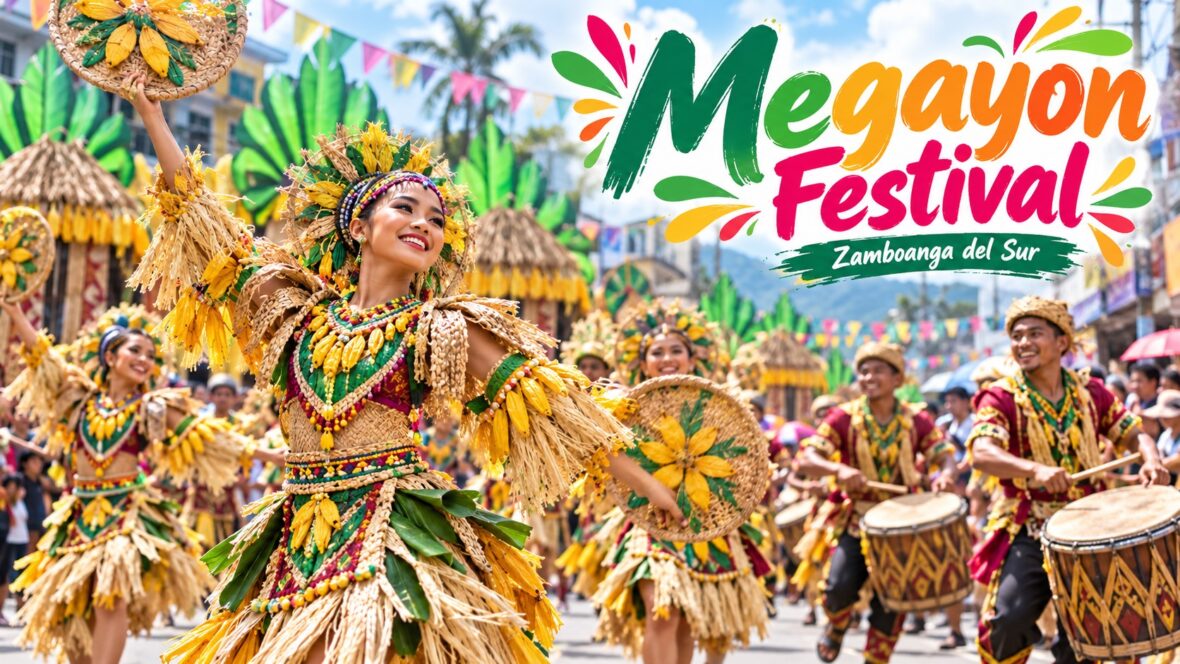
When people think of Philippine festivals, the first images that often come to mind are colorful costumes, pounding drums, street dancing and huge crowds lining the roads. Megayon Festival certainly has all the ingredients of a lively Mindanao celebration, but its message goes much deeper than spectacle.
Megayon Festival is the provincial festival of Zamboanga del Sur, a celebration built around one powerful idea: people from different cultures can share one home while keeping their own traditions alive.
The word “Megayon” comes from the Subanen language and is commonly translated as “unity,” “solidarity” or “togetherness.” That meaning is at the heart of the festival. Rather than celebrating only one town, one crop or one religious devotion, Megayon brings together the different communities that helped shape Zamboanga del Sur.
And that is what makes Megayon one of the more meaningful cultural festivals in the Philippines.
Content
What Is the Megayon Festival?
Megayon Festival is an annual cultural celebration held in Zamboanga del Sur, usually in September.
It showcases the traditions, dances, music, costumes, crafts, products and local festivals of communities throughout the province. The celebration is closely associated with Zamboanga del Sur’s founding anniversary and has traditionally served as a major gathering for the province’s different cultural groups.
But calling Megayon simply a “street dancing festival” doesn’t really capture what it represents.
The celebration revolves around the coming together of three broad cultural communities often described in tourism materials as the Subanen people, Moro or Muslim communities, and local settlers, many of whom are Christian. Through Megayon, their traditions are presented side by side as different parts of the larger identity of Zamboanga del Sur.
That idea of unity amid diversity is the festival’s defining theme.
What Does “Megayon” Mean?
“Megayon” is a Subanen term associated with unity or togetherness.
It’s a fitting name considering the history and population of the province.
Zamboanga del Sur is home to communities with different ethnic, linguistic and religious backgrounds. Instead of asking those differences to disappear, the festival celebrates them.
In Megayon, unity doesn’t mean everyone becoming the same. It means different communities recognizing one another, sharing a common province and celebrating their heritage together.
That’s a beautiful message, especially in a part of the Philippines where Indigenous, Muslim and Christian traditions have interacted for generations.
The Three Cultures at the Heart of Megayon
One of the easiest ways to understand Megayon Festival is through the three cultural traditions highlighted during the celebration.
The Subanen
The Subanen are among the Indigenous peoples of the Zamboanga Peninsula and have deep ancestral connections to the region.
Their traditional culture, music, dances, clothing, rituals, crafts and relationship with the land are important parts of Megayon’s cultural presentations.
The festival’s very name comes from the Subanen language, giving Indigenous heritage a central place in the celebration.
Visitors may encounter performances inspired by Subanen traditions, traditional clothing, indigenous musical instruments, handicrafts and representations of everyday community life.
These presentations are more than entertainment. At their best, they provide younger generations with an opportunity to encounter traditions that might otherwise become less visible over time.
Moro and Muslim Communities
Muslim communities are another important part of Zamboanga del Sur’s cultural story.
Festival presentations can highlight Moro-inspired dance, clothing, music, decorative arts and other cultural expressions.
Bright textiles, graceful movements, ornate costumes and rhythmic music often create some of the most visually striking moments of the festival.
The inclusion of Moro culture is especially important because Megayon isn’t intended to present Zamboanga del Sur as culturally uniform. Its identity grew from interaction among many communities.
Local Settlers
The third group traditionally highlighted in descriptions of Megayon is the province’s local settler population, associated largely with Christian communities whose families came from other parts of Mindanao and the Visayas.
They brought languages, religious practices, agricultural traditions, music, dances and customs that eventually became part of everyday life in Zamboanga del Sur.
Megayon places these traditions alongside those of the Subanen and Moro communities.
The result is essentially a cultural conversation performed through dance, music, food, costume and celebration.
History of the Megayon Festival
Zamboanga del Sur itself was created through Republic Act No. 711, approved on June 6, 1952, when the old Province of Zamboanga was divided into Zamboanga del Norte and Zamboanga del Sur. Pagadian was designated as the capital of Zamboanga del Sur.
The province was formally organized on September 17, 1952, which explains why September 17 has long been commemorated as its foundation anniversary. A presidential proclamation as early as 1953 recognized September 17 as the first anniversary of the province’s organization.
Megayon came much later.
Government tourism references generally date the beginning of the modern Megayon Festival to 2001. The Department of Tourism describes it as a September celebration created to highlight the solidarity of the province’s Subanen, Moro and local settler communities.
Some local historical accounts trace its cultural roots even further back to an artist-led gathering held around Mount Timolan in Tigbao in 1996, before Megayon developed into the larger provincial celebration known today. A local account also records its institutionalization as a provincial celebration in 2006.
So while Megayon is relatively young compared with centuries-old Philippine fiestas, it carries traditions that are much older than the festival itself.
What Happens During Megayon Festival?
The exact program can change from year to year, but several activities have become strongly associated with Megayon.
Street Dancing
Street dancing is naturally one of the most anticipated parts of the festival.
Groups representing different municipalities can fill the streets with elaborate costumes, choreographed routines and music inspired by local history, agriculture, Indigenous traditions and community life.
This is where Megayon becomes especially photogenic.
Expect movement, percussion, colorful fabrics, large props and performances that tell stories rather than simply showcase choreography.
Historical editions have included competitive street dancing among participating local government units.
Cultural Presentations
If you really want to understand Megayon, pay attention to the cultural presentations.
Performances can depict traditions associated with Subanen, Moro and settler communities through music, dances, rituals and storytelling.
A past Megayon competition, for example, included presentations specifically centered on Moro, Subanen and local-settler heritage.
These performances are important because they reveal what the festival is actually about.
The dancing isn’t just there because every Philippine festival needs street dancing. It becomes a way of telling the province’s story.
Float Parade
Another visually impressive feature seen in previous editions is the float parade.
Municipalities decorate floats using themes connected with agriculture, livelihood, local products, culture or natural attractions.
You may see displays incorporating corn, coconuts, woven materials, flowers and representations of local industries.
In the 2019 festival, for example, municipalities competed in a float parade alongside the street dancing and cultural presentations.
Traditional Costumes
Costume is a major part of Megayon.
Festival clothing can draw inspiration from Indigenous textiles, Muslim cultural traditions, rural life and the agricultural identity of Zamboanga del Sur.
Look closely and you’ll often notice that costumes are not simply chosen because they are colorful.
Patterns, accessories, materials and headdresses may represent particular communities or tell part of the story being performed.
For photographers, this is one of the festival’s highlights.
For culturally curious travelers, it’s worth going beyond taking photos and learning what the costume represents.
Music and Traditional Dance
Drums, gongs and other percussion instruments help create the unmistakable energy of Megayon.
Different communities have their own musical and dance traditions, and festival performances provide an opportunity for those traditions to be presented to wider audiences.
The Tourism Promotions Board describes Megayon as featuring traditional dances, music and other cultural expressions alongside trade exhibits.
Some numbers can be energetic and theatrical. Others may be slower and more ceremonial.
Together they demonstrate just how culturally varied one province can be.
Trade Fairs and Local Products
Megayon is also a showcase for what Zamboanga del Sur produces.
Trade and agricultural exhibits have long been part of the provincial celebration, allowing municipalities to promote their products, food, crafts and tourism destinations. The Tourism Promotions Board specifically describes the festival as a showcase for trade and travel products as well as the cultures and traditions of different municipalities.
This part of the festival is easy to overlook if you’re focused only on the street dancing, but don’t skip it.
It’s often one of the best places to discover products you won’t normally encounter in shopping malls.
Depending on the participating municipalities, visitors may find agricultural produce, processed foods, woven products, handicrafts and locally made souvenirs.
Agricultural and Harvest Connections
Megayon is primarily a festival of unity and provincial identity, but agriculture also plays an important role.
Zamboanga del Sur has a large agricultural economy, and harvest themes have appeared throughout the festival’s history.
This explains why crops, farm products and rural scenes frequently appear in floats, exhibits and performances.
In that sense, Megayon is partly a thanksgiving celebration too—a recognition of the land and livelihoods that sustain communities throughout the province.
Municipal Festivals in One Place
One of the more interesting things about Megayon is that it can function almost like a festival-of-festivals for Zamboanga del Sur.
Instead of visiting every municipality separately, festivalgoers may get glimpses of traditions and local celebrations from different parts of the province in one major provincial event.
The Tourism Promotions Board notes that Megayon highlights the culture, traditions, tourism products and even local festivals of participating municipalities.
For travelers who enjoy Philippine festivals, that’s a big reason to attend.
You aren’t experiencing only Pagadian City. You’re getting a wider introduction to Zamboanga del Sur.
Why Megayon Festival Is Different
There are hundreds of festivals across the Philippines.
Some honor patron saints. Others celebrate mangoes, flowers, seafood, historical battles, local industries or a successful harvest.
Megayon stands out because its central theme is coexistence.
At its core, it asks a simple question: How do communities with different histories, religions and cultural traditions celebrate belonging to the same place?
Megayon’s answer is to give those traditions space to be seen.
That’s why the festival is best understood not simply as a tourism event but as a statement about provincial identity.
Subanen heritage remains Subanen.
Moro traditions remain distinct.
Settler traditions retain their own character.
Yet together, they become part of the story of Zamboanga del Sur.
That is Megayon.
Megayon Festival and the Founding of Zamboanga del Sur
The festival has historically been closely connected with the province’s founding anniversary.
Although Republic Act No. 711 creating Zamboanga del Sur was approved on June 6, 1952, the province commemorates September 17 as the anniversary of its formal organization. Presidential proclamations over many decades have recognized that date as the province’s foundation anniversary.
For example, September 17, 2025 was officially declared a special non-working day in Zamboanga del Sur for its 73rd Founding Anniversary.
This connection explains why Megayon has traditionally taken place during September.
Where Is Megayon Festival Held?
The major provincial events are generally centered in or around Pagadian City, the capital of Zamboanga del Sur.
Recent Tourism Promotions Board listings identify the Provincial Capitol Complex in Dao, Pagadian City as the venue for Megayon Festival.
This makes Pagadian the most practical base for travelers who want to attend.
Individual events, exhibitions or related celebrations may be staged at different venues, though, so visitors should always check the official program once it is released.
Getting to Pagadian City
For travelers coming from outside the region, Pagadian is accessible by both air and land.
Pagadian Airport serves the city and is the most convenient gateway when suitable flights are available.
Travelers already in Mindanao can also reach Pagadian by bus or van from major cities and transport hubs around the region.
Because schedules and routes can change, it’s best to check transport options closer to your actual trip rather than relying on an old festival itinerary.
Once you’re in Pagadian, local transportation such as tricycles and other public transport can take you around the city.
When Is the Best Time to Visit?
September is the obvious choice if Megayon is your main reason for traveling to Zamboanga del Sur.
If possible, don’t arrive only for the final few hours of the biggest event.
Give yourself at least a couple of days.
Festival programs often contain smaller activities that offer a more relaxed way to experience local culture compared with the packed atmosphere of a major street-dancing competition.
Spend time at the trade fair.
Watch the cultural presentations.
Try local food.
Talk to exhibitors.
Then enjoy the big parade when it arrives.
You’ll understand much more about Megayon that way.
Tips for Watching Megayon Festival
Festival travel in the Philippines can be exciting but tiring, especially if you’re planning to photograph a parade or street dancing.
Arrive early for major events because good viewing spots can disappear quickly. Bring water, wear comfortable clothes, apply sunscreen and keep a small umbrella or raincoat with you—September weather in Mindanao can change quickly.
A power bank is also almost essential if you’ll be taking photos and videos all day.
Most importantly, remember that some performances are based on Indigenous or religious traditions. Treat them as cultural expressions rather than simply costumes for entertainment.
Ask before taking close-up photographs in situations that appear ceremonial or private.
What Else Can You Do in Zamboanga del Sur?
Megayon is a great reason to discover the province beyond the festival grounds.
The Department of Tourism describes Zamboanga del Sur as a destination of bays, rivers, lakes and rural landscapes. It also highlights places such as Paglinawan Organic Eco Farm in Dumingag, an accredited agri-tourism destination centered on sustainable and organic farming.
If you have additional days, consider turning your festival trip into a wider Zamboanga del Sur journey.
Pagadian can serve as your starting point, but the province extends far beyond the capital.
That’s another reason Megayon works so well as an introduction: many participating municipalities use the festival to showcase places, products and traditions travelers may want to explore afterward.
Is Megayon Festival Worth Visiting?
Absolutely—especially if you prefer festivals with a strong cultural story behind them.
Megayon isn’t necessarily as internationally famous as Sinulog, Ati-Atihan or MassKara, and that can actually be part of its appeal.
It feels deeply connected to Zamboanga del Sur.
You’re not simply watching performers dance through the streets. You’re watching communities present who they are.
You’ll see Indigenous heritage.
You’ll encounter Moro cultural influences.
You’ll see traditions brought by generations of settlers.
You’ll discover agricultural products and local crafts.
And throughout everything runs the festival’s central message: unity.
Megayon Festival 2026 Schedule
While this guide is intended to remain useful beyond any particular year, travelers planning to attend in 2026 should take note of the current published dates.
The Tourism Promotions Board’s Philippine festival calendar lists Megayon Festival on September 27–30 at the Provincial Capitol Complex in Dao, Pagadian City.
A 2026 event listing also currently gives September 27–30, 2026 for the celebration at the same venue.
However, detailed programs—such as the exact dates and times for street dancing, cultural competitions, concerts, trade fairs and other activities—can still be announced or adjusted separately.
If you’re specifically traveling for Megayon, check the Zamboanga del Sur provincial government’s latest announcements before booking around one particular event.

Final Thoughts
Megayon Festival may be filled with the colors, music and energy you’d expect from a great Philippine festival, but what stays with you is the meaning behind its name.
Unity.
Zamboanga del Sur is a province shaped by different peoples, traditions and histories. Megayon doesn’t attempt to hide those differences. It places them proudly onstage.
Through Subanen traditions, Moro culture, settler heritage, street dancing, music, crafts, agricultural products and community celebrations, the festival tells visitors that diversity can itself become part of a shared identity.
And perhaps that’s the best way to experience Megayon.
Come for the dancing and colorful costumes.
Stay for the food, crafts and festivities.
But leave understanding that Megayon Festival is ultimately about something much bigger—a province coming together to celebrate its many cultures as one Zamboanga del Sur.


