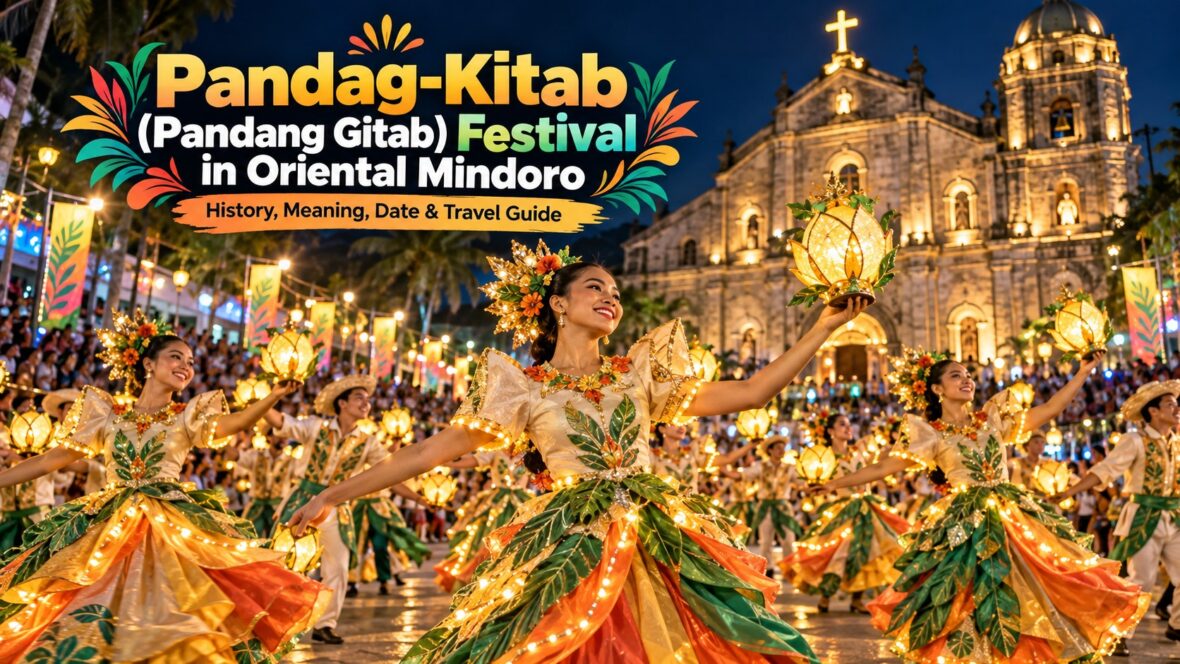
When we think about festivals in the Philippines, we often imagine colorful street dancing, lively drumbeats, elaborate costumes, and thousands of people celebrating together. But in Oriental Mindoro, there’s a festival that brings something quite different to the streets—graceful traditional dancing illuminated by flickering lights.
Welcome to the Pandag-Kitab Festival, more commonly known today as the Pandang Gitab Festival, Oriental Mindoro’s very own Festival of Lights.
This cultural celebration brings together the province’s rich heritage, traditional Filipino dances, and the fascinating symbolism of light. Inspired by the famous Pandanggo sa Ilaw, the festival transforms an ordinary evening into a beautiful showcase of glowing costumes, synchronized movements, and Mindoreño pride.
What makes Pandang Gitab particularly interesting is how it connects a traditional dance associated with the lives of fishing communities to a modern provincial celebration.
And while Oriental Mindoro is widely known for the beaches of Puerto Galera and its beautiful natural attractions, Pandang Gitab offers visitors another reason to discover the province—its people, history, and living traditions.
If you’re curious about the Pandag-Kitab Festival, here’s everything you need to know about its origins, meaning, history, activities, and how to experience this unique celebration.
Content
What Is the Pandag-Kitab Festival?
The Pandag-Kitab Festival, officially known as Pandang Gitab Oriental Mindoro: The Festival of Lights, is an annual cultural and thanksgiving festival celebrated in the province of Oriental Mindoro in the Philippines.
It is recognized as the official provincial festival of Oriental Mindoro.
The celebration takes inspiration from Pandanggo sa Ilaw, one of the Philippines’ well-known traditional folk dances, which involves balancing lamps or glasses containing lights while performing graceful dance movements.
During Pandang Gitab, this traditional dance becomes the foundation for a much larger cultural presentation featuring illuminated costumes, street dancing competitions, music, and creative performances.
The festival is also a celebration of thanksgiving, recognizing the province’s cultural heritage, natural environment, traditions, and the unity of its people.
Unlike festivals organized primarily around a particular town’s patron saint, Pandang Gitab represents Oriental Mindoro as a province.
Its celebration brings together participants from different municipalities, providing an opportunity for local communities to showcase their creativity and cultural identity.
Pandag-Kitab Festival Quick Facts
- Official name: Pandang Gitab Oriental Mindoro – The Festival of Lights
- Other name: Pandag-Kitab Festival
- Location: Oriental Mindoro, Philippines
- Traditional host city: Calapan City
- Usual celebration date: April 30
- Festival type: Cultural, thanksgiving, and street dancing festival
- Main inspiration: Pandanggo sa Ilaw
- First introduced: 2001
- Official provincial festival designation: 2012
- Major highlights: Illuminated street dancing, cultural performances, traditional music, and creative costume presentations
Although Calapan City has traditionally hosted the festival, the exact venue can change depending on the arrangements made by the provincial government.
Meaning of Pandag-Kitab: Why Is It Called the Festival of Lights?
One of the most interesting things about this celebration is the origin of its name.
The term Pandang Gitab comes from two words: Pandanggo and Dagitab.
Pandanggo refers to a traditional Filipino dance influenced by the Spanish fandango. One of its most recognizable variations is Pandanggo sa Ilaw, where dancers balance lights while moving gracefully.
Dagitab, meanwhile, refers to light or a spark and is associated in the festival’s traditional explanation with small lamps and flickering flames.
Combining these two ideas resulted in the name Pandang Gitab, which reflects the festival’s two defining elements: dancing and light.
The word Pandag-Kitab also appears in older tourism references, but Pandang Gitab is the name generally used in official provincial announcements and current tourism materials.
The festival is popularly called the Festival of Lights because illumination plays an important role in the performances.
But these lights are more than decorations.
They represent the old traditions of Mindoro’s coastal communities, particularly the use of lamps by families of fishermen.
Over time, they have also become symbols of hope, thanksgiving, togetherness, and the cultural identity of Oriental Mindoro.
History and Origin of the Pandag-Kitab Festival
To understand the origins of Pandang Gitab, we need to look at the history of Pandanggo sa Ilaw.
The Connection to Pandanggo sa Ilaw
Pandanggo sa Ilaw is among the best-known traditional folk dances in the Philippines.
The dance belongs to the broader family of pandanggo dances, which developed through Filipino adaptations of the Spanish fandango.
The version associated with Mindoro has traditionally been traced to Lubang Island, which is now part of Occidental Mindoro.
In this dance, performers carefully balance oil lamps or candles enclosed in glasses on their heads and hands.
What makes the performance especially impressive is the coordination required to maintain balance while completing the dance movements.
Dancers sway from side to side, move their arms gracefully, and follow the rhythm of the music without allowing the lights to fall.
These movements reflect both artistic expression and physical skill.
The traditional Mindoro version also has a connection to the lives of fishermen and their families.
The Story of Mindoro’s Fishing Communities
According to the traditional explanation associated with Pandanggo sa Ilaw, families in Mindoro’s coastal communities used lamps when accompanying or guiding fishermen who were heading out to sea.
Before modern lighting became widely available, these lamps helped illuminate dark surroundings, especially during the early morning hours.
The lights also became associated with hopes for a safe voyage and a successful catch.
This practice is believed to have helped inspire the imagery behind the dance.
Imagine a coastal community before sunrise.
Fishing boats are preparing to leave, families gather near the shore, and small oil lamps illuminate the darkness.
The flames provide guidance while also expressing the hopes of those waiting for their loved ones to return safely.
This is the cultural imagery preserved through Pandanggo sa Ilaw.
And many years later, it became the inspiration for an entire provincial festival.
The Beginning of Pandang Gitab in 2001
Pandang Gitab was introduced in 2001 as part of the celebration of Oriental Mindoro’s 51st founding anniversary.
What began as a cultural street dancing activity eventually developed into one of the province’s most recognizable celebrations.
The festival adapted the basic movements and symbolism of Pandanggo sa Ilaw while incorporating larger performances suitable for public streets.
Instead of only a few dancers performing a traditional folk dance, groups could present coordinated routines featuring costumes, creative props, and illuminated decorations.
The goal was to preserve the identity of the original dance while presenting it in a way that could be appreciated by larger audiences.
Calapan City, the provincial capital, became the traditional setting for these performances.
Its main streets provided a venue where participants could showcase their dancing skills and where residents could gather to watch the celebration.
As the festival grew, it became an important part of Oriental Mindoro’s cultural calendar.
Becoming the Official Festival of Oriental Mindoro
An important milestone came in 2012 when Pandang Gitab was formally recognized as the official festival of Oriental Mindoro through Provincial Ordinance No. 25-2012.
The designation gave the celebration a broader role in representing the province’s heritage and tourism identity.
Rather than simply being a cultural presentation in Calapan, it became a festival representing the entire province.
This recognition also strengthened its importance as a platform for cultural preservation.
The festival highlights not only traditional dancing but also the creative abilities of local performers, choreographers, costume designers, and participating communities.
Today, Pandang Gitab continues to represent an important part of Oriental Mindoro’s cultural heritage.
When Is the Pandag-Kitab Festival Celebrated?
The Pandang Gitab Festival is generally celebrated every April 30.
However, the celebration has not always followed this date.
During its earlier years, the festival was held at different times of the year.
Older tourism references mention celebrations in November, while previous provincial publications also identified the third Saturday of February as the festival date.
The celebration later moved to the summer season, and April 30 became its established date in more recent festival calendars.
This explains why travelers researching the festival may encounter conflicting dates online.
For current travel planning, April 30 is the date listed by Oriental Mindoro’s tourism portal.
Nevertheless, visitors should always verify the official program before making arrangements, particularly because the location, street dancing route, and accompanying activities may change.
Where Is the Pandag-Kitab Festival Held?
Pandang Gitab is a provincial festival associated historically with Calapan City, the capital of Oriental Mindoro.
Calapan has served as the traditional center of the celebration, with performances taking place along major streets and at designated festival venues.
The Provincial Capitol Grounds has also been identified in tourism materials as a festival venue.
However, the festival is not necessarily limited to Calapan every year.
Provincial organizers may select another municipality to host the main celebration, allowing different communities to participate more directly in this important cultural event.
For example, the 2026 festival was held in Pinamalayan, Oriental Mindoro.
This is an important detail if you’re planning to attend in the future.
Instead of automatically booking accommodation in Calapan, check the announced host municipality first.
Since Oriental Mindoro covers a large area, staying near the actual festival venue can make your visit much more convenient.
What Happens During the Pandag-Kitab Festival?
The highlight of Pandang Gitab is undoubtedly its illuminated street dancing competition.
However, the festival is also a broader celebration of local culture, creativity, and community participation.
Here are some of the experiences associated with the event.
1. Pandang Gitab Street Dancing Competition
The street dancing competition is the main attraction of the festival.
Groups of dancers perform coordinated routines inspired by the movements of Pandanggo sa Ilaw.
Unlike many Philippine festivals that emphasize energetic drumbeats and fast-paced choreography, the traditional foundation of Pandang Gitab features graceful swaying movements, balance, and carefully coordinated arm gestures.
The performances have also evolved to include contemporary choreography and elaborate visual presentations.
One of the most captivating parts of the street dancing competition is the use of light.
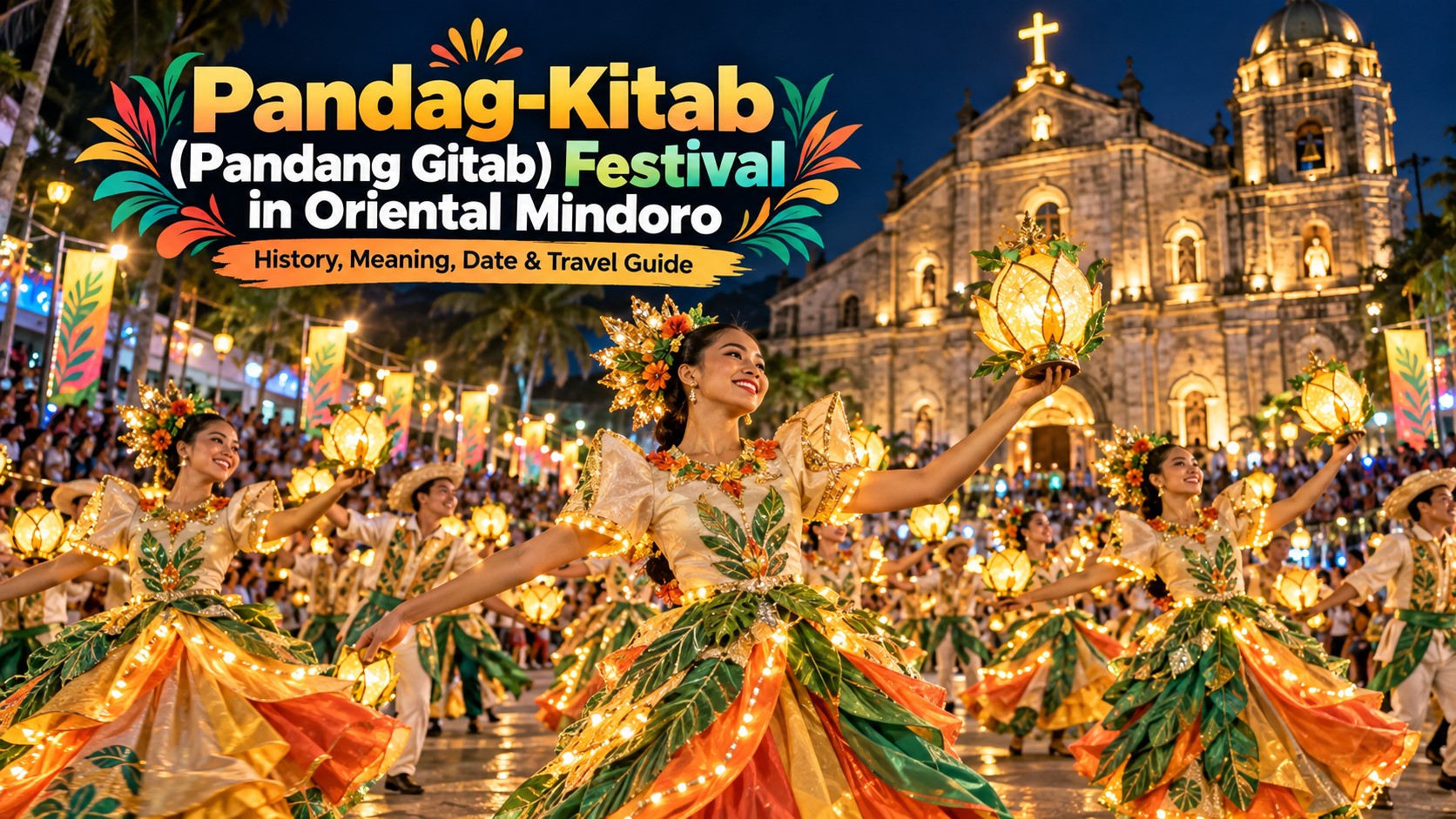
Dancers may carry illuminated props, wear lighted costumes, or incorporate decorative lighting into their performances.
The combination creates a beautiful spectacle, particularly when the dancers perform after dark.
From a distance, the illuminated groups appear to move through the streets as glowing formations.
But beyond the visual effects, the dance remains connected to the traditional movements that inspired the festival.
2. Traditional Pandanggo sa Ilaw Performances
The festival also provides an opportunity to appreciate the dance that inspired its creation.
Pandanggo sa Ilaw is traditionally performed with carefully balanced lamps.
A dancer may balance one light on the head and additional lights on the hands while moving rhythmically.
The choreography requires concentration, grace, and coordination.
Even small movements must be carefully controlled to prevent the lamps from falling.
For those who have only seen Pandanggo sa Ilaw performed during school programs or cultural presentations, watching its influence on a larger festival can offer a different perspective.
It shows how a traditional dance can evolve into a province-wide cultural celebration without losing its historical connection.
3. Colorful and Illuminated Costumes
Another major attraction of Pandang Gitab is the creativity behind its costumes.
Traditional versions of the dance feature Filipino clothing inspired by garments such as the baro’t saya.
Modern festival presentations, meanwhile, may feature elaborate costumes decorated with lights, reflective materials, and colorful accessories.
The costumes can be designed around themes representing Oriental Mindoro’s environment, cultural heritage, and local communities.
For example, some festival presentations have incorporated designs inspired by natural scenery and wildlife.
The use of lighting adds another dimension to these costumes.
Decorations that appear colorful during daylight can look completely different once illuminated in the evening.
This is one reason the festival is particularly attractive to photographers and visitors who enjoy cultural performances.
4. Cultural Presentations and Traditional Music
Music is an essential part of Pandang Gitab.
The festival is rooted in traditional Filipino dance music, particularly the melodies associated with Pandanggo sa Ilaw.
Unlike celebrations that rely primarily on powerful percussion, the traditional dance emphasizes rhythmic yet graceful musical accompaniment.
The music helps dancers maintain the swaying and balancing movements characteristic of pandanggo.
Festival presentations may incorporate specially arranged compositions and other musical elements depending on the choreography.
The combination of music, movement, and light gives Pandang Gitab its distinctive identity.
5. Participation of Oriental Mindoro’s Municipalities
Because Pandang Gitab is the official provincial festival, participating groups can represent different municipalities and communities across Oriental Mindoro.
This gives the celebration a broader cultural dimension.
Each delegation can bring its own interpretation of the festival’s theme through choreography, costumes, music, and production design.
Participation also encourages cooperation among dancers, choreographers, costume makers, local officials, and volunteers.
For spectators, the competition offers an opportunity to see the different creative approaches of participating communities.
Although the delegations share the same cultural foundation, their performances can vary significantly in style and visual presentation.
6. Other Festival Activities
Depending on the annual program, Pandang Gitab celebrations may include additional cultural and community activities.
Past festival programs have featured activities such as cultural presentations, pageants, tourism-related events, and other public celebrations.
Some editions have also included events that highlight local heritage and religious traditions.
The exact lineup is not identical every year, so it’s worth checking the official festival schedule before your visit.
If you’re traveling specifically to experience the festival, prioritize the main street dancing competition and the associated cultural performances.
These provide the clearest introduction to what Pandang Gitab represents.
Why Is Pandang Gitab Different From Other Philippine Festivals?
The Philippines has many spectacular festivals, from Sinulog in Cebu and Ati-Atihan in Aklan to MassKara in Bacolod.
Each celebration has its own history, cultural background, and signature performances.
What distinguishes Pandang Gitab is its focus on traditional dancing and the symbolism of light.
While some festivals are famous for their energetic choreography, giant costumes, or elaborate floats, Pandang Gitab places particular importance on graceful movement and illuminated presentations.
The festival also has an interesting connection to everyday life in coastal communities.
Its inspiration comes from a dance associated with fishermen and the families who used lamps to guide them through the darkness.
That connection makes the celebration more than a colorful street performance.
It represents a traditional way of life that remains part of Mindoro’s cultural history.
Another distinctive feature is the festival’s nighttime presentation.
The lights become much more visible after sunset, allowing the costumes and props to create visual effects that would be less noticeable during daytime performances.
It’s this combination of history, movement, and illumination that gives Pandang Gitab its special character.
Cultural Significance of the Pandag-Kitab Festival
Pandang Gitab plays an important role in preserving and promoting Oriental Mindoro’s cultural identity.
Its significance can be understood through several aspects of the celebration.
Preserving Traditional Filipino Dance
At the heart of the festival is Pandanggo sa Ilaw.
By adapting this traditional dance into a public celebration, Pandang Gitab helps introduce younger generations and visitors to an important part of Philippine folk culture.
Traditional dances are more than performances.
They preserve stories about the communities where they developed, including their customs, livelihoods, and social traditions.
Through Pandang Gitab, the movements and imagery associated with Pandanggo sa Ilaw remain visible to contemporary audiences.
Recognizing the Province’s Coastal Heritage
Oriental Mindoro has numerous coastal communities where fishing continues to be an important livelihood.
The festival’s connection to the use of lamps by fishing families reflects this longstanding relationship between local communities and the sea.
The lights represent a part of the province’s history that existed long before the modern festival was introduced.
By incorporating this imagery into the celebration, Pandang Gitab recognizes the traditions of the communities that helped shape Mindoro’s cultural identity.
Celebrating Thanksgiving and Hope
Pandang Gitab is also a thanksgiving festival.
Provincial descriptions associate the celebration with gratitude for the province’s blessings, natural environment, cultural heritage, and the qualities of its people.
Light is especially meaningful in this context.
A small lamp can provide guidance in darkness.
In the festival, this familiar image becomes a symbol of hope, unity, and the desire for a brighter future.
This symbolism gives the celebration a deeper meaning beyond its colorful presentation.
Bringing Communities Together
As a provincial festival, Pandang Gitab provides an opportunity for communities across Oriental Mindoro to participate in a shared cultural event.
Preparing for a street dancing competition involves considerable cooperation.
Dancers must rehearse, costumes must be prepared, choreography must be developed, and local delegations must coordinate their performances.
The resulting presentation reflects the efforts of many people working together.
For Oriental Mindoreños, the festival serves as an expression of provincial identity and community pride.
How to Get to the Pandag-Kitab Festival in Oriental Mindoro
If you’re planning to attend Pandang Gitab, the first thing to determine is the official venue for that year’s celebration.
Calapan City is traditionally associated with the festival and serves as the main gateway to Oriental Mindoro.
However, celebrations may also be hosted in other municipalities.
From Manila to Oriental Mindoro
For travelers coming from Metro Manila, one of the most common routes is through Batangas Port.
First, travel from Manila to Batangas City by bus or private vehicle.
Bus services bound for Batangas Port are available from transport terminals in Metro Manila.
From Batangas Port, board a ferry bound for Calapan Port in Oriental Mindoro.
The sea crossing generally takes approximately one to three hours, depending on the type of vessel and operating conditions.
Roll-on/roll-off ferries commonly take around two to three hours, while faster vessels may complete the crossing in less time.
Once you arrive in Calapan, you can continue to your accommodation or the announced festival venue using local transportation.
If the festival is hosted outside Calapan, you may need an additional land journey by bus, van, or another available local transport service.
Traveling From Batangas
For visitors already in Batangas, the journey is relatively straightforward.
Travel to Batangas Port and take a ferry to Calapan.
Make sure to check the ferry operator’s latest departure schedule, ticket availability, and passenger requirements.
During holidays and major travel periods, passenger demand may increase.
Getting Around Oriental Mindoro
Transportation options within the province include buses, vans, jeepneys, and tricycles, depending on the route and destination.
For festival visitors, the most convenient arrangement is usually to stay near the official venue.
This is particularly helpful because the main performances may continue into the evening.
Streets surrounding the celebration may also be affected by road closures and traffic adjustments.
Tips for Attending the Pandag-Kitab Festival
If you’re visiting Oriental Mindoro specifically for Pandang Gitab, a little preparation can make the experience much more enjoyable.
Check the Official Schedule
Although April 30 is the established festival date, the exact venue and program should always be confirmed.
Look for announcements from the Provincial Government of Oriental Mindoro and its Provincial Tourism Office.
These announcements usually provide the most relevant information about the host municipality, street dancing route, and event schedule.
Arrive Before the Main Performances
Street dancing competitions can attract large crowds.
If you want a good viewing position, arrive before the performances begin.
This also gives you time to familiarize yourself with the route and identify suitable areas for watching the dancers.
Stay Near the Festival Venue
If you’re attending an evening celebration, consider booking accommodation close to the host town’s main event area.
This can reduce the need to travel long distances after the performances.
It’s also worth making reservations early once the host municipality is announced.
Bring Essentials
Since the festival takes place during the warmer months, comfortable clothing and proper hydration are important.
Bring drinking water, a small bag, a power bank, and any personal essentials.
If you’re planning to take photos, make sure your phone or camera is fully charged.
Respect the Performers
The dancers often wear elaborate costumes and carry delicate props.
Avoid crossing the performance route or stepping too close to moving groups.
Keep the designated pathways clear and follow the instructions of event organizers.
This helps ensure that both performers and spectators can enjoy the celebration safely.
Prepare for Nighttime Photography
Pandang Gitab is particularly interesting to photograph because of its illuminated performances.
However, taking pictures at night can be challenging.
Try to find a location with a clear view of the dancers and sufficient ambient lighting.
If you’re using a camera, adjust your settings for moving subjects in low-light conditions.
Avoid using strong flash directly at performers, especially when they are balancing lights or executing coordinated movements.
Why Visit Oriental Mindoro During Pandang Gitab?
Oriental Mindoro is one of those Philippine destinations where you can enjoy both natural attractions and cultural experiences.
Many travelers immediately associate the province with Puerto Galera, a well-known destination for beaches, snorkeling, and diving.
But there is more to Oriental Mindoro than its coastal attractions.
The province also has agricultural communities, historic towns, mountain landscapes, and traditional cultural practices.
Pandang Gitab provides an opportunity to experience this side of Mindoro.
Instead of spending your entire visit at the beach, you can witness a celebration that brings together performers and communities from across the province.
You can also learn about the history of Pandanggo sa Ilaw, observe traditional dance movements, and see how they have been adapted into a modern cultural event.
For travelers who enjoy Philippine festivals, Pandang Gitab offers a distinctive experience because of its combination of dancing, lights, and provincial heritage.
And for those interested in exploring more of Oriental Mindoro, the festival can be part of a longer trip around the province.
Frequently Asked Questions About the Pandag-Kitab Festival
What is the Pandag-Kitab Festival?
The Pandag-Kitab Festival, officially called Pandang Gitab Oriental Mindoro, is the province’s Festival of Lights. It is a cultural and thanksgiving celebration featuring illuminated street dancing performances inspired by the traditional Pandanggo sa Ilaw.
Where is the Pandag-Kitab Festival celebrated?
The festival is celebrated in Oriental Mindoro, Philippines. It has historically been associated with Calapan City, but other municipalities may host the celebration depending on the annual arrangements.
When is the Pandang Gitab Festival held?
The festival is currently associated with April 30. However, it was held on different dates during earlier years, so visitors should verify the official schedule.
What is the meaning of Pandang Gitab?
Pandang Gitab combines the words Pandanggo, referring to a traditional dance, and Dagitab, referring to a spark or light. The name represents the festival’s connection to the Dance of Lights.
Why is it called the Festival of Lights?
It is called the Festival of Lights because the celebration features illuminated performances inspired by Pandanggo sa Ilaw, where dancers traditionally balance lamps or lights while dancing.
What is the origin of the Pandang Gitab Festival?
The festival was introduced in 2001 during Oriental Mindoro’s 51st founding anniversary celebration. Its cultural inspiration comes from Pandanggo sa Ilaw, a traditional dance associated with Mindoro and believed to have roots in Lubang Island.
Is Pandag-Kitab the same as Pandang Gitab?
Yes. Pandag-Kitab appears in older references to the festival, while Pandang Gitab or Pandang-Gitab is the name used more commonly in official tourism and provincial government materials today.
Is Pandang Gitab a religious festival?
Pandang Gitab is primarily a cultural and thanksgiving festival rather than a celebration dedicated to a single patron saint. However, some editions may include activities reflecting the religious traditions of local communities.
What is the main highlight of the festival?
The main highlight is the street dancing competition featuring performers wearing illuminated costumes and presenting choreography inspired by Pandanggo sa Ilaw.
Is the Pandang Gitab Festival worth visiting?
For travelers interested in Philippine culture, traditional dances, and local festivals, Pandang Gitab offers an opportunity to experience one of Oriental Mindoro’s most recognizable celebrations.
Its illuminated nighttime performances are particularly distinctive compared with many other Philippine street dancing festivals.
Pandang Gitab Festival 2026: Schedule and Highlights
For reference, the 2026 edition of Pandang Gitab Oriental Mindoro was celebrated on April 30, 2026, in the municipality of Pinamalayan.
The main street dancing competition was scheduled to begin at 6:00 PM.
The announced route started at Recodo Port and passed through designated performance areas near Immaculate Heart of Mary Academy, Jaena Street, and Quezon Street before concluding at Juan Morente Sr. Memorial Pilot School.
The celebration featured 10 competing delegations, with costumes inspired by the flora and fauna of Mount Halcon.
Silay Bahagsubay Dance Company from Pinamalayan emerged as the grand champion, while Tribu Rayaw from Gloria placed second and Arcus Luminis from Pinamalayan finished third.
These details reflect the 2026 edition and should not be assumed to apply to future celebrations.
For succeeding editions, travelers should refer to official provincial announcements for confirmed venues, routes, and schedules.
Final Thoughts
The Pandag-Kitab or Pandang Gitab Festival is a beautiful example of how a traditional Filipino dance can become the foundation of a larger cultural celebration.
What began as an expression of Mindoro’s traditions has grown into the official festival of Oriental Mindoro, bringing together dancing, illuminated costumes, music, and community participation.
But perhaps the most meaningful part of the celebration is the story behind the lights.
Long before colorful festival costumes and modern illuminated props became part of Pandang Gitab, small lamps were associated with families guiding fishermen through the darkness.
That simple image continues to inspire a celebration centered on hope, gratitude, and cultural identity.
And that’s what makes Pandang Gitab special.
Beyond the glowing lights and beautiful performances, it reminds us that some of the Philippines’ most fascinating festivals have their roots in the everyday lives and traditions of local communities.
So if you’re planning a trip to Oriental Mindoro and want to experience something beyond its beaches and natural attractions, consider timing your visit with the Pandang Gitab Festival.
It’s a wonderful opportunity to discover the culture, creativity, and traditions that make Oriental Mindoro such an interesting part of the Philippines.