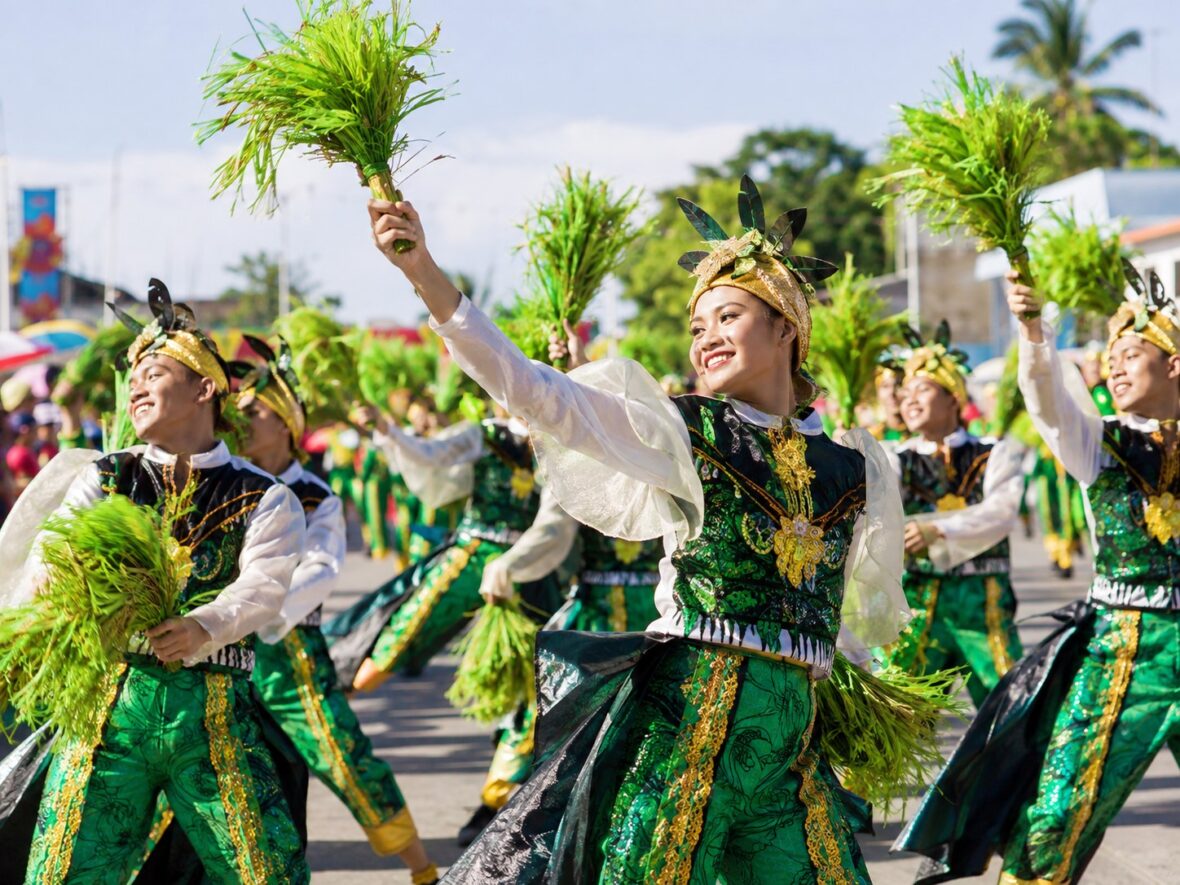
If you’ve ever searched for festivals happening in the Philippines every September, chances are you’ve encountered the Sarakiki Festival of Calbayog City, Samar.
Older tourism calendars describe it as a colorful celebration where performers dress and move like roosters while dancing to traditional Samareño rhythms. The Tourism Promotions Board still lists Sarakiki Festival from September 1 to 8 in Calbayog City, describing street dancers dressed as cocks and performing to ancient Samareño instruments.
But there’s an important update.
If you’re planning to visit Calbayog today—especially for 2026—you’ll want to search for another name:
Hadang Festival.
In September 2025, Calbayog formally declared Hadang Festival as its official city festival, ending the previous use of the combined Sarakiki-Hadang name. The change was made through City Ordinance No. 2025-27-658, which institutionalized Hadang as an annual celebration.
So does that mean Sarakiki Festival disappeared?
Not exactly.
Sarakiki remains an important part of Calbayog’s festival history, and the rooster-inspired dance movements that made it famous help explain how the city’s modern festival identity developed.
But today, the city is emphasizing something older and deeper: Hadang, a ritual tradition rooted in pre-colonial Samareño culture.
And that’s what makes the story of Sarakiki particularly interesting.
It’s not just a festival guide.
It’s also a story about how a city looked at its cultural identity and decided to go back to its roots.
Content
Sarakiki Festival Quick Facts
| Details | Information |
|---|---|
| Traditional festival name | Sarakiki Festival / Sarakiki-Hadang Festival |
| Current official festival | Hadang Festival |
| Location | Calbayog City, Samar |
| Region | Eastern Visayas |
| Traditional dates | September 1–8 |
| City fiesta | September 8 |
| Patroness | Nativity of the Blessed Virgin Mary |
| Sarakiki known for | Rooster-inspired street dancing |
| Hadang known for | Ritual dances and cultural storytelling |
| Official name change | September 2025 |
| Best period to visit | First week of September, subject to the current year’s official schedule |
The September 1–8 dates remain in the Tourism Promotions Board’s Sarakiki listing, while September 8 is Calbayog’s annual religious feast in honor of the Nativity of the Blessed Virgin Mary.
Where Is Sarakiki Festival Celebrated?
Sarakiki Festival originated in Calbayog City in the province of Samar.
Calbayog is one of the major cities of Eastern Visayas and serves as an important commercial and cultural center on Samar Island. The city government describes Calbayog as a first-class component city and the largest city in Eastern Visayas in terms of land area.
But during the first week of September, the city’s identity becomes strongly connected with fiesta.
For generations, Calbayognons have celebrated the September 8 feast of the Nativity of the Blessed Virgin Mary, the patroness of the city. The city government describes this annual religious celebration as one that continues to unite generations of Calbayognons.
Sarakiki—and now Hadang—developed as the cultural side of that fiesta season.
What Is the Sarakiki Festival?
The Sarakiki Festival became known for energetic street-dancing performances inspired by the movements of roosters.
The Tourism Promotions Board gives a wonderfully simple description: dancers dressed as cocks sway to the beat of ancient Samareño instruments.
And once you’ve seen photos of the festival, that description makes sense.
You’ll notice feathers.
Bright colors.
Large headpieces.
Powerful poses.
Dancers bending, strutting and confronting one another in ways that resemble roosters displaying dominance or engaging in courtship.
It’s colorful.
It’s theatrical.
And it’s definitely memorable.
A lot of Philippine festivals feature flowers, saints or agricultural products.
Not many can say:
Our dancers move like roosters.
That alone makes Sarakiki stand out.
What Does “Sarakiki” Mean?
The term Sarakiki became associated with movements that imitate the behavior of a rooster, particularly its strutting, courting and challenging gestures.
Festival dancers translate these movements into choreography.
You’ll see performers:
Strut.
Turn.
Lower their bodies.
Raise their arms like wings.
Challenge other dancers.
Move rapidly as though two roosters are confronting each other.
The old festival’s visual identity was so strongly connected with these movements that rooster imagery became almost inseparable from the name Sarakiki.
That’s what made the festival easy to recognize.
You didn’t necessarily need to see a sign saying “Calbayog.”
Once the dancers started moving like roosters, you knew which festival you were watching.
Why Roosters?
This is where the festival becomes more than simply a fun animal dance.
Traditional societies often observe animals closely.
Their movements become part of stories, rituals, dances and beliefs.
In the case of Calbayog, bird and animal movements are also connected with Hadang, the older ritual tradition now being emphasized as the city’s official cultural festival.
The Philippine Information Agency describes Hadang as an ancient ritual dance offering in which communities sought blessings including a good harvest, healing or protection.
So the animal-inspired movements associated with Sarakiki make more sense when viewed within this wider cultural tradition.
The rooster wasn’t simply chosen because it looked entertaining.
It became part of a much larger tradition of expressing beliefs through movement.
What Is Hadang?
To understand Sarakiki today, you really need to understand Hadang.
Hadang refers to an old ritual tradition associated with offerings to spirits and requests for blessings.
According to the Philippine Information Agency, Hadang is an ancient ritual dance offering performed for purposes such as:
- A good harvest
- Healing
- Protection
- Safety
- Blessings for the community
A 2025 report on Calbayog’s festival ordinance similarly describes Hadang as having roots in pre-colonial Samareño ritual offerings connected with harvests, protection from disasters and safe journeys.
That’s a much broader cultural story than simply imitating roosters.
And this distinction eventually became important enough for Calbayog to reconsider the festival’s official identity.
From Sarakiki to Sarakiki-Hadang
For many years, people encountered the festival under two names.
Sometimes it was simply:
Sarakiki Festival
Later, it became commonly known as:
Sarakiki-Hadang Festival
The combined name attempted to bring together the colorful rooster-inspired performance with the older Hadang ritual tradition.
You can still find Sarakiki-Hadang throughout older tourism materials, photographs, travel blogs and festival calendars.
Even Calbayog’s own development documents refer to the Sarakiki-Hadang Festival as part of the city’s annual fiesta traditions.
But the combined name eventually became the subject of discussion within the community.
The big question was essentially:
Which tradition best represents Calbayog’s real cultural roots?
In 2025, the city finally made an official decision.
Calbayog Officially Changed the Festival to Hadang
This is the most important update for anyone researching Sarakiki Festival 2026.
On September 1, 2025, Calbayog Mayor Raymund Uy approved Ordinance No. 2025-27-658, formally declaring the Hadang Festival as the official festival of Calbayog City. The measure had been passed by the city council several days earlier.
The ordinance ended the formal use of Sarakiki-Hadang as the city’s official festival branding.
City officials explained that the goal was to strengthen the festival’s cultural authenticity and ensure that future celebrations remained connected with Calbayog’s historical traditions.
In other words:
Calbayog didn’t simply rename the festival because it wanted a newer logo.
The city wanted the celebration to reflect what it considered its deeper cultural roots.
So Is Sarakiki Festival Still Celebrated in 2026?
Here’s the clearest way to put it:
Sarakiki remains an important historical name, but Hadang Festival is now Calbayog City’s officially recognized festival.
The Tourism Promotions Board still has an older listing under Sarakiki Festival, showing September 1–8.
However, Calbayog’s 2025 ordinance gives official status specifically to Hadang Festival.
So if you’re searching for current announcements for 2026, use:
Hadang Festival 2026 Calbayog
rather than relying only on:
Sarakiki Festival 2026
You may still encounter Sarakiki terminology in older tourism pages, photographs and informal references.
But Hadang is now the official identity.
When Is Sarakiki / Hadang Festival Celebrated?
Traditionally, the festival season is associated with the first week of September.
The Tourism Promotions Board lists Sarakiki Festival from:
September 1–8
That period leads directly toward Calbayog’s patronal feast on:
September 8 – Nativity of the Blessed Virgin Mary
Calbayog’s cathedral parish is dedicated to the Nativity of the Blessed Virgin Mary, whose feast is celebrated annually on September 8.
That means early September is not simply cultural festival season.
It’s also fiesta season.
Expect the atmosphere to combine:
Religious devotion.
Family gatherings.
Street activities.
Cultural performances.
Concerts.
Competitions.
Community celebrations.
And plenty of food.
Exactly what you would expect from a major Philippine city fiesta.
Hadang Festival 2026 Schedule
For travelers searching for an exact Hadang Festival 2026 schedule, there is an important point to keep in mind.
The traditional festival window remains associated with the first week of September and the September 8 city fiesta.
However, a complete official 2026 day-by-day Hadang program was not clearly available in the sources I could verify as of August 13, 2026.
That’s especially important this year because 2026 is the first full festival season after Hadang was formally established as Calbayog’s official festival in September 2025.
So don’t assume every 2025 activity will happen on exactly the same date in 2026.
Watch for announcements from:
Calbayog City Government
and
Calbayog City Arts and Culture Office
as September approaches.
If you’re booking ahead and want the safest general period, the first week of September through September 8 remains the most logical target based on the established fiesta calendar.
What Happens During Hadang Festival?
The modern Hadang Festival uses dance, music and visual storytelling to reinterpret Calbayog’s ritual traditions for contemporary audiences.
And this isn’t simply a case of performers putting on traditional-looking costumes.
The symbolism matters.
The Philippine Information Agency’s account of Calbayog’s 2025 Hadang performances notes the use of:
- Drums and chants
- Ritual-inspired movements
- Pintados-style imagery
- Red costumes symbolizing courage
- Pudong headbands associated with victory
- Choreography based on community beliefs and historical identity
This gives the festival a much more narrative character.
You’re not just watching dancers move beautifully.
You’re watching a story.
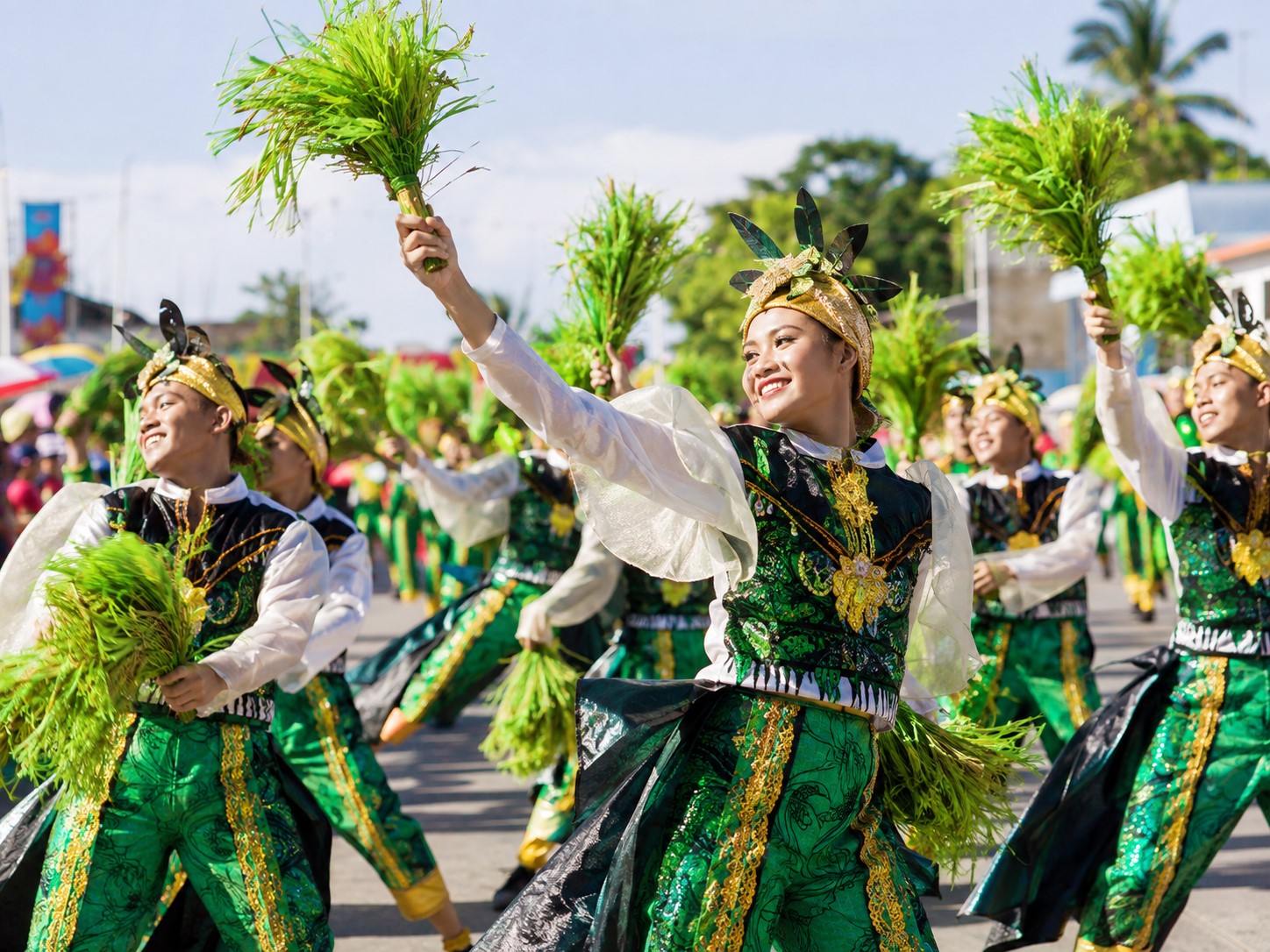
Hadang Festival Street Dancing
Street dancing remains one of the most visually exciting reasons to attend.
Imagine a group of performers moving in perfect synchronization.
Drums are pounding.
Costumes flash in the sunlight.
Props move across the performance area.
Chants echo through the crowd.
Then the choreography shifts from celebration to confrontation, ritual and storytelling.
The old Sarakiki influence can help explain some of the animal-inspired energy associated with Calbayog’s festival tradition, but today’s Hadang performances increasingly emphasize broader themes of history, ritual, courage and community.
That’s why travelers who have seen older Sarakiki photographs may notice that the festival’s visual style continues to evolve.
Hadang Festival’s Success in Samar
Hadang isn’t simply important within Calbayog.
It has also become one of Samar’s strongest-performing festival contingents.
At the 2025 Tandaya Festival of Festivals, Calbayog’s Hadang Festival was named co-champion together with Catbalogan City’s Manaragat Festival. The victory gave Hadang its third consecutive championship in the provincial competition.
That’s a significant achievement.
Festival competitions in the Philippines can be incredibly competitive.
Contingents train for weeks or months.
Costumes cost money.
Props require engineering.
Choreography is constantly revised.
One timing mistake can affect an entire performance.
So winning three times in a row suggests that Calbayog has become very serious about presenting Hadang as a major cultural showcase.
The Meaning Behind Hadang Performances
What I find interesting about Hadang is that the performance isn’t supposed to exist just for applause.
The old ritual was connected with asking for blessings.
Modern festival performances reinterpret that meaning.
The Philippine Information Agency describes Hadang as a living expression of gratitude, courage and faith, transforming an old ritual into a stage performance that can connect younger generations with the community’s heritage.
That’s an important role for festivals.
A tradition can disappear surprisingly quickly when nobody practices it anymore.
But put it on stage.
Teach it to young dancers.
Research the costumes.
Explain the symbolism.
Let thousands of people watch it.
Suddenly, people start asking questions.
“What does Hadang mean?”
“Why are they doing that movement?”
“Where did this ritual come from?”
And that’s how culture stays alive.
Not frozen.
Alive.
The Religious Side: September 8 Fiesta
Despite all the dancing, Calbayog’s September celebration also has a deeply religious side.
The city’s Catholic fiesta honors the Nativity of the Blessed Virgin Mary, celebrated on September 8.
That means visitors should expect religious activities alongside the civic festival program.
There may be Masses.
Church celebrations.
Processions.
Devotional activities.
Families returning home for fiesta.
And gatherings involving communities throughout the city.
For many locals, September 8 isn’t simply “festival day.”
It’s a religious feast.
So if you encounter a procession or church ceremony, treat it differently from a street-dancing competition.
Take photos respectfully.
Follow instructions.
And remember that people around you may be there primarily as devotees rather than spectators.
Sarakiki vs. Hadang: What’s the Difference?
This is probably the most common question people researching the festival will have.
Sarakiki
Sarakiki became famous for rooster-inspired movements and colorful street dancing.
The Tourism Promotions Board still describes the festival through dancers dressed like cocks moving to traditional Samareño music.
Hadang
Hadang has deeper ritual roots.
It refers to an old offering tradition associated with asking spirits for blessings such as harvests, healing and protection.
Sarakiki-Hadang
For years, the city combined both concepts under the name Sarakiki-Hadang Festival. Calbayog’s own planning documents still contain this older terminology.
Hadang Festival Today
Since September 2025, Hadang Festival is the city’s official festival, following the passage of Ordinance No. 2025-27-658.
That’s the important distinction for modern travelers.
Why Did Calbayog Drop the Sarakiki Name?
According to reporting on the ordinance, cultural advocates and local officials had raised concerns that the combined Sarakiki-Hadang identity could blur the distinction between Calbayog’s actual ritual traditions and the later festival presentation.
The new ordinance was meant to provide a clearer cultural framework.
Hadang was given official recognition because the city wanted future celebrations to stay connected with what local leaders considered Calbayog’s authentic historical and cultural roots.
I actually think this makes the festival more interesting.
Lots of communities create festivals for tourism.
Calbayog essentially did the reverse.
It looked at the tourism festival it already had and asked:
Are we telling our own story accurately?
Then it adjusted the celebration.
That’s cultural preservation happening in real time.
What to Expect When Visiting Calbayog During Fiesta
If you’re visiting around early September, expect the city to be busy.
Festival season can bring together:
- Street-dancing performances
- Cultural presentations
- Concerts
- Pageants
- Community activities
- Religious celebrations
- Food stalls
- Local products
- Competitions
- Visitors returning home for fiesta
The exact program changes every year.
In 2025, for example, Calbayog’s City Arts and Culture Office announced concert programming as part of the Hadang Festival lineup, with local bands and artists taking part.
2026 may feature a different lineup, which is why checking the current official schedule matters.
Hadang Festival Queen
Like many Philippine festivals, Hadang has also included a Festival Queen competition.
Festival queens play a major role in cultural presentations across the Visayas.
But this isn’t necessarily just a conventional beauty pageant.
A festival queen can be part dancer, part storyteller and part symbol of the contingent’s cultural theme.
Costume.
Movement.
Expression.
Stage presence.
All of those matter.
If Hadang Festival Queen activities are included in the 2026 program, they can be one of the more visually impressive events to watch.
The Music of the Festival
Another thing to pay attention to is the music.
Older descriptions of Sarakiki emphasize performers dancing to ancient Samareño instruments, while modern Hadang performances prominently use drums, chants and rhythmic accompaniment.
Try watching beyond the costumes.
Listen.
The rhythm is what gives the performers their power.
In good festival choreography, dancers and percussion don’t feel separate.
The drumbeat tells you when something dramatic is about to happen.
Movements become faster.
Then everything stops.
A chant rises.
The performers shift formation.
And the crowd reacts.
That’s the kind of thing photographs can’t fully capture.
Sometimes you need to be there.
Best Time to Visit
If you’re planning your first Sarakiki/Hadang experience, I’d target:
September 1–8
That’s the traditional festival period in national tourism listings and leads directly into Calbayog’s September 8 fiesta.
But if your main goal is specifically the street-dancing showdown, check the official 2026 calendar before booking.
Festival competitions aren’t guaranteed to stay on exactly the same date every year.
If possible, give yourself several days in Calbayog.
That way you have time for the festival and still get to explore the city.
Exploring Calbayog Beyond the Festival
Don’t make the mistake of arriving for the street dance and leaving immediately.
Calbayog has much more to offer.
The city government promotes a range of attractions around Calbayog, and its large geographical area includes natural destinations as well as urban and cultural sites.
Depending on your available time, you can turn the festival trip into a wider Samar adventure.
Spend one day watching Hadang.
Use another to explore.
Then come back to the city center for fiesta activities at night.
That’s usually a much better way to experience local festivals than rushing in and out on the same day.
Travel Tips for Sarakiki / Hadang Festival
Search for “Hadang Festival,” not only Sarakiki
This is probably the most important tip for 2026.
Because the city officially adopted Hadang Festival in 2025, current announcements are more likely to use Hadang than Sarakiki.
Verify the street-dancing date
September 1–8 is the established festival period in older tourism listings, but individual competitions can move.
Don’t book transportation solely because an old blog says the parade is on a specific day.
Arrive early
Festival street-dancing routes can become crowded quickly.
If you want a decent viewing spot, come earlier than you normally would.
Bring rain protection
September weather can change quickly.
An umbrella or lightweight rain jacket can save the day.
Wear comfortable shoes
You’ll probably walk.
A lot.
Street closures may also mean your ride can’t drop you exactly where you want to go.
Carry water
Crowds, humidity and hours outdoors can be tiring.
Stay hydrated.
Bring some cash
Small food vendors and temporary festival stalls may still prefer cash.
Respect the September 8 religious celebration
The city fiesta honors the Nativity of the Blessed Virgin Mary.
Church activities and processions should be treated respectfully.
Look beyond the main stage
Some of the best festival experiences happen away from the competition area.
Walk around.
Try local food.
Talk to vendors.
Watch families celebrating.
That’s where you often experience the fiesta as locals do.
Why Sarakiki Festival Still Matters
Now that Hadang is the official festival, it would be easy to treat Sarakiki as something that no longer matters.
I don’t think that’s the right way to see it.
Sarakiki represents an important stage in Calbayog’s cultural story.
It helped make the city recognizable through festival dancing.
It introduced generations of visitors to Calbayog.
Its rooster-inspired choreography became visually distinctive.
And for years, the Sarakiki-Hadang name carried the city into festival competitions and tourism calendars.
Hadang doesn’t erase that history.
It gives it more context.
Today, visitors can look at those famous rooster dances and then ask a deeper question:
What traditions existed before the festival became a tourism event?
The answer leads you to Hadang.
And that’s where the story gets even better.
Frequently Asked Questions About Sarakiki Festival
Where is Sarakiki Festival celebrated?
Sarakiki Festival is associated with Calbayog City, Samar, in Eastern Visayas. The Tourism Promotions Board lists Calbayog City as its venue.
When is Sarakiki Festival?
The traditional tourism listing gives September 1–8.
However, travelers researching the current celebration should now look for Hadang Festival, which became Calbayog’s official city festival in 2025.
Is Sarakiki Festival still the official festival of Calbayog?
No. In September 2025, Calbayog formally declared Hadang Festival its official city festival through Ordinance No. 2025-27-658.
What is Sarakiki Festival famous for?
Sarakiki became famous for street dancers dressed like roosters and performing movements inspired by cocks to Samareño musical rhythms.
What is Hadang Festival?
Hadang is based on an ancient ritual offering associated with seeking blessings such as a good harvest, healing and protection. The modern festival transforms those traditions into cultural performances.
When is Calbayog City’s fiesta?
Calbayog celebrates the Nativity of the Blessed Virgin Mary on September 8.
Is Sarakiki the same as Hadang?
No, although they became closely connected.
Sarakiki is most strongly associated with the rooster-inspired dance tradition, while Hadang refers to an older ritual offering tradition. For years they were combined as Sarakiki-Hadang Festival, but Calbayog officially adopted Hadang Festival alone in 2025.
When is Hadang Festival 2026?
The celebration is expected around Calbayog’s traditional early-September fiesta period, but travelers should verify the final 2026 program from the Calbayog City Government or City Arts and Culture Office. The established Sarakiki calendar runs September 1–8, ending on the city’s September 8 patronal feast.
Why was Sarakiki-Hadang renamed Hadang Festival?
Calbayog officials said the move was intended to protect the authenticity of the city’s cultural traditions and give future festival celebrations a clearer connection with their historical roots.
Has Hadang Festival won other competitions?
Yes. Calbayog’s Hadang contingent became a three-time consecutive champion at Samar’s Tandaya Festival of Festivals after sharing the 2025 championship with Catbalogan’s Manaragat Festival.
Final Thoughts
At first glance, the Sarakiki Festival is easy to remember.
Roosters.
Feathers.
Drums.
Colorful street dancing.
It’s fun, energetic and different.
But once you look deeper, the festival reveals a much more interesting story.
Behind the famous rooster movements is a community with old ritual traditions.
Behind the festival costumes are beliefs about harvest, healing, protection and gratitude.
Behind the tourism event is Hadang.
And in 2025, Calbayog made a major decision to put that older cultural identity back at the center of its official festival.
So if you’re planning to visit Calbayog in September 2026, don’t be surprised if you don’t see Sarakiki Festival written everywhere.
Look for Hadang Festival.
Watch the dancers.
Listen to the drums.
Notice the symbols in their costumes.
Then remember that what you’re seeing isn’t simply choreography created to entertain a crowd.
It’s a modern interpretation of traditions that existed long before festival competitions, tourism posters and social media.
And that’s what makes Calbayog’s celebration worth experiencing.
The name may have changed.
But the dancing continues.
And now, the story behind it is becoming even clearer.