The surest way to see humpback whales from Icy Strait Point is a small-group boat heading out between May and September, when the whales have arrived for the summer and spend their days feeding. The other six options below still put you in whale country, ranked by how close and how often you’re likely to be near one, so you can match the choice to your budget, your stomach for open water and the month your ship pulls in.
Content
1. Small-Group Boat Tours From the Harbor
Small whale watching boats often carry between 6 and 22 passengers, according to one guide, and that headcount changes everything about the trip. You get rail space without elbowing anyone. The captain can turn quickly when someone spots a blow, and a boat that size can idle near feeding whales without much engine noise. Tours typically last about three hours, which fits comfortably inside most cruise port days.
Checking departure times against your ship’s all-aboard hour is easiest on a page of Icy Strait Point excursions, since the boat tours sit side by side there and you can see at a glance which sailing fits your hours ashore. Once that’s settled, the rest of the planning is about clothing.
Bring more layers than seem reasonable. The wind on the water in July feels nothing like the dock, and a hat and gloves will keep you outside watching instead of retreating to the cabin.
2. Larger Whale Watching Cruises
A bigger vessel trades intimacy for steadiness. If you get seasick, are traveling with small children or with a grandparent who won’t want to stand for three hours, the enclosed cabin, restrooms and broader hull make a big difference. Whales don’t mind the size of the boat, and on a good day you’ll see the same flukes and spouts as the small boats, just from a little farther back and with more people at the rail. Seats on these tend to cost less, which matters if you’re booking for a family of five.
3. Point Adolphus Feeding Grounds
Point Adolphus, about 5 miles south of Icy Strait, is where many of the boats end up anyway, and for good reason. Cold currents push nutrient-rich water up toward the surface there, and humpbacks gather to feed on the small fish and krill that follow.
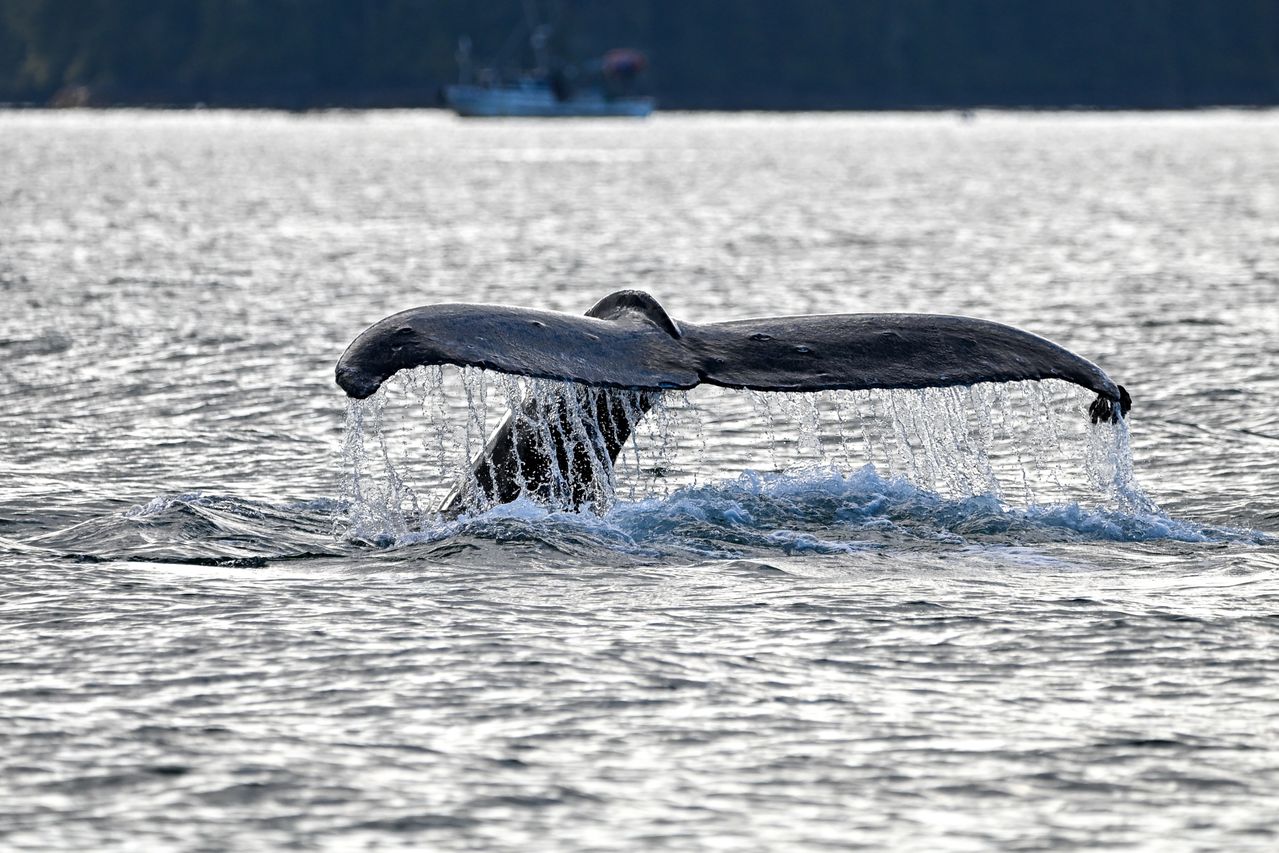
When you book, look for a trip that names Point Adolphus as its destination rather than describing a general cruise of the area. Time spent at the feeding grounds is time spent watching whales that are busy eating, which usually means long surface intervals, repeated dives and the occasional tail lifted clean out of the water as they go down.
If you’re lucky, you’ll see a group bubble-net feeding. That’s when several whales circle below a school of fish, blow a ring of bubbles to trap it, then surge up through the middle with their mouths open. Nobody can schedule it, but this stretch of water gives you one of the better chances in Southeast Alaska.
Pack binoculars even on a close-range boat. Spouts often appear first on the far side of the channel, and you’ll want to know which direction to point your camera before the whale surfaces again.
4. Kayak Tours on Port Frederick
Kayak tours on Port Frederick run about three hours from the harbor, and they’re the most peaceful way on this list to spend time on the water. You won’t cover the distance a powerboat does, so whale sightings are less predictable. What you get instead is the sound. A humpback exhaling a few hundred yards away carries across calm water in a way you’ll never hear over an engine.
This suits people who would rather paddle along the shoreline, watch eagles on the spruce snags and take whatever wildlife appears. If seeing a whale is the single goal of your day, book a boat.
5. Whale and Wildlife Combination Trips
Many tours fold in the rest of the local cast, and sightings of sea lions, seals, sea otters and eagles show up regularly on whale watching itineraries. These trips make a lot of sense for families, because a child who has been staring at empty water for twenty minutes perks right up at a raft of otters floating on their backs. Sea lions hauled out on the rocks are loud, smelly and great fun. If no whale breaches, the day still feels full.
6. Wilderness Island Tours, April Through October
One listing runs Wilderness Island tours from April through October, lasting 2 to 3 hours, and that wider season is the main reason it earns a place here. Humpbacks are said to reach Icy Strait in May, so an April or early May cruise may arrive before the big summer numbers. A trip like this keeps the outing worthwhile with island scenery and shoreline wildlife, and any whale that turns up feels like a bonus. Later in summer it works as a quieter alternative to a full whale cruise, particularly if someone in your group doesn’t love three hours on open water.
7. Shoreline Watching Near the Port
The cheapest option costs nothing.
Walk the waterfront paths near the dock with binoculars and scan the strait for a puff of mist low on the water. Humpbacks sometimes feed close enough to shore to spot from land, especially on calm mornings when a spout stands out against flat gray water. Sit somewhere sheltered, give it half an hour and keep your eyes moving across the channel rather than fixed on one spot. You’ll see eagles almost certainly, and possibly much more.
Whatever you choose, remember that whales are wild animals and fog rolls through Icy Strait without warning. A boat tour raises your odds considerably, yet it can still come back with nothing more than a distant spout seen through drizzle, and a three-hour excursion uses up a big share of a short port day. Before you pay for the most whale-focused trip, ask yourself whether you’d still enjoy those hours if the whales stayed down. If the answer is no, a wildlife combination tour or a slow walk along the shore might suit you better.