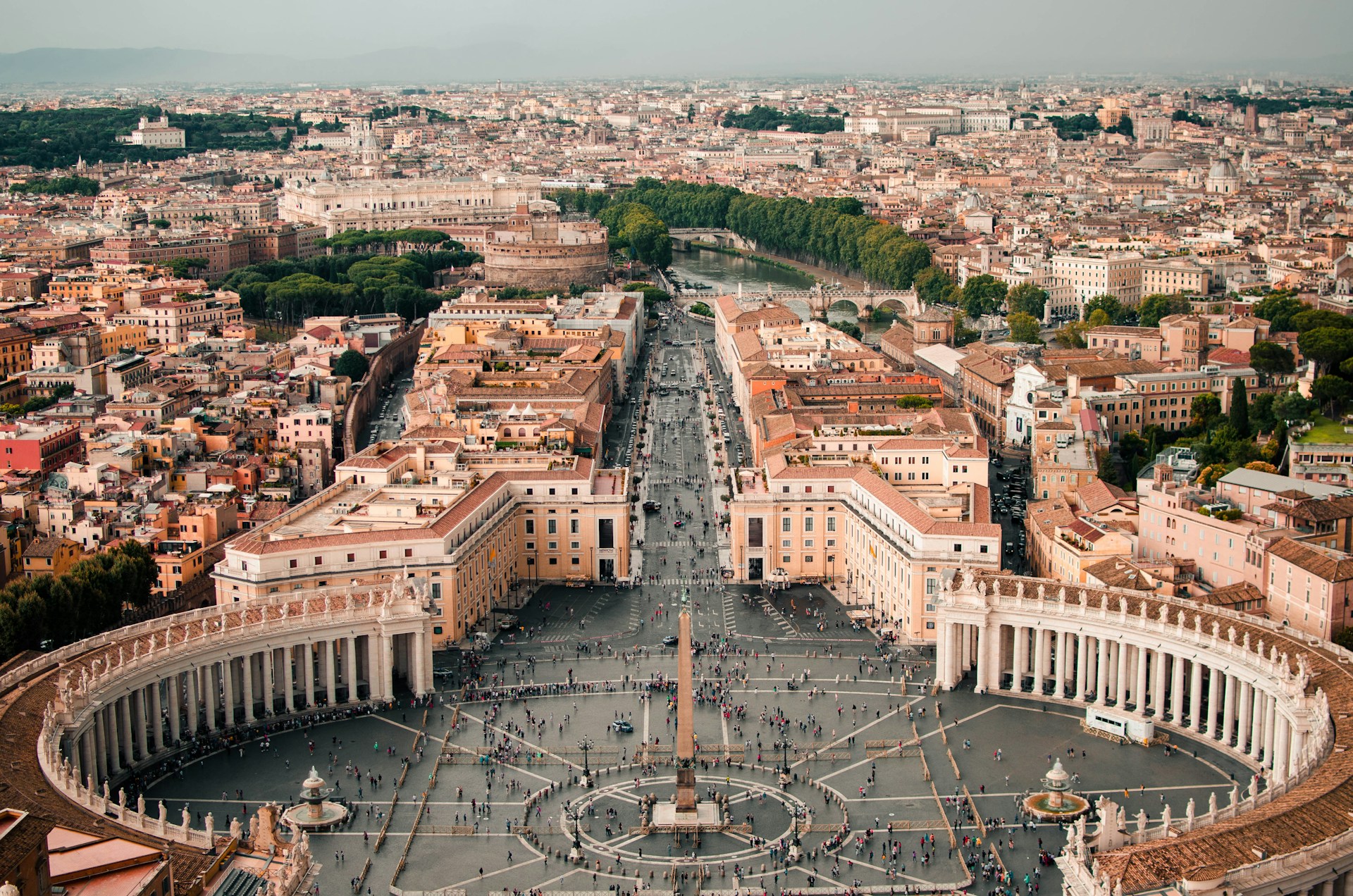
Since January 2024, according to one guide, the Vatican Museums have sold entry online only, with no tickets at the door. Plenty of people still arrive on Viale Vaticano expecting a ticket window and a queue, and they end up standing on the pavement scrolling through sold-out dates. A Vatican visit now starts days or weeks before you reach Rome, and the order in which you handle each step decides how smoothly the day goes.
Content
1. Book Vatican Museums Tickets Online, Two to Three Months Out in Summer
One source reports that official tickets can sell out two to three months ahead in summer. That catches people who plan the rest of an Italy trip carefully and leave the Vatican as a “we’ll sort it when we get there” item. If you’re travelling between June and August, book your museum slot around the same time as your flights.
Spring is nearly as busy, especially around Easter. Once you know which morning you’ll be in Rome, pick the date and buy.
Some visitors prefer to have a specialist plan the whole morning. Vatican private tours that begin before the main crowds arrive handle the timed entry, the route through the galleries and the commentary in one booking, so the morning runs at an easy pace with a guide setting the order of rooms.
2. Validate and Download Your Ticket Before the Turnstiles
An online ticket isn’t quite a ticket yet. Once you’re inside the entrance, look for the validation counters in the access corridor before the turnstiles. Staff there check your booking, and if you walk past them, your ticket may not scan at the gate. The fix is simple, but it means doubling back against the flow of people.
Download the ticket to your phone, or print it, the night before. A vendor guide notes that mobile signal near the Museums entrance is unreliable, and the walls outside are thick, old and crowded with other people trying to load the same email. A screenshot or PDF saved offline removes that problem.
3. Check Free Entry for Under 7s, Students and Visitors With a Disability
Children under 7 get in free, and a reduced rate applies from 7 to 18. Students up to age 25 can also get a reduced ticket with valid documents, per one source, so bring a student card that clearly shows your name and the institution.
Visitors with a certified disability of 67 percent or more enter free. These tickets are issued at the entrance rather than online, which makes them one of the few situations where you arrive without a prebooked ticket. Carry the certification paperwork, and expect staff to look at it closely.
Then there’s the last Sunday of the month, when the Museums are free for everyone. The catch is that free tickets can’t be reserved online, so the line forms early and the galleries are packed. It suits budget travellers with patience and a flexible morning. If this is your one shot at the Sistine Chapel, a paid weekday ticket is usually the better use of your time.
4. Choose 9:00 or a Late-Afternoon Slot
On busy spring and summer dates, the prime morning slots like 9:00 or 9:30 go first. What’s left tends to be late-afternoon times, and those are underrated. Tour groups thin out after lunch, and the light through the Gallery of Maps windows is softer.
The trade-off is time. Tickets cover one continuous visit, so you can’t step out for lunch and come back in. An afternoon slot gives you a fixed window before closing, and a morning slot lets you eat afterwards without watching the clock. Have a proper breakfast or a late lunch beforehand, because the café inside won’t be where you want to spend your time.
5. Ask Where a Shortcut Tour Finishes Before You Book
There’s a well-known shortcut from the Sistine Chapel straight into St. Peter’s Basilica, and it isn’t something the official website sells. Some tour companies and private guides can book access to it, roughly between 9:30 am and 5 or 5:30 pm. It saves you walking all the way back through the Museums, out onto the street and around the walls to the Basilica’s own entrance.
Before paying for any tour, check one detail in the itinerary: does it finish inside the Sistine Chapel or inside St. Peter’s Basilica? Those two endings lead to very different afternoons. A tour that ends in the chapel leaves you to find your own way out and then queue for the Basilica separately. A tour that ends in the Basilica has already used the shortcut for you.
If the listing doesn’t say, ask the company directly.
6. Allow Two to Three Hours for the Route to the Sistine Chapel
The Sistine Chapel sits near the end of a long, one-way route, which surprises first-timers. You’ll pass the Pinecone Courtyard, walk the Gallery of the Candelabra, the Gallery of Tapestries and the Gallery of Maps, then go through the Raphael Rooms before you reach Michelangelo’s ceiling. Signs point toward the chapel the whole way, but there’s no quick back passage.
Two to three hours is a sensible plan for a first visit. Rushing it to get to the ceiling faster tends to backfire, since you arrive tired and the crowd in the chapel slows you down anyway. Spend your energy on the Raphael Rooms, especially The School of Athens, and walk the Gallery of Maps slowly enough to look up at the gilded ceiling as well as the painted maps on the walls.
The Egyptian and Etruscan collections are a good place to save time if you need to. They’re excellent, but they sit off the main route and add a good stretch of walking.
7. Put Your Phone Away in the Sistine Chapel
Photos aren’t allowed inside the Sistine Chapel, and guards enforce it. They’ll call out to people holding up phones, and the room gets regular reminders to keep quiet. It’s still a working chapel, which explains the rules on silence.
Put your phone in a bag before you walk in instead of just lowering it. People who keep it in hand tend to drift back toward taking a picture. Find a spot along the side benches if one opens up, and look at the ceiling in sections: the Creation of Adam, then the Flood, then turn around for the Last Judgment on the altar wall. Guides are usually asked to explain the frescoes before entering the chapel, so listen to that briefing outside.
8. Cover Shoulders and Knees for St. Peter’s Basilica
St. Peter’s Basilica has a dress code, and staff at the entrance will turn people away for bare shoulders or knees. That applies to men and women, and in July heat it catches a lot of visitors in shorts and tank tops.
The simplest approach is to dress for the Basilica from the start of the day, since the Museums expect modest clothing too. Linen trousers or a skirt below the knee, plus a T-shirt with sleeves, work in summer. A light scarf in your bag can cover shoulders in a pinch, but it won’t solve shorts, so dress with your knees covered from the start.