The Philippines has hundreds of festivals, and each one has a different story to tell.
Some celebrate a bountiful harvest. Others honor patron saints, commemorate historical events, or highlight the products that make a particular town famous.
But in Sibagat, Agusan del Sur, there’s a festival built around a simple yet meaningful idea: an encounter.
It’s called the Bagat Festival.
At first glance, it’s another colorful local celebration filled with cultural performances, traditional dances, community activities, and gatherings. But look a little deeper, and you’ll discover that the festival is closely connected to the history of Sibagat, its Indigenous communities, and the transformation of a place once associated with conflict into a community that celebrates unity.
Bagat Festival is more than an occasion for entertainment. It’s an opportunity for residents to remember their roots, celebrate their identity, and introduce visitors to the traditions of this part of Mindanao.
Here’s everything you need to know about Bagat Festival, including its meaning, history, cultural significance, major activities, and how to experience the celebration.
Content
What Is Bagat Festival?
Bagat Festival is an annual cultural celebration held in the municipality of Sibagat, Agusan del Sur, in the Caraga Region of northeastern Mindanao.
The festival celebrates the history, culture, traditions, and community identity of the Sibagatnons, the people of Sibagat.
One of its most important themes is the coming together of different people and communities.
This reflects the meaning of the word bagat, which is associated with meeting or encountering one another.
The celebration also highlights the cultural heritage of the Manobo people, whose history is closely connected to the municipality.
Through traditional performances, community presentations, and other cultural activities, Bagat Festival provides an opportunity to appreciate the customs and stories that helped shape Sibagat.
The festival is also associated with Araw ng Sibagat, the municipality’s founding anniversary celebration.
Together, these occasions provide a time for residents to celebrate both their historical beginnings and the progress of their community.
Where Is Bagat Festival Celebrated?
Bagat Festival takes place in Sibagat, a municipality in the province of Agusan del Sur.
Sibagat is located in the northern part of the province and is often described as one of the gateways to Agusan del Sur.
The municipality is relatively close to Butuan City and Bayugan City, making it accessible to travelers exploring the Caraga Region.
Sibagat is known for its agricultural communities, rivers, forested landscapes, and Indigenous cultural heritage.
Agriculture is an important part of the local economy, particularly the production of abaca, coconut, bananas, and vegetables.
During Bagat Festival, different parts of the municipality become venues for community gatherings, cultural programs, and other activities.
The locations of individual events may change from one celebration to another, depending on the official schedule prepared by the local government.
What Does Bagat Mean?
The name Bagat Festival comes from the word bagat, commonly explained in local accounts as meaning “encounter” or “meeting.”
The word is associated with the Manobo language and the historical identity of Sibagat.
It is also connected to the origin of the municipality’s name.
According to local oral history, the area surrounding the Sibagat River served as a meeting place for different Indigenous groups.
However, these encounters were not always peaceful.
Some historical accounts describe conflicts between groups living around the river and surrounding communities.
The river became associated with these encounters, eventually contributing to the name Sibagat.
Over time, the meaning of the encounter developed into something more positive.
Today, Bagat Festival presents the idea of meeting as an expression of unity, cultural appreciation, and peaceful coexistence.
Instead of remembering encounters only as moments of conflict, the celebration emphasizes the possibility of bringing people together.
This transformation is central to understanding the festival.
A word connected to the town’s past has become a symbol of its collective identity.
History and Origin of Bagat Festival
To understand Bagat Festival, it’s important to know a little about the history of Sibagat itself.
The Early Communities of Sibagat
Long before Sibagat became an independent municipality, the surrounding lands and river systems were inhabited by Indigenous communities.
The Manobo and Banwaon peoples are among the groups associated with local historical accounts of the area.
Rivers played an important role in the lives of these communities.
They provided access to water, transportation routes, and places where people could meet.
According to local oral traditions, the Sibagat River was also associated with encounters and conflicts between groups.
These stories became part of the community’s historical memory.
It’s important to understand that these accounts belong to local oral history. They help explain the cultural meaning of the place, although individual events and details should not automatically be treated as independently verified historical facts.
From Conflict to Peaceful Encounters
One of the most meaningful ideas associated with Bagat Festival is the transformation of encounter into reconciliation.
Local accounts describe how rival Indigenous communities eventually established peaceful relationships.
The festival draws on this historical memory by emphasizing cooperation and understanding.
This is why the celebration isn’t simply about remembering battles or conflicts.
It is also about recognizing what communities can achieve when they come together.
Today, Sibagat is home to people with different cultural backgrounds and beliefs.
Bagat Festival provides a shared celebration where these communities can express their identity and participate in the town’s cultural life.
The Establishment of Sibagat as a Municipality
Sibagat was originally part of the municipality of Bayugan in Agusan del Sur.
On February 1, 1980, Batas Pambansa Blg. 56 was approved, providing for the creation of the independent Municipality of Sibagat.
The law separated several barangays from Bayugan to form the new municipality, subject to the required plebiscite.
This date became an important reference point for the celebration of Araw ng Sibagat.
As the municipality developed, cultural celebrations such as Bagat Festival became an opportunity to highlight both its history and its present-day achievements.
The Development of Bagat Festival
Bagat Festival gradually developed into an organized municipal cultural celebration.
It became a venue for showcasing local traditions, Indigenous heritage, artistic performances, community initiatives, and livelihood activities.
The celebration has also been institutionalized through local government measures.
Agusan del Sur’s provincial tourism regulations recognize Bagat Festival as one of the official cultural celebrations of its municipalities and refer to Sibagat Municipal Ordinance No. 25-19.
The festival continues to evolve, with different themes and activities introduced in particular years.
However, the central idea remains the same.
Bagat is about encounters.
It celebrates the people, traditions, and shared experiences that give Sibagat its identity.
When Is Bagat Festival Celebrated?
Bagat Festival is generally celebrated around the last week of January and the first week of February, in connection with Araw ng Sibagat.
The municipality’s founding anniversary is associated with February 1, the date when Batas Pambansa Blg. 56 was approved in 1980.
The provincial tourism regulations identify late January to early February as the festival period, although the exact dates of activities can vary.
There is also an important detail worth mentioning.
Some older festival calendars and tourism listings identify November 6 as the date of Bagat Festival.
However, more recent official records show that the festival has been celebrated in late January and early February.
For example, the 2023 Bagat Festival was associated with the municipality’s January 30 founding-anniversary activities, while the 2026 celebration included events in early February.
If you’re planning to attend, it’s best to check the latest schedule released by the Municipal Government of Sibagat rather than relying solely on older festival calendars.
Bagat Festival Activities and Highlights
What can visitors expect during Bagat Festival?
Although the lineup changes from year to year, the celebration has featured a combination of cultural performances, community activities, traditional presentations, and livelihood-related events.
Here are some of its notable highlights.
1. Manobo Cultural Performances
One of the most significant elements of Bagat Festival is its connection to Manobo culture.
The Manobo people are among the Indigenous communities of Mindanao, with distinct traditions, languages, and cultural practices across different areas.
In Sibagat, their heritage is closely associated with the municipality’s history.
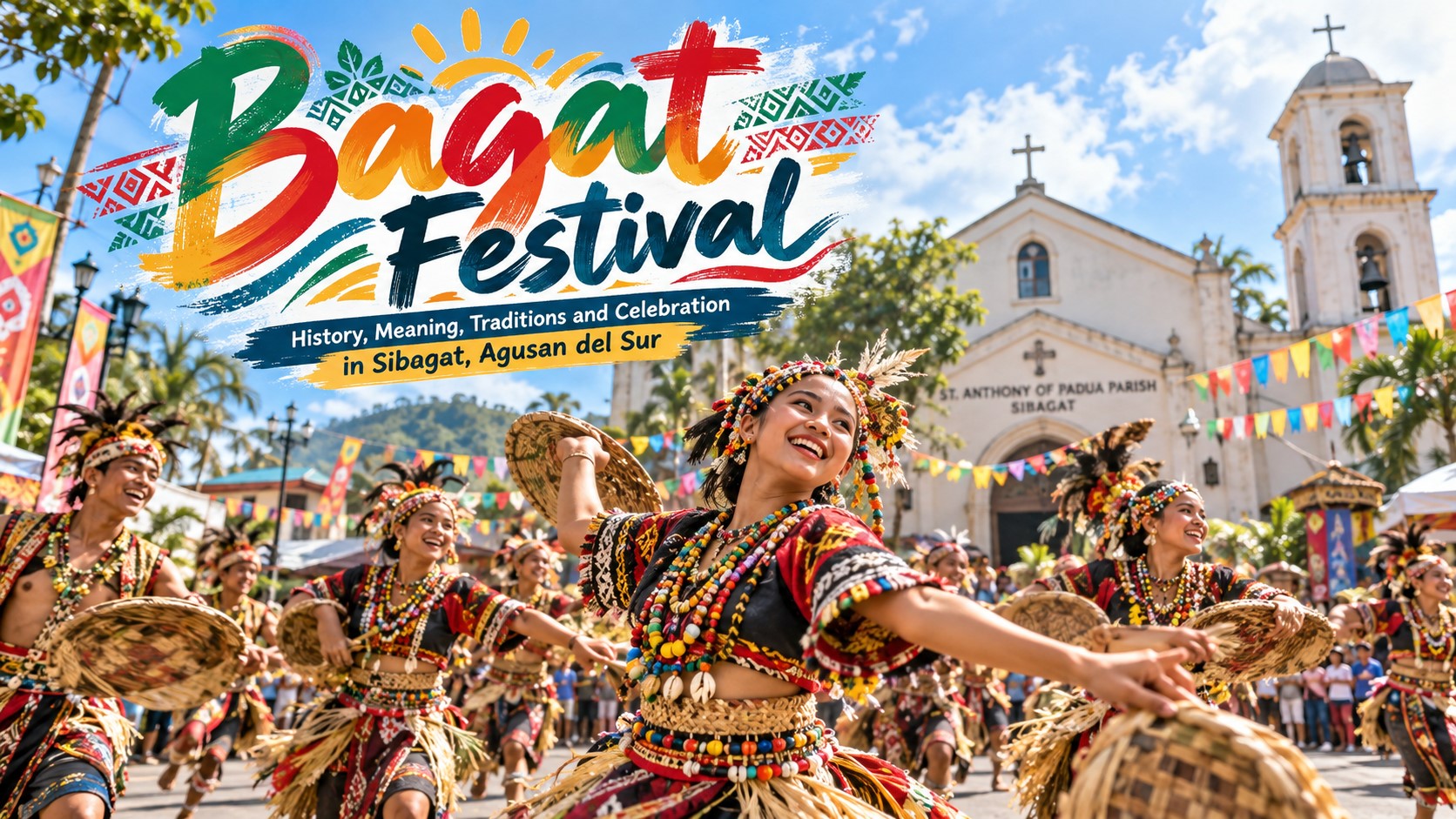
Festival presentations have highlighted Indigenous dances, cultural expressions, and community traditions.
These performances provide an opportunity for younger generations and visitors to learn more about local heritage.
They also remind audiences that the cultural identity of Sibagat did not begin when the municipality was formally established.
Its roots extend much further into the history of the Indigenous communities that lived in the area.
2. Traditional Rituals and Cultural Ceremonies
Traditional ceremonies have also formed part of previous Bagat Festival celebrations.
One example is the panawagtawag, a Manobo ritual documented during the 2024 celebration.
The ceremony involves a baylan, or traditional spiritual practitioner, and reflects beliefs associated with the Indigenous community.
These practices are an important part of cultural heritage.
For visitors, they offer an opportunity to better understand traditions that continue to hold significance for community members.
However, it’s important to approach such activities respectfully.
Traditional rituals are not merely performances created for tourists. They may carry spiritual meaning for the people who practice them.
Visitors should follow the instructions of organizers and community representatives, particularly regarding photography, participation, and access to ceremonial areas.
3. Gakit or Bamboo Raft Parade
Another particularly interesting activity associated with Bagat Festival is the gakit parade.
A gakit is a bamboo raft or floating platform.
During past celebrations, decorated bamboo rafts representing different community sectors have been presented along the river.
One documented example took place at the Sabang Cultural Heritage area.
The activity connects the festival to the historical importance of rivers in Sibagat.
Long before modern roads became the primary means of transportation, waterways were important to communities across many parts of Mindanao.
In Sibagat, the river also holds historical meaning because of the encounters associated with the town’s origins.
Today, a colorful gathering of bamboo rafts offers a very different image.
Instead of separation and conflict, the parade represents people coming together in celebration.
The gakit activity is one of the festival’s most distinctive documented traditions.
4. Community and Cultural Presentations
Bagat Festival also provides opportunities for residents from different barangays and community groups to participate in the festivities.
Programs may include cultural presentations, group performances, and other activities prepared by local organizations.
This community involvement is an important part of the celebration.
Rather than limiting the festival to professional performers, the event creates opportunities for residents to become active participants.
Schools, youth organizations, cultural groups, and other community sectors can contribute to the occasion.
This makes Bagat Festival a celebration created not only for the people of Sibagat but also by the people of Sibagat.
5. Local Products, Agriculture, and Livelihood Exhibits
Agriculture and livelihood are important parts of Sibagat’s identity.
The municipality is known for producing abaca, coconut, bananas, vegetables, and other agricultural products.
Because of this, the festival has also served as a venue for economic and livelihood-related activities.
For example, Sibagat hosted an Organic Congress alongside its 2023 founding-anniversary and Bagat Festival celebrations.
More recently, festival activities have included discussions about innovation, sustainable farming, and the development of locally produced goods.
These programs highlight an important aspect of the event.
Bagat Festival doesn’t only look backward to the municipality’s history.
It also creates opportunities to discuss the future of local communities, farmers, entrepreneurs, and industries.
6. Abaca Weaving and Local Craftsmanship
Abaca is one of the most important agricultural products associated with Sibagat.
The fiber is used in making various products, including textiles and handicrafts.
Local weaving traditions are also connected to the municipality’s cultural and economic identity.
Festival-related programs have highlighted the work of Sibagat’s abaca weavers and the opportunities to develop their products.
This is significant because traditional craftsmanship can help preserve local skills while supporting community livelihoods.
For visitors interested in Philippine culture, these products tell another side of Sibagat’s story.
They represent the relationship between the land, local knowledge, creativity, and everyday work.
7. Youth Participation and Community Activities
Another notable feature of Bagat Festival is the involvement of young people.
The local government has encouraged youth organizations to participate in the celebration and contribute their ideas and advocacies.
In 2023, municipal officials met with youth leaders to discuss participation in festival activities.
This reflects an important purpose of the celebration.
Cultural preservation is not simply about remembering traditions.
It also involves passing knowledge, responsibility, and community values to younger generations.
Through participation, young Sibagatnons become part of the continuing story of their municipality.
The Cultural Significance of Bagat Festival
Bagat Festival may not be as internationally recognized as Sinulog, Ati-Atihan, or MassKara, but its cultural significance is rooted in the particular history of Sibagat.
There are several reasons why the celebration matters.
Preserving Indigenous Heritage
The festival creates a public space for recognizing the traditions and cultural contributions of Indigenous communities.
Through dances, historical storytelling, ceremonies, and cultural presentations, local heritage remains visible to residents and visitors.
It is also an opportunity to encourage appreciation and respect for traditions that existed long before the modern municipality was established.
Promoting Peace and Unity
The meaning of the word bagat gives the festival a distinctive message.
An encounter can represent conflict.
But it can also represent friendship, cooperation, and reconciliation.
In the context of the celebration, the emphasis is on people meeting and working together despite differences in their backgrounds.
This gives the festival a cultural meaning beyond its performances and festivities.
Strengthening Local Identity
Every municipality has its own history.
And in many Philippine towns, festivals provide an opportunity to express what makes the community different from its neighbors.
For Sibagat, that identity includes its Indigenous heritage, rivers, agricultural livelihood, and historical development.
Bagat Festival brings these elements together in one celebration.
Supporting Local Livelihoods
Community events can also provide opportunities for local sellers, farmers, food vendors, craftspeople, and small businesses.
Bagat Festival’s inclusion of agricultural and innovation-related activities reflects the relationship between culture and livelihood.
By highlighting local products and skills, the celebration helps introduce the economic life of Sibagat to a wider audience.
How to Get to Sibagat, Agusan del Sur
If you’re planning to experience Bagat Festival, you first need to reach Sibagat.
The municipality is located in northeastern Mindanao, and Butuan City is one of the most practical starting points for visitors coming from outside the region.
From Manila or Cebu
Travelers can fly to Butuan through Bancasi Airport, which serves Butuan City and surrounding areas.
From the airport, proceed to the appropriate bus or van terminal in Butuan.
Look for public transportation traveling toward Sibagat or along the Butuan–Bayugan route.
Before boarding, confirm with the driver or terminal staff that the vehicle will pass through your intended destination in Sibagat.
From Butuan City
Sibagat can be reached by road from Butuan City.
Buses, vans, and other public transportation serving the Butuan–Agusan del Sur corridor may provide access to the municipality.
Travel times depend on your departure point, the number of stops, road conditions, and traffic.
If your main purpose is to attend the festival, it’s best to confirm the event venue before traveling.
Some activities may take place in the municipal center, while others may be held in designated cultural or outdoor locations.
From Bayugan City
Travelers coming from Bayugan City can head north toward Sibagat using available public transportation along the main highway.
Local transportation may be needed to reach specific festival venues.
As with other provincial celebrations, transportation availability may differ depending on the location and time of the event.
Other Things to See in Sibagat
Bagat Festival can also be an opportunity to discover more of Sibagat.
The municipality has natural attractions and local experiences that reflect its forested landscape and agricultural heritage.
Pinandagatan Falls
Pinandagatan Falls is a natural attraction located in Barangay New Tubigon, Sibagat.
The waterfalls have attracted attention as part of the municipality’s developing ecotourism offerings.
For travelers who enjoy nature and outdoor activities, the area represents another side of Sibagat beyond its cultural celebrations.
However, visiting may require local guidance and advance coordination, especially for trekking and access to remote areas.
Abaca Weaving Communities
Sibagat’s abaca industry is another interesting aspect of the municipality.
Travelers interested in local craftsmanship may want to learn about abaca processing and traditional weaving.
If community visits or demonstrations are available, these can provide a better understanding of how agricultural resources become useful products.
Any visit should be arranged with the appropriate local organizers or community representatives.
The important thing is to remember that Sibagat isn’t only a festival destination.
Its culture, livelihood, and natural environment can also make the trip worthwhile.
Tips for Visiting Bagat Festival
If you’re attending the festival for the first time, a little preparation can make the experience easier.
- Check the latest festival schedule through the Municipal Government of Sibagat or its tourism office.
- Identify which activities interest you most, particularly cultural performances and traditional celebrations.
- Confirm transportation arrangements before traveling, especially if your chosen activity takes place outside the town center.
- Wear comfortable clothing and footwear suited to outdoor events.
- Bring drinking water, sun protection, and rain protection as needed.
- Carry some cash for transportation, food, and purchases from local vendors.
- Respect Indigenous cultural practices and follow the instructions of organizers during traditional ceremonies.
- Ask permission before photographing people, especially during rituals or activities involving Indigenous communities.
- Dispose of waste properly and help keep festival venues clean.
Most importantly, take the opportunity to learn about the people and the stories behind the celebration.
Bagat Festival becomes much more meaningful when you understand what the word itself represents.
Bagat Festival vs. Bagat-Dagat Festival: Are They the Same?
This is a common source of confusion because the two festivals have similar names.
However, Bagat Festival and Bagat-Dagat Festival are different celebrations.
Bagat Festival takes place in Sibagat, Agusan del Sur, and focuses on the town’s history, Indigenous culture, community identity, and the meaning of encounter.
Bagat-Dagat Festival, meanwhile, is associated with Cataingan, Masbate.
The Masbate celebration is known for gatherings and water-related activities, including boat competitions and other events held around Masbate Lagoon.
Bagat-Dagat is generally celebrated in June, while Sibagat’s Bagat Festival has more recently been observed around late January and early February.
If you’re researching Philippine festivals, make sure to distinguish between the two.
Frequently Asked Questions About Bagat Festival
Where is Bagat Festival celebrated?
Bagat Festival is celebrated in Sibagat, a municipality in Agusan del Sur, located in the Caraga Region of Mindanao, Philippines.
What is the meaning of Bagat Festival?
The word bagat means encounter or meeting in local usage. The festival celebrates the history of Sibagat and promotes cultural appreciation, unity, and peaceful coexistence among communities.
When is Bagat Festival held?
Recent celebrations have taken place around late January and early February, coinciding with the municipality’s founding-anniversary period. Older calendars sometimes list November 6, but travelers should confirm the current schedule with the local government.
What is Bagat Festival known for?
The festival is known for highlighting Sibagat’s cultural heritage, particularly Manobo traditions, community performances, traditional ceremonies, and activities such as the gakit bamboo raft parade.
Who celebrates Bagat Festival?
Bagat Festival is celebrated by the people of Sibagat, including residents, Indigenous communities, cultural groups, youth organizations, and other local sectors.
Is Bagat Festival a religious festival?
Bagat Festival is primarily a cultural and community celebration rather than a festival dedicated exclusively to a Catholic patron saint.
However, some activities may feature traditional Indigenous spiritual practices, and the municipality has its own separate religious celebrations.
What is the connection between Bagat Festival and Araw ng Sibagat?
The two celebrations are closely associated. Araw ng Sibagat commemorates the municipality’s establishment, while Bagat Festival highlights its history, cultural traditions, and community identity.
Is Bagat Festival open to tourists?
Bagat Festival includes public cultural and community activities that visitors may be able to attend. However, access to specific events, especially traditional ceremonies, depends on the arrangements and guidelines of the organizers.
Bagat Festival 2026: Celebration and Activities
For reference, the 2026 celebration marked the 46th Araw ng Sibagat and the 24th Bagat Festival.
Its theme was “Bagat Festival 2026: Reimagining Encounters.”
One documented activity was the Innovations Forum held on February 2, 2026.
The forum brought together speakers who discussed local enterprise, agricultural innovation, sustainable farming practices, and the potential of Sibagat’s traditional abaca products.
The event also highlighted opportunities for farmers, weavers, entrepreneurs, cooperatives, and community-based industries.
These activities show how the festival continues to expand beyond its traditional cultural presentations while maintaining its emphasis on encounters and cooperation.
The full program of every 2026 activity has not been independently verified here.
For future celebrations, visitors should consult the latest announcements from the Municipal Government of Sibagat for confirmed dates, venues, and event schedules.
Why Bagat Festival Is Worth Knowing
When we talk about Philippine festivals, it’s easy to focus on the biggest parades, the most elaborate costumes, or the celebrations that attract thousands of tourists.
But some of the country’s most meaningful festivals are rooted in the stories of smaller communities.
Bagat Festival is one of them.
Its name comes from a word associated with encounters.
Its history is connected to the Indigenous communities and rivers of Sibagat.
And its modern celebration brings together culture, local livelihood, community participation, and the continuing development of the municipality.
What makes Bagat Festival particularly interesting is how its central meaning has evolved.
An encounter that once carried memories of rivalry and conflict has become associated with unity, peace, and coming together.
That’s a meaningful story for a festival to tell.
And for travelers who want to explore the cultural heritage of Mindanao beyond the usual destinations, Bagat Festival offers another opportunity to appreciate the rich traditions of the Philippines.
Because sometimes, the most memorable part of a festival isn’t just what happens during the celebration.
It’s understanding why the community celebrates it in the first place.