The Philippines is home to hundreds of colorful festivals, each with its own story, tradition, and meaning. Some celebrate bountiful harvests, others honor patron saints, while many showcase the history and cultural identity of their communities.
But in the municipality of Dumalag in Capiz, there’s a celebration that puts something very simple yet meaningful at the center of everything: sharing.
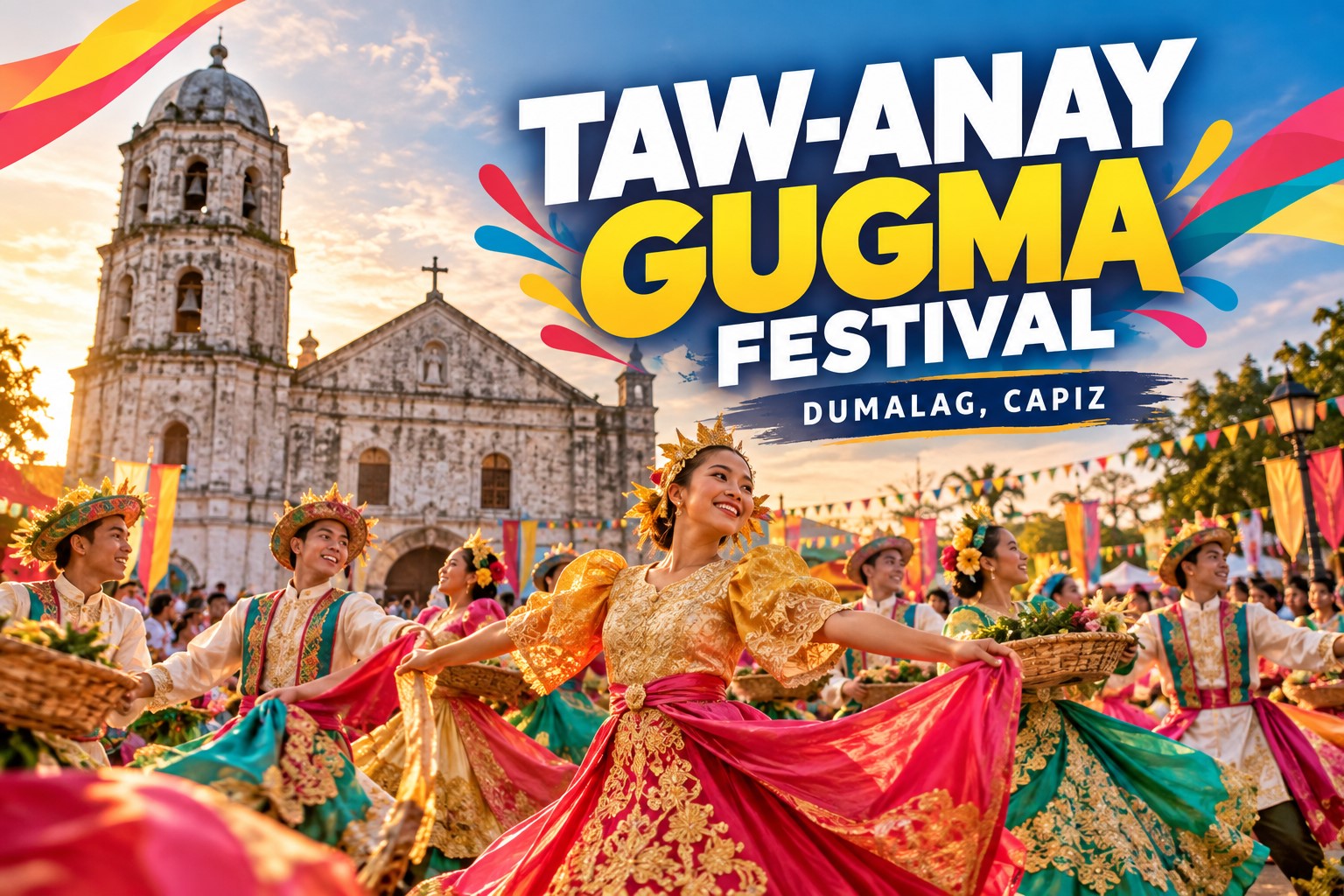
Welcome to the Taw-anay Gugma Festival, an annual cultural and religious celebration that honors Saint Martin of Tours, the patron saint of Dumalag, while highlighting the values of love, generosity, unity, and community involvement.
Held every November 11, the festival brings together the people of Dumalag, also known as Dumalagnons, in a celebration of faith and thanksgiving.
Unlike some of the country’s larger festivals that are primarily known for elaborate street dancing and spectacular performances, Taw-anay Gugma has a particularly meaningful message. It reminds everyone that celebrations aren’t just about entertainment. They’re also about strengthening relationships, helping one another, and appreciating the community we belong to.
If you’re curious about the Taw-anay Gugma Festival, its history, meaning, traditions, and what makes it special, here’s a closer look at this celebration in Capiz.
Content
What Is the Taw-anay Gugma Festival?
The Taw-anay Gugma Festival is an annual town and religious fiesta celebrated in Dumalag, a municipality in the province of Capiz on Panay Island.
The celebration takes place every November 11, coinciding with the feast day of Saint Martin of Tours, the town’s patron saint.
At its heart, Taw-anay Gugma celebrates the importance of love, generosity, compassion, and sharing within the community.
The festival reflects the religious devotion and cultural heritage of Dumalagnons. It is an opportunity for residents to express gratitude for their blessings, honor their patron saint, and renew their connections with one another.
The local celebration has traditionally included a thanksgiving Mass and community activities that bring residents together.
Cultural presentations and town fiesta programs have also formed part of past celebrations, including the Mutya sang Dumalag pageant.
But what makes Taw-anay Gugma particularly interesting is the message behind its name.
Rather than focusing entirely on spectacular performances or competition, the festival celebrates the idea that a community becomes stronger when people share what they have and care for one another.
It’s a simple concept, but one that reflects an important part of Filipino culture.
What Does Taw-anay Gugma Mean?
The name Taw-anay Gugma is associated with the concept of sharing love and kindness.
The word “gugma” means love in Hiligaynon and other Visayan languages. In the context of the festival, the expression emphasizes generosity, compassion, and acts of charity.
The municipal description of the celebration identifies sharing as its central value.
It’s an appropriate message for a town whose patron saint is remembered for helping people in need.
In Filipino communities, sharing often happens through small, everyday gestures.
It might mean preparing food for visiting relatives during a fiesta, helping neighbors organize a community event, or contributing time and resources to activities that benefit everyone.
These familiar expressions of generosity help explain the spirit behind Taw-anay Gugma.
The celebration reminds residents that love is not simply something people talk about. It is something expressed through actions.
And that message connects directly to the life of Saint Martin of Tours.
The Story Behind Taw-anay Gugma: Saint Martin of Tours
To understand the deeper meaning of the festival, it’s important to know the story of Saint Martin of Tours.
Saint Martin was a Christian religious leader who lived during the fourth century. He was born in the Roman province of Pannonia, in what is now part of Hungary, and later served as a soldier in the Roman army.
He eventually became a monk and was appointed Bishop of Tours in present-day France.
However, one of the most famous stories about his life happened before he became a bishop.
According to Christian tradition, Martin encountered a poor man who was suffering from the cold.
Seeing that the man needed help, Martin took his military cloak, divided it into two pieces, and gave half to the stranger.
That night, Martin reportedly dreamed of Jesus wearing the portion of the cloak he had given away.
The story became one of the best-known examples of his compassion and generosity.
Saint Martin would later become an important figure in Christianity, remembered for his humility, charitable works, and devotion to helping others.
His feast day is observed by the Catholic Church on November 11.
For the people of Dumalag, Saint Martin’s story provides an important lesson.
Sharing does not necessarily mean giving away something expensive or extraordinary. Sometimes, helping another person with whatever you have is already a meaningful expression of love.
That is the same message emphasized during the Taw-anay Gugma Festival.
History and Origins of the Taw-anay Gugma Festival
The Taw-anay Gugma Festival is closely connected to the religious history of Dumalag and its devotion to Saint Martin of Tours.
Christianity has been part of the town’s history for centuries.
Historical accounts indicate that Augustinian missionaries reached the settlement formerly known as Ayombong during the late 16th century.
The community eventually became known as Dumalag, and its parish was dedicated to Saint Martin of Tours.
Over the centuries, the town developed religious traditions centered on its patron saint.
The annual November 11 fiesta continues that devotion.
The name Taw-anay Gugma became associated with the celebration’s emphasis on sharing, charity, and community participation.
A municipal account describes the occasion as an expression of the town’s treasured religious traditions, particularly the practice of generosity inspired by Saint Martin.
Documentation from the municipality’s tourism office in 2022 likewise identified love, unity, and communal involvement as central values of the celebration.
Although the town’s patronal devotion has a long history, the exact year when Taw-anay Gugma was first formally organized under its present name is not clearly established in the available historical accounts.
What is clear is that the celebration has become part of Dumalag’s cultural and religious identity.
It connects the town’s longstanding Catholic heritage with values that residents continue to recognize in everyday community life.
How Is the Taw-anay Gugma Festival Celebrated?
Like many Philippine town fiestas, Taw-anay Gugma combines religious observances with community celebrations.
While the activities may change from year to year, the festival’s main purpose remains the same: honoring Saint Martin of Tours and celebrating the spirit of sharing.
Here are some of the important traditions and activities associated with the occasion.
1. Thanksgiving Mass and Religious Devotion
One of the most important parts of Taw-anay Gugma is the religious celebration dedicated to Saint Martin of Tours.
The thanksgiving Mass provides an opportunity for parishioners to express gratitude for the blessings they have received.
For Catholic residents, attending Mass is a way of honoring their patron saint and renewing their commitment to their faith.
The Saint Martin of Tours Parish Church serves as the religious center of the celebration.
The town’s own description of Taw-anay Gugma emphasizes the importance of thanksgiving and devotion to God.
While community activities contribute to the festive atmosphere, the religious observance remains fundamental to the occasion.
2. Sharing and Acts of Generosity
Sharing is perhaps the most distinctive theme of Taw-anay Gugma.
Inspired by Saint Martin’s example, the celebration places special importance on kindness, compassion, and helping others.
This message goes beyond material gifts.
People may express generosity by contributing their time, supporting community preparations, offering hospitality, or helping ensure that others can participate in the celebration.
The idea is familiar to anyone who has experienced a traditional Filipino fiesta.
During these occasions, families often welcome visitors, prepare food, and reconnect with relatives and friends.
In Dumalag, such expressions of hospitality are especially appropriate to the meaning of Taw-anay Gugma.
The festival celebrates not only the blessings that people receive but also their willingness to share those blessings with others.
3. Community Participation
Another defining aspect of Taw-anay Gugma is the involvement of the local community.
The celebration is not simply an event organized for spectators.
Residents, schools, community organizations, and local institutions have participated in organizing fiesta activities.
For example, municipal planning documents from 2022 show the involvement of educational institutions in preparations for Mutya sang Dumalag.
Their responsibilities included venue arrangements, event production, documentation, and other organizational work.
This kind of participation reflects an important element of the festival’s message.
The celebration becomes a collective effort, with people contributing different skills and resources to make the occasion possible.
It is also an expression of bayanihan, the Filipino tradition of cooperation and mutual assistance.
4. Mutya sang Dumalag
Beauty pageants have also been part of the town’s fiesta celebrations.
One documented example is Mutya sang Dumalag, which has featured candidates representing the community.
The pageant provides an opportunity for participants to showcase confidence, personality, and cultural pride.
Past editions have also incorporated elements inspired by local products and traditional clothing.
For example, a documented 2018 program included a production number featuring attire influenced by products associated with Dumalag, as well as a category involving hablon fabric.
Beyond the competition itself, the event has required the cooperation of organizers, sponsors, schools, and volunteers.
However, pageant schedules and formats are not necessarily the same every year.
Visitors interested in watching Mutya sang Dumalag should check the official fiesta program for the specific edition they plan to attend.
5. Cultural and Community Activities
Taw-anay Gugma is also recognized in Philippine festival calendars as a cultural and town fiesta celebration.
Depending on the year’s program, visitors may encounter presentations, organized gatherings, and other activities highlighting the town’s identity.
These events give residents opportunities to socialize, celebrate, and take part in the community’s traditions.
It’s worth remembering that not every festival follows the same format.
Some Philippine festivals feature massive street-dancing competitions, elaborate floats, and large-scale performances.
Taw-anay Gugma, however, is especially associated with its patronal feast and message of sharing.
For this reason, visitors should not assume that activities from other Capiz festivals are automatically part of the Taw-anay Gugma program.
The exact activities depend on the organizers and the official schedule for each year.
Saint Martin of Tours Parish Church: The Heart of the Celebration
One of the most important landmarks in Dumalag is the Saint Martin of Tours Parish Church.
Located in the town’s Poblacion, the church is closely connected to the religious history and identity of the municipality.
It is also one of the places visitors should consider seeing when attending the Taw-anay Gugma Festival.
The church has a long and interesting history.
Historical accounts indicate that the town’s early church and convent structures were established during the Spanish colonial period.
Construction and reconstruction took place over several generations, with significant work during the 19th century.
The building also survived difficult periods.
A destructive typhoon damaged church structures in 1875, while an earthquake in 1948 caused extensive damage.
Reconstruction efforts continued during the following decades.
More recently, restoration projects helped preserve and improve important features of the church, including its altars, ceiling, dome, and other architectural details.
The restored church was formally dedicated on October 8, 2017.
Today, the structure remains an important part of Dumalag’s religious and historical landscape.
For visitors, the church provides a meaningful place to learn about the town’s Catholic heritage and the patron saint honored during Taw-anay Gugma.
Where Is the Taw-anay Gugma Festival Held?
The Taw-anay Gugma Festival is celebrated in the municipality of Dumalag, Capiz, in the Western Visayas region of the Philippines.
Dumalag is located in the interior of Panay Island, approximately 40 to 45 kilometers by road from Roxas City, depending on the route and starting point.
It is a predominantly rural municipality with agricultural communities and a long history of religious and cultural traditions.
The town is composed of 19 barangays, with the Poblacion serving as the municipal center.
The Saint Martin of Tours Parish Church is located in the Poblacion and is the key religious landmark associated with the November 11 celebration.
Other community activities may be held in designated local venues, depending on the year’s program.
If you’re visiting for the first time, the town center is a practical starting point.
When Is the Taw-anay Gugma Festival Celebrated?
The Taw-anay Gugma Festival is traditionally celebrated every November 11.
The date coincides with the Catholic feast day of Saint Martin of Tours.
Although November 11 is the main occasion, additional fiesta-related activities may be held before the feast day.
For example, historical accounts describe celebrations and community programs taking place over several days in early November.
However, the exact duration of the festivities is not fixed for every edition.
Some activities may be scheduled before November 11, while others may take place on the feast day itself.
For visitors planning a trip, it is advisable to check the announcements from the Municipality of Dumalag or Saint Martin of Tours Parish for the latest program.
How to Get to Dumalag, Capiz
If you’re planning to experience Taw-anay Gugma, the most practical approach is to travel to Capiz and continue to Dumalag by road.
From Manila
For travelers coming from Metro Manila, one convenient option is to fly to Roxas City, the capital of Capiz.
From Roxas City, continue by road to Dumalag.
The journey covers roughly 40 to 45 kilometers, with actual travel time depending on road conditions, traffic, and the transportation you choose.
Private vehicles and hired transportation offer a more direct way to reach the municipality.
If you prefer public transportation, ask at the local transport terminal about services passing through or going toward Dumalag. Routes, departure points, and schedules should be confirmed locally.
From Roxas City
Roxas City is a useful starting point for visitors exploring the municipalities of Capiz.
From the city, you can arrange transportation to Dumalag.
Once you reach the municipality, head toward the Poblacion and Saint Martin of Tours Parish Church.
For those visiting during the fiesta, allow additional travel time because local celebrations may affect traffic and access to certain streets.
From Iloilo
Travelers coming from Iloilo may also reach Dumalag by road through the interior of Panay Island.
The most suitable route will depend on your starting location and whether you’re using private or public transportation.
If commuting, confirm available services and transfer points before departure rather than relying on regular weekday schedules during the fiesta period.
Other Places to Visit in Dumalag
If you’re traveling to Dumalag for Taw-anay Gugma, you might want to spend some additional time discovering the municipality.
Although the festival is the main attraction during November, the town also has natural and historical places worth knowing about.
Suhot Cave and Spring
One of Dumalag’s known natural attractions is Suhot Cave and Spring.
Located in Barangay Dolores, the area is associated with limestone caves and cool spring water.
It offers a different side of the municipality, away from its religious and cultural landmarks.
If you’re interested in nature, this is one attraction you can consider including in a longer Capiz trip.
Be sure to verify current access arrangements, operating hours, and visitor requirements before going.
Dumalag Town Center
The Poblacion is also worth exploring, especially for visitors who enjoy discovering smaller Philippine towns.
This is where you’ll find the parish church and municipal community spaces.
During the fiesta season, the town center is a natural place to experience the local atmosphere.
For travelers who appreciate heritage and local culture, simply taking time to explore the town can be part of the experience.
Why Taw-anay Gugma Matters to the People of Dumalag
Every festival has a reason for existing.
Some preserve ancient rituals. Others commemorate historical victories or celebrate the industries that support local livelihoods.
For Taw-anay Gugma, the central message is the value of sharing.
The celebration reminds Dumalagnons of the charitable example of Saint Martin of Tours and encourages the community to practice the same generosity.
It also helps preserve the town’s cultural identity.
As residents participate in religious observances and community programs, they continue traditions that connect them to their hometown.
The involvement of different generations is particularly meaningful.
Older residents help preserve their community’s history and customs, while younger participants have opportunities to become involved in organizing and celebrating local events.
The festival is also an occasion for families and friends to reconnect.
For Dumalagnons who live or work elsewhere, the annual fiesta provides a familiar date associated with their hometown.
And for visitors, it offers an opportunity to discover a local celebration whose importance goes beyond performances and entertainment.
Taw-anay Gugma vs. Other Festivals in Capiz
Capiz is known for several cultural and religious celebrations.
One interesting thing about Dumalag is that it is also associated with other festivities, including the Ilig Festival.
The Ilig Festival focuses on the town’s history of transporting bamboo and other goods along the Panay River.
Its cultural activities have included performances and events inspired by bamboo, local livelihoods, and the community’s relationship with the river.
Taw-anay Gugma, on the other hand, is associated with the November 11 patronal fiesta honoring Saint Martin of Tours.
The celebrations have different historical and thematic focuses, even though both reflect the values and heritage of Dumalag.
Another celebration sometimes mentioned in accounts of the municipality is Dinagsa, which is associated with devotion to the Santo Niño.
These distinctions are useful for travelers researching local festivals.
Not every activity associated with Dumalag’s other celebrations is necessarily part of Taw-anay Gugma.
Tips for Attending the Taw-anay Gugma Festival
If you’re planning to visit Dumalag during the festival, a little preparation can help make your trip more enjoyable.
Plan Your Visit Around November 11
Since the patronal feast is celebrated on November 11, this is the most important date to remember.
If you want to experience additional cultural programs, check whether activities are scheduled on the days leading up to the main celebration.
Visit Saint Martin of Tours Parish Church
The church is central to the festival’s history and religious significance.
Even if you’re not attending a religious service, it is worth appreciating the building’s heritage and understanding its connection to the community.
Visitors should observe proper decorum, especially during Mass and other religious activities.
Respect Local Customs
Taw-anay Gugma is more than a tourism event.
It is an important religious and community celebration for the people of Dumalag.
Be respectful during church services, ask permission before photographing individuals, and follow instructions from local organizers.
Prepare for Crowds and Weather
Like other town fiestas in the Philippines, celebrations may attract residents, returning families, and visitors.
It’s advisable to arrive early for scheduled activities and allow extra time for transportation.
November can also bring rainy weather to Panay Island, so carrying an umbrella or light raincoat is a practical idea.
Support the Local Community
One meaningful way to appreciate the festival is to support local establishments and small businesses.
Consider eating at local restaurants, purchasing locally made products, or exploring nearby attractions.
These simple choices can contribute to the community hosting the celebration.
Frequently Asked Questions About Taw-anay Gugma
What is the Taw-anay Gugma Festival?
Taw-anay Gugma is an annual cultural and religious fiesta in Dumalag, Capiz, celebrating the feast of Saint Martin of Tours and the values of sharing, love, generosity, and community unity.
Where is Taw-anay Gugma celebrated?
The festival is celebrated in Dumalag, a municipality in Capiz province on Panay Island, Western Visayas.
When is the Taw-anay Gugma Festival?
The annual patronal celebration takes place every November 11. Additional events may be organized before the main fiesta date.
What does Taw-anay Gugma mean?
The expression is associated with sharing love, compassion, and generosity. The festival emphasizes acts of kindness and communal involvement inspired by Saint Martin of Tours.
Who is the patron saint of Dumalag?
The patron saint of Dumalag is Saint Martin of Tours, a fourth-century Christian bishop remembered for his charitable works and compassion for people in need.
Is Taw-anay Gugma a religious festival?
Yes. It is both a religious and cultural celebration. The thanksgiving Mass and devotion to Saint Martin of Tours are central to the occasion, while community programs contribute to the town fiesta atmosphere.
Is there street dancing during Taw-anay Gugma?
The festival is primarily documented as a religious and cultural fiesta centered on sharing and devotion. Street-dancing traditions associated with other local festivals should not automatically be attributed to Taw-anay Gugma.
Visitors should refer to the official program to determine whether dance performances or other cultural presentations are included in a particular year’s celebration.
Is Taw-anay Gugma celebrated every year?
Taw-anay Gugma is traditionally an annual celebration associated with the November 11 feast day. The scale and specific activities may vary from year to year.
Taw-anay Gugma Festival 2026 Schedule
For 2026, the traditional main celebration falls on Wednesday, November 11, coinciding with the Feast of Saint Martin of Tours.
Date: November 11, 2026 (Wednesday)
Location: Dumalag, Capiz
Occasion: Annual Town and Religious Fiesta
Patron Saint: Saint Martin of Tours
The detailed official program of activities for the 2026 edition has not yet been independently confirmed.
Specific schedules for religious services, cultural presentations, pageants, and community events should be verified through the municipal government or Saint Martin of Tours Parish.
Travelers are encouraged to check official announcements closer to the celebration.
Final Thoughts
With so many festivals happening across the Philippines, it’s easy to associate these celebrations with colorful costumes, energetic performances, and big crowds.
But Taw-anay Gugma in Dumalag, Capiz, offers a reminder that festivals can also be about something much simpler.
At its heart, the celebration is about sharing.
Through its devotion to Saint Martin of Tours, the festival highlights the importance of generosity, kindness, faith, and community involvement.
It is a celebration that connects the town’s religious history with the everyday values that help bring people together.
And that’s what makes Taw-anay Gugma meaningful.
For the people of Dumalag, the festival is more than an annual date on the calendar. It is an opportunity to celebrate their patron saint, reconnect with their community, and continue a tradition built around love and generosity.
For visitors exploring the different festivals of the Philippines, Taw-anay Gugma offers a chance to discover a quieter but equally meaningful side of the country’s rich fiesta culture.
Because sometimes, the most important part of a celebration isn’t how grand it looks.
It’s how much it brings people together.