Filipino motorists are waking up to another mixed fuel price adjustment today, Tuesday, October 6, 2026.
This time, gasoline drivers will have to pay more at the pump, while motorists using diesel are getting another small break.
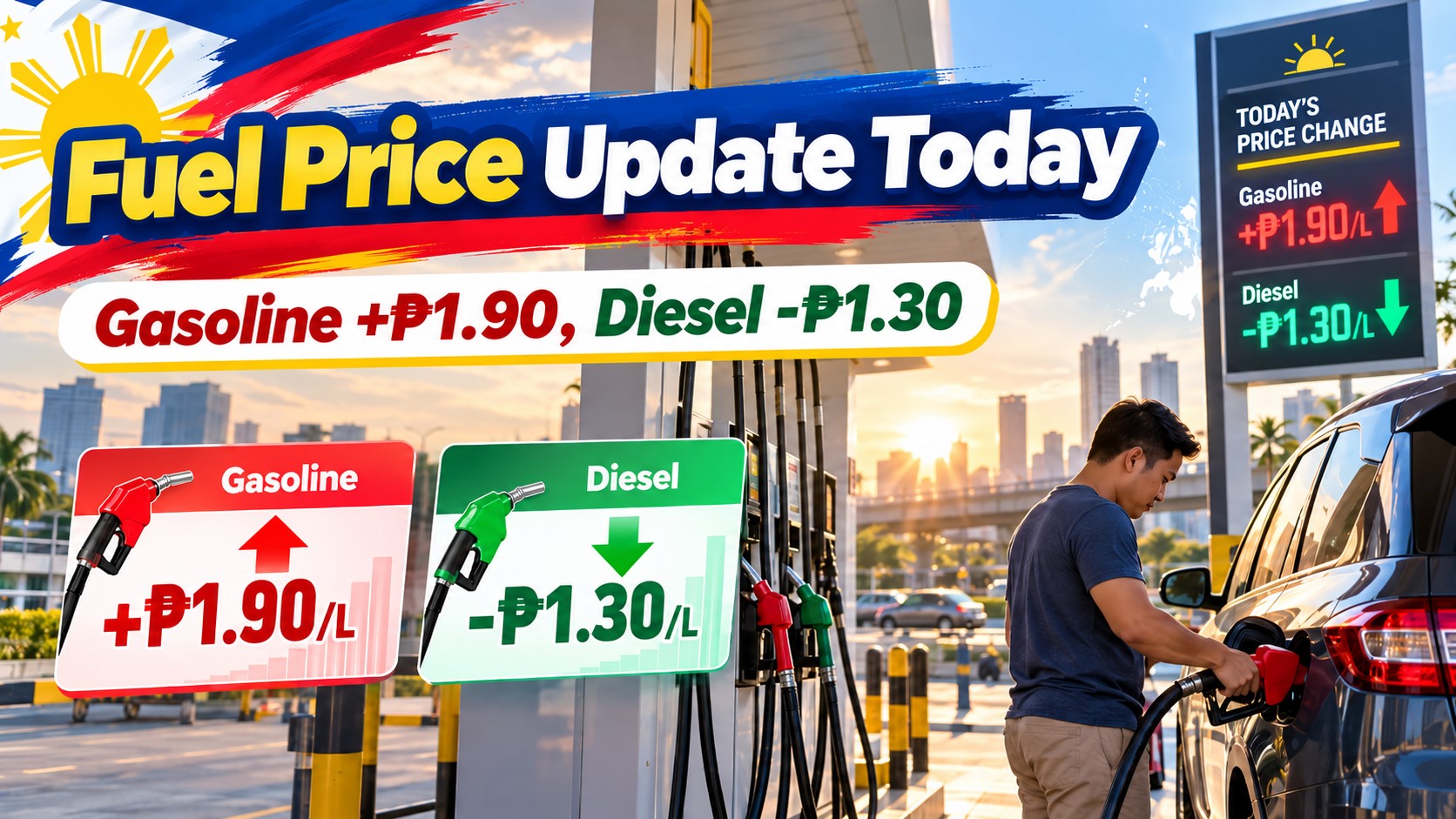
Shell Pilipinas announced a ₱1.90 per liter increase for gasoline and a ₱1.30 per liter rollback for diesel. Kerosene, meanwhile, increased by ₱3.30 per liter.
Petro Gazz announced a slightly higher gasoline adjustment of ₱1.93 per liter while also cutting diesel by ₱1.30 per liter.
The new prices took effect at 6:00 a.m. today.
So if you’re filling up your car today, the impact really depends on what fuel you use.
For gasoline motorists, it’s another increase.
For diesel users, it’s the second consecutive week of lower prices.
Here’s everything you need to know about today’s Philippine fuel price update.
Content
Fuel Price Update Today
The announced adjustments include:
| Fuel | Price Adjustment |
|---|---|
| Gasoline – Shell | +₱1.90 per liter |
| Gasoline – Petro Gazz | +₱1.93 per liter |
| Diesel | -₱1.30 per liter |
| Kerosene – Shell | +₱3.30 per liter |
The adjustments took effect beginning 6:00 a.m. on Tuesday, October 6, 2026.
The exact pump price you see will still vary depending on the oil company, station, location and fuel grade.
Gasoline Goes Up Again
Gasoline motorists are taking the biggest hit among regular private vehicle owners this week.
Shell raised gasoline prices by ₱1.90 per liter, while Petro Gazz announced a ₱1.93 per liter increase.
That may not sound massive when you’re looking only at the per-liter adjustment.
But once you multiply it by an entire tank, you can definitely feel the difference.
For example, using the ₱1.90 adjustment:
| Gasoline Purchased | Additional Cost |
|---|---|
| 20 liters | ₱38 |
| 30 liters | ₱57 |
| 40 liters | ₱76 |
| 50 liters | ₱95 |
| 60 liters | ₱114 |
So if you normally fill around 50 liters of gasoline, you’re spending roughly ₱95 more compared with prices before today’s adjustment.
If your station implements a ₱1.93 increase instead, the additional cost will be slightly higher.
For motorists who drive daily to work, school or business, these weekly adjustments can quickly add up.
Diesel Price Drops by ₱1.30 Per Liter
There’s better news if your vehicle runs on diesel.
Diesel prices went down by ₱1.30 per liter beginning October 6.
This is the second consecutive week of diesel price reductions.
Here’s roughly how much you can save:
| Diesel Purchased | Savings |
|---|---|
| 20 liters | ₱26 |
| 30 liters | ₱39 |
| 40 liters | ₱52 |
| 50 liters | ₱65 |
| 60 liters | ₱78 |
A driver filling a 50-liter tank, for example, would spend around ₱65 less compared with the previous pump price.
That’s welcome news not only for private diesel-vehicle owners but also for businesses and transport operators that depend heavily on diesel.
Trucks, delivery vehicles, buses, jeepneys and other commercial vehicles are particularly sensitive to changes in diesel prices because of the amount of fuel they consume.
Kerosene Goes Up by ₱3.30
Kerosene users aren’t getting the same relief as diesel motorists.
Shell announced a significant ₱3.30 per liter increase in kerosene prices beginning today.
That’s especially important for households and businesses that continue to use kerosene, as well as sectors whose costs can be affected by changes in similar petroleum products.
Interestingly, the increase comes just one week after a substantial kerosene rollback.
How Does This Compare With Last Week?
Today’s adjustment follows a huge round of fuel price reductions implemented during the previous week.
For the September 29 to October 5 period, fuel prices fell by:
- Gasoline: at least ₱0.24 per liter
- Diesel: ₱7.57 per liter
- Kerosene: ₱5.85 per liter
Today’s movement partly reverses that relief for gasoline and kerosene.
Diesel, however, continues to move downward with another ₱1.30 rollback.
Here’s the week-to-week comparison:
| Fuel | Sept. 29 Adjustment | Oct. 6 Adjustment |
|---|---|---|
| Gasoline | -₱0.24/L | +₱1.90 to ₱1.93/L |
| Diesel | -₱7.57/L | -₱1.30/L |
| Kerosene | -₱5.85/L | +₱3.30/L |
So for diesel drivers, prices are still moving in the right direction.
For gasoline motorists, much of last week’s relatively small rollback has already been erased by today’s increase.
Why Are Gasoline and Diesel Moving in Opposite Directions?
This week’s price movement may look strange at first.
We’re used to seeing gasoline and diesel rise or fall together.
But the prices of different refined petroleum products can move in different directions depending on regional supply, demand, inventories and trading conditions.
The Department of Energy said the adjustments reflect movements in the international oil market amid continuing developments in the Middle East affecting global supply and prices.
There is also another major development affecting Asia’s fuel market.
China temporarily suspended most refined fuel exports for October as its refiners work to protect domestic inventories.
China is an important supplier of refined petroleum products to the Asia-Pacific market, so removing some of that supply creates additional pressure on countries competing for gasoline, diesel and other finished products.
The Department of Energy has warned that China’s decision could tighten regional supplies and potentially raise the cost of imported refined fuel.
China’s Fuel Export Suspension Matters to the Philippines
This is something worth watching beyond this week’s gasoline increase.
China’s major refiners have reportedly suspended fuel exports for October, with limited exceptions, as the country prioritizes its own inventories.
The move comes while global energy markets are already dealing with supply risks linked to the continuing Middle East conflict.
For the Philippines, that matters because we depend significantly on imported petroleum products.
If a major regional supplier reduces exports, Philippine oil companies may have to compete for supply from other markets.
That can mean:
- Higher international product prices
- Higher freight costs
- Stronger competition for available fuel
- More volatility in local pump prices
DOE Oil Industry Management Bureau Director Rino Abad has described China’s decision as a potential source of tighter refined-product supply in the Asia-Pacific market.
That doesn’t automatically mean gasoline prices will keep rising every week.
But it does mean fuel prices could remain volatile.
Middle East Tensions Are Still a Major Factor
Another reason Filipinos shouldn’t expect stable fuel prices yet is the continuing geopolitical situation in the Middle East.
The region remains critically important to global petroleum supply.
Southeast Asia imports more than half of the crude oil used by its refineries from the Middle East, according to current regional energy reporting.
Any disruption involving oil infrastructure, tanker routes or major shipping lanes can quickly affect international prices.
Those increases eventually work their way down to Philippine pump prices.
This is why even events happening thousands of kilometers away can suddenly add several pesos to a liter of gasoline in Metro Manila, Cebu, Davao or anywhere else in the Philippines.
Why Did Diesel Still Go Down?
Diesel is moving differently this week.
Industry forecasts ahead of today’s adjustment pointed to the expected release of emergency oil and diesel reserves by G7 countries and their partners as one factor easing fears of an immediate diesel shortage.
That reduced some of the pressure on international diesel prices and contributed to this week’s rollback.
However, it’s important to remember that markets move quickly.
The suspension of Chinese refined-product exports and continuing geopolitical tensions could put renewed pressure on diesel prices in succeeding weeks.
So today’s rollback doesn’t necessarily mean diesel prices will continue declining.
What Today’s Increase Means for Daily Commuters
For someone who fills up only occasionally, an extra ₱1.90 per liter may seem manageable.
But consider a worker who consumes 40 liters of gasoline every week.
That’s roughly ₱76 in extra fuel cost per fill-up based solely on today’s increase.
Over four weeks, that would amount to around ₱304 if prices remained at the same higher level.
And that’s before considering future adjustments.
For households already dealing with higher food, electricity, transportation and other daily expenses, even relatively small fuel increases matter.
What It Means for Motorcycle Riders
Motorcycle riders use much smaller tanks, so the peso increase per fill-up is naturally lower.
For example:
A 5-liter gasoline purchase costs about ₱9.50 more after a ₱1.90-per-liter increase.
A 10-liter purchase costs around ₱19 more.
That might not sound like much, but motorcycle riders who work in delivery services or ride-hailing can refuel frequently.
Over an entire month, those increases can still affect take-home income.
What It Means for Public Transportation
Diesel-powered transport gets some relief this week.
The ₱1.30-per-liter rollback can help reduce operating costs for vehicles such as:
- Jeepneys
- Buses
- Vans
- Trucks
- Delivery vehicles
The savings become more meaningful when operators purchase hundreds or even thousands of liters over time.
But today’s diesel rollback comes after months of highly volatile fuel prices.
As of September 22, before the large rollback the following week, year-to-date fuel price adjustments still reflected substantial net increases: ₱69.90 per liter for gasoline, ₱73.68 for diesel and ₱64.54 for kerosene.
The subsequent rollbacks reduced those totals, but fuel costs remain a major concern for transportation businesses.
Will Jeepney Fares Go Down Because Diesel Is Cheaper?
Not automatically.
Public transport fares are regulated and don’t immediately change every time fuel prices move.
Fare adjustments typically involve a formal process and consideration of factors beyond a single week’s diesel price.
Fuel is certainly one of the biggest expenses for public utility vehicle operators, but maintenance costs, vehicle expenses and other operating costs also matter.
So passengers shouldn’t expect an automatic fare decrease just because diesel dropped by ₱1.30 today.
Should You Fill Up Before a Fuel Price Increase?
For future price adjustments, filling up before a confirmed gasoline increase can save money.
The savings depend on the size of your tank and how empty it is.
For example, avoiding a ₱1.90-per-liter hike on a 40-liter purchase saves ₱76.
That’s useful—but I also wouldn’t recommend driving far out of your way just to save a few centavos or pesos per liter.
Fuel used searching for cheaper fuel can cancel out the savings.
Pump Prices Are Different From Station to Station
Another important thing to remember is that today’s adjustment isn’t the actual final price you’ll see everywhere.
The adjustment is added to or deducted from each station’s existing pump price.
Fuel prices can differ significantly depending on:
- Location
- Oil company
- Station operating costs
- Competition in the area
- Fuel grade
- Promotions and discounts
A gasoline station along a major central-business-district road may charge considerably more than an independent station in another city.
The Department of Energy publishes pump-price monitoring data for Metro Manila and other regions, allowing consumers to compare prevailing prices.
Gasoline Prices Can Also Differ by Fuel Grade
When you see an announcement saying gasoline is increasing by ₱1.90 per liter, that doesn’t mean every gasoline product will have exactly the same final pump price.
Regular unleaded, premium gasoline and higher-octane products start from different base prices.
The increase is applied on top of those existing prices.
So even at the same station, you can see several different gasoline prices displayed on the board.
Fuel Price Update Summary for October 6, 2026
For anyone who just wants the important numbers, here’s today’s update:
Gasoline: up ₱1.90 per liter at Shell, with Petro Gazz announcing a ₱1.93 increase.
Diesel: down ₱1.30 per liter.
Kerosene: up ₱3.30 per liter at Shell.
Effective: 6:00 a.m., Tuesday, October 6, 2026.
Frequently Asked Questions
Did gasoline prices increase today, October 6, 2026?
Yes.
Shell Pilipinas raised gasoline prices by ₱1.90 per liter beginning at 6:00 a.m. today, while Petro Gazz announced a ₱1.93-per-liter increase.
Did diesel prices go down today?
Yes.
Diesel prices were reduced by ₱1.30 per liter.
This is the second consecutive week of diesel price rollbacks.
What happened to kerosene prices?
Shell increased kerosene prices by ₱3.30 per liter effective October 6.
What time did the new fuel prices take effect?
The announced adjustments took effect at 6:00 a.m. on Tuesday, October 6, 2026.
Why did gasoline prices increase?
International refined-product supply remains under pressure from several factors, including continuing Middle East tensions and China’s temporary suspension of refined fuel exports for October. The DOE has warned that China’s export decision could tighten fuel supplies in the Asia-Pacific region.
Why did diesel prices go down?
Recent international diesel-market movements provided some relief, including expectations surrounding releases of emergency petroleum reserves by G7 countries and their partners.
Are gasoline prices going up by exactly ₱1.90 everywhere?
Not necessarily.
Shell announced a ₱1.90-per-liter increase, while Petro Gazz announced ₱1.93.
The final retail price also varies by station, location, company and gasoline grade.
Final Thoughts
Today’s fuel price adjustment is a mixed bag for Filipino motorists.
If you’re driving a gasoline-powered car, you’re paying around ₱1.90 more per liter beginning October 6, with some companies implementing slightly different adjustments.
Diesel drivers, on the other hand, get another ₱1.30-per-liter rollback.
And kerosene users are facing a fairly significant ₱3.30 increase.
What makes the situation more complicated is what’s happening outside the Philippines.
China’s suspension of refined fuel exports is creating concerns about tighter fuel supplies across Asia, while continuing tensions in the Middle East are keeping international petroleum markets volatile.
That means today’s adjustment probably won’t be the last significant movement we’ll see.
For motorists, the best approach is still practical: compare pump prices when possible, use legitimate fuel-discount programs, keep your vehicle properly maintained and pay attention to the weekly oil-price announcements.
Because these days, the difference of even ₱1 or ₱2 per liter can easily turn into hundreds of pesos over a month of driving.