Mushrooms may seem like an unusual inspiration for a festival.
They do not have the bright colors of flowers, the grand appearance of parade floats or the instant excitement of a street party. They grow quietly, often inside simple cultivation houses where humidity, temperature and cleanliness must be carefully managed.
But in General Mariano Alvarez, Cavite, mushrooms represent something much bigger.
They represent livelihood, resourcefulness and the ability to create opportunities even when farmland and working space are limited. Every March, the municipality celebrates this connection through the Kabutenyo Festival—a lively community event featuring mushroom-inspired street dancing, trade fairs, culinary competitions, parades and public programs.
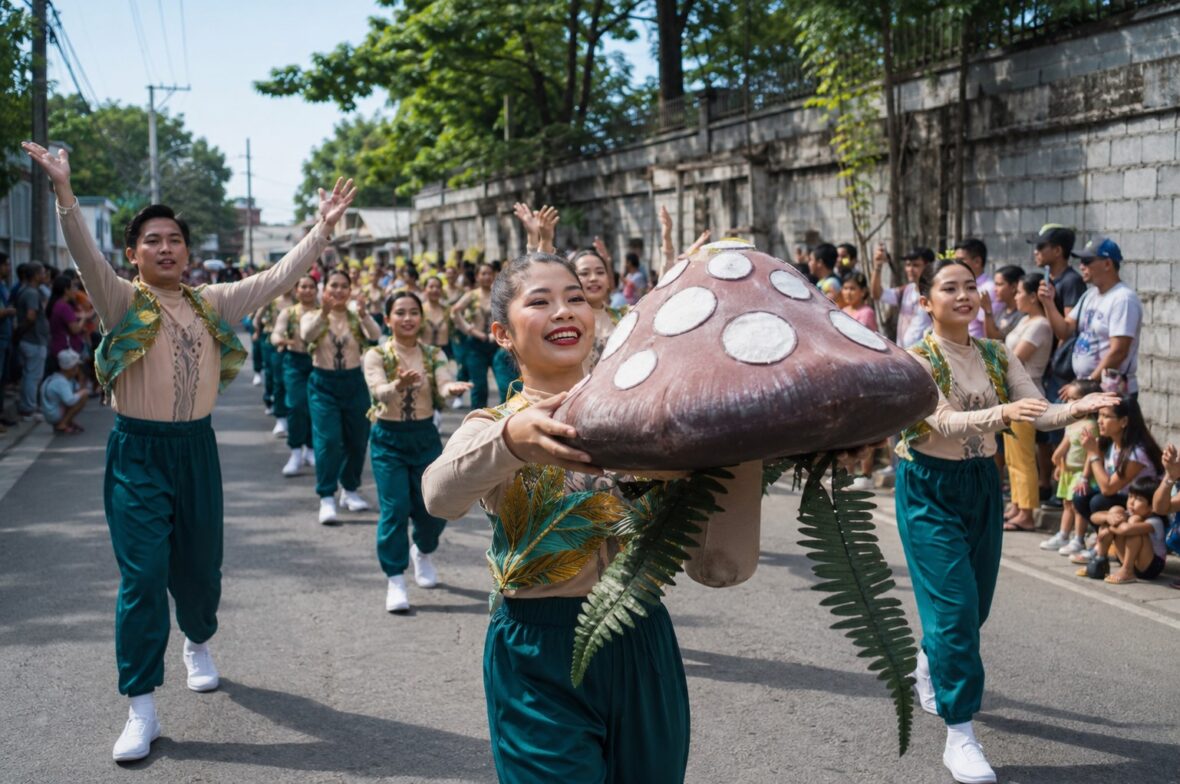
During the festival, ordinary streets become filled with giant mushroom props, earthy-colored costumes and dancers portraying the different stages of mushroom production. Food booths serve familiar dishes reinvented with oyster mushrooms, while growers and entrepreneurs introduce visitors to products created from the town’s best-known agricultural commodity.
For travelers, the Kabutenyo Festival offers a different side of Cavite. It is not only a colorful celebration but also a story about how a relatively young and highly urbanized municipality embraced mushroom cultivation as an alternative source of livelihood.
Content
What Is the Kabutenyo Festival?
The Kabutenyo Festival is an annual cultural and agricultural celebration held in the Municipality of General Mariano Alvarez, commonly called GMA, in Cavite.
The festival highlights the town’s cultured oyster-mushroom industry and its identity as the Mushroom Capital of Cavite. According to the municipal government, mushroom production has been promoted as an alternative livelihood for low-income residents, and the annual celebration was developed to showcase cultured oyster mushrooms and their economic potential.
The festival is closely connected with GMA’s founding anniversary in March. General Mariano Alvarez was formally inaugurated as an independent municipality on March 14, 1981, after the communities forming it were separated from Carmona.
Festival programs differ from year to year, but the celebration is best known for:
- Mushroom-themed street dancing
- Civic and cultural parades
- Agricultural and trade fairs
- Mushroom culinary competitions
- Community performances
- Pageants and talent competitions
- Concerts and thanksgiving programs
- Activities celebrating GMA’s founding anniversary
The 2026 edition marked the municipality’s 45th founding anniversary. Its principal Kabutenyo activities were announced for March 11 to 14, with a separate Gabi ng Pasasalamat held at the municipal plaza on March 9.
What Does “Kabutenyo” Mean?
The name Kabutenyo is a playful combination of kabute, the Filipino word for mushroom, and Kabitenyo, a person from Cavite.
It immediately communicates what the festival represents: a distinctly Caviteño celebration built around mushrooms.
The name also works as a community identity. During the festival, Kabutenyo does not refer only to the agricultural product. It can describe the growers, cooks, performers, entrepreneurs and residents who participate in the celebration.
You will see the word printed on banners, costumes, booths and festival merchandise. It has become an easy and memorable way for General Mariano Alvarez to distinguish its celebration from the many other festivals held across Cavite.
Why Is General Mariano Alvarez Known for Mushrooms?
General Mariano Alvarez promotes itself as the Mushroom Capital of Cavite because of its cultured oyster-mushroom facilities and livelihood programs.
Unlike traditional farming, mushroom production does not always require a wide field. Oyster mushrooms can be grown inside carefully managed structures using prepared fruiting bags arranged on shelves. This makes the livelihood particularly relevant in urban and densely settled communities where conventional agricultural land may be limited.
The Agricultural Training Institute has promoted oyster-mushroom production as part of urban agriculture because it can produce food in restricted spaces, provide additional household income and make use of appropriate agricultural materials. DOST-PCAARRD has likewise supported mushroom-growing projects as alternative livelihood opportunities for farmers and community groups.
This helps explain why mushrooms became such a fitting product for GMA.
The municipality is not known for enormous farms or wide plantations. Much of its growth came from resettlement communities that developed into densely populated neighborhoods. Mushroom production offered residents a form of agriculture that could be introduced through organized facilities, household-scale projects and community livelihood programs.
The mushroom became a symbol of doing more with limited space.
A Brief History of General Mariano Alvarez
General Mariano Alvarez is one of Cavite’s youngest municipalities.
The area was previously part of Carmona and included resettlement communities established for families relocated from Metro Manila. Batas Pambansa Blg. 75, approved on June 13, 1980, separated the National Housing Authority resettlement areas in San Jose, San Gabriel and part of Cabilang Baybay from Carmona and created the Municipality of General Mariano Alvarez.
A plebiscite followed, and the municipality’s first appointed officials were formally inaugurated on March 14, 1981. This date became the basis of GMA’s annual founding-anniversary celebration.
The municipality was named after General Mariano Alvarez, a Cavite revolutionary leader associated with the Magdiwang faction of the Katipunan.
Over the decades, the resettlement area grew into a busy municipality containing residential communities, schools, small businesses, transport terminals and commercial establishments. Although its surroundings became increasingly urban, GMA continued developing livelihood projects that residents could pursue within limited spaces.
Mushroom cultivation became one of the best-known examples.
How Mushroom Farming Became a Livelihood
Mushroom growing can begin on a relatively manageable scale.
Instead of purchasing a large agricultural property, a household or community organization can start with a cultivation room, shelves, fruiting bags and the technical knowledge needed to maintain the proper environment.
The work still requires discipline.
Growers must protect their production area from contamination, maintain appropriate moisture and provide enough ventilation. They also need reliable materials, clean equipment and a market that can absorb fresh harvests before they lose quality.
However, the model can be expanded gradually.
A grower may begin with a limited number of fruiting bags, develop a steady harvest and later add more shelves or products. Government-supported mushroom projects in other Philippine communities have demonstrated how production can create supplemental earnings and eventually develop into small agribusinesses.
The festival helps connect that quiet production process with the public.
A resident who has never entered a mushroom-growing facility may first encounter the livelihood through a festival booth, cooking demonstration or street-dancing performance. That experience can lead to curiosity about training, production or selling mushroom-based products.
Why Oyster Mushrooms?
The mushroom most closely associated with the festival is the oyster mushroom.
Oyster mushrooms grow in clusters and have broad caps that resemble oyster shells. Their mild flavor and tender texture make them suitable for many Filipino dishes.
They are also flexible in the kitchen.
Fresh oyster mushrooms can be sautéed with garlic, added to soups, mixed with vegetables or coated and fried until crisp. They can replace or supplement meat in dishes such as sisig, lumpia, burgers and savory rice meals.
This versatility is important from a livelihood perspective.
Growers are not limited to selling fresh mushrooms. Entrepreneurs can develop processed products that are easier to transport, store or market. A festival culinary competition gives cooks a reason to explore these possibilities and introduces visitors to preparations they may never have tried before.
How Cultured Oyster Mushrooms Are Grown
Mushroom cultivation looks very different from farming rice, vegetables or fruit trees.
A simplified production cycle usually involves preparing a growing material, placing it in heat-resistant bags, sterilizing it, introducing mushroom spawn and allowing fungal growth to spread through the substrate.
Once the bags are fully colonized, they are transferred to a fruiting area where humidity, airflow and cleanliness must be managed. Clusters of oyster mushrooms eventually emerge from openings in the bags and are harvested while still fresh and tender.
Every stage matters.
Contaminated materials can ruin a bag before mushrooms appear. Insufficient moisture can dry the fruiting bodies, while poor airflow can affect their development. Harvesting too late may also reduce the product’s market quality.
This explains why mushroom growing should not be dismissed as simply placing bags inside a room and waiting.
Successful growers combine scientific procedures, observation and daily care. Philippine agriculture and science agencies continue to provide training on production, processing and commercialization because technical knowledge directly influences both yield and quality.
What to Expect at the Kabutenyo Festival
The complete program changes annually, but several activities have become strongly associated with Kabutenyo.
Some focus directly on mushrooms, while others celebrate GMA’s founding, residents and wider community culture.
Sayaw sa Kabutehan Street-Dancing Parade
Street dancing is the festival’s most colorful attraction.
The activity has been promoted under the name Sayaw sa Kabutehan, turning mushroom cultivation into a large public performance. The municipal government identified the grand street-dancing parade as a centerpiece of the 16th Kabutenyo Festival in 2024.
Performers may represent barangays, schools or community organizations.
Their costumes commonly feature green, brown, beige, white and other earthy shades. Some wear enormous mushroom-shaped headpieces, while others carry oversized caps, leaves and fruiting bags as props.
The choreography often tells a story.
Dancers may begin by portraying workers preparing materials. Other performers represent moisture, growth or the environment needed by mushrooms. Small figures gradually emerge before the entire group opens its mushroom-inspired costumes and fills the street.
The performance transforms a process normally hidden inside a cultivation room into something energetic and easy for the public to understand.
Mushroom-Inspired Costumes
The costumes are one of the most enjoyable parts of Kabutenyo.
Designers have many shapes and textures to work with. A mushroom cap can become a hat, shield, skirt or umbrella-like prop. White fabric can represent oyster-mushroom clusters, while brown and green materials suggest soil, wood and plant life.
Some groups create realistic mushroom designs.
Others take a more imaginative approach, transforming performers into colorful forest characters or fantasy creatures. Although actual oyster mushrooms are usually pale, a festival costume does not need to follow nature exactly. Bright orange, yellow, purple and blue help the dancers stand out along the road.
From a distance, dozens of mushroom headpieces moving together create a memorable scene.
They also make the festival instantly recognizable. Even without reading a banner, spectators can understand what product the town is celebrating.
Civic Parade
Kabutenyo is more than a street-dancing contest.
A civic parade may bring together municipal employees, schools, barangays, community organizations, bands, businesses and local service groups. Videos and reports from the 2026 edition show both lively street dancing and a broad civic procession involving different organizations.
The parade reflects the municipality beyond mushroom farming.
Participants may represent education, health care, public safety, local businesses, youth organizations and community programs. Banners and floats celebrate GMA’s development while mushroom imagery keeps the event connected with the festival theme.
For residents, the parade becomes an opportunity to see the different sectors of the municipality gathered in one place.
Agricultural and Trade Fair
The trade fair is where the festival’s livelihood purpose becomes most visible.
Growers, food producers and local entrepreneurs can introduce visitors to fresh mushrooms, processed foods and other locally made products. Trade fairs and mushroom-centered culinary activities remain among Kabutenyo’s regularly advertised attractions.
Depending on the exhibitors, visitors may find:
- Fresh oyster mushrooms
- Mushroom chips
- Mushroom chicharon
- Bottled mushroom products
- Mushroom seasoning or powder
- Ready-to-cook products
- Mushroom-based meals
- Plants, food and other GMA-made products
Not every item will necessarily be available at every edition, but the fair is the best place to look for products created by local enterprises.
Take time to speak with sellers.
Ask whether the mushrooms were grown in GMA, how the product should be stored and how long it will remain fresh. These conversations make the trade fair more interesting and help visitors appreciate the work behind the packaging.
Mushroom Culinary Contest
A culinary competition is one of the best ways to demonstrate that mushrooms are more than an occasional pizza topping.
Contestants are challenged to create dishes featuring mushrooms as a main ingredient. The festival has long been associated with culinary contests, trade fairs and public displays highlighting the different ways mushrooms can be prepared.
Possible entries may include familiar Filipino dishes adapted with oyster mushrooms, such as:
- Mushroom sisig
- Crispy mushroom bites
- Mushroom lumpia
- Mushroom adobo
- Mushroom burgers
- Creamy mushroom pasta
- Mushroom arroz caldo
- Mushroom empanada
- Mushroom kare-kare
- Mushroom pancit
A strong competition entry must do more than add mushrooms to an existing dish.
The cook must consider texture, moisture and seasoning. Oyster mushrooms absorb flavor well, but they can release liquid when cooked. Proper preparation helps them remain tender without turning a dish watery.
The contest encourages residents to experiment and can inspire products that later become part of a small food business.
Cooking Demonstrations and Tastings
Some festival booths may offer demonstrations or samples.
This is particularly helpful for visitors who are interested in buying fresh mushrooms but do not know how to prepare them.
A seller may demonstrate how to clean oyster mushrooms, remove the tougher base and cook them without soaking them unnecessarily. Visitors can also learn which dishes work best with fresh mushrooms and which processed products are ready to eat.
Free tasting can change people’s perceptions.
Someone who thinks mushrooms are bland may discover a crispy mushroom snack with strong seasoning. A diner trying to reduce meat consumption may realize that mushrooms can provide a satisfying texture in familiar dishes.
This direct experience supports growers because customers are more likely to buy an unfamiliar product after learning how to use it.
Ms. GMA and Festival Pageants
Pageants and personality competitions may be staged as part of the founding-anniversary season.
The 2024 celebration featured Ms. GMA, held on March 14 as part of the municipality’s 43rd anniversary.
Candidates may represent different barangays and appear in festival-inspired costumes, formal wear and interview segments.
Mushroom imagery can also appear in creative costumes. Designers may use layered fabric to resemble mushroom gills, large rounded structures to form caps or earthy colors to represent the growing environment.
Beyond glamour, the pageant offers candidates a platform for promoting community projects and local pride.
Drum and Lyre Exhibitions
Music is an essential part of Kabutenyo.
Recent festival promotions have included drum-and-lyre exhibitions alongside the trade fair and street-dancing competition.
School bands bring another layer of energy to the celebration.
Their uniforms, coordinated formations and upbeat music attract families and provide students with a chance to represent their schools before a large audience.
The sound of drums can be heard before the parade reaches your viewing area, creating anticipation as performers approach.
Concerts and Thanksgiving Programs
Evening entertainment normally adds a more relaxed atmosphere after the daytime competitions.
The 2026 Gabi ng Pasasalamat was held at the municipal plaza and included guest performers from GMA Network’s talent roster.
Concert lineups naturally change every year.
Some editions may feature nationally known entertainers, while others highlight local singers, dance groups and community performers. Major shows can attract large crowds, so visitors should arrive early and follow entrance, bag and security rules.
The thanksgiving theme is appropriate for the festival.
Kabutenyo celebrates not only a product but also the people, programs and relationships that allowed the livelihood to develop.
Founding-Anniversary Activities
Because Kabutenyo is held around GMA’s founding anniversary, the program may extend beyond mushroom-centered events.
Community sports, clean-up activities, public-service programs, job fairs and recognition ceremonies have appeared in previous festival seasons. The wider purpose is to celebrate the municipality’s progress while giving residents different ways to participate.
This makes Kabutenyo a true municipal festival rather than a single agricultural fair.
A resident who is not a mushroom grower can still join through sports, music, public service, pageants or barangay performances.
When Is the Kabutenyo Festival Celebrated?
Kabutenyo is traditionally celebrated in March, close to GMA’s founding anniversary on March 14.
March 13 has often been identified as the traditional festival date, but the complete program normally covers several days.
The most recent edition at the time of writing was held in March 2026. Major activities were announced for March 11 to 14, although related entertainment began earlier with the March 9 thanksgiving program.
Future visitors should check the latest official schedule.
The street-dancing competition, trade fair, parade, pageant and concert may be held on different dates. Starting times and venues may also change because of weather, traffic arrangements or local planning.
Where Is the Festival Held?
Major programs are generally held around the General Mariano Alvarez Municipal Plaza, government areas and designated roads within the municipality.
Street dancers and civic groups may assemble in separate barangays before moving toward the principal performance or judging venue. Trade booths, pageants and concerts may also use different locations.
Do not assume that every event happens in one place.
Before traveling, check the official announcement for:
- The parade’s assembly point
- The street-dancing route
- The final competition venue
- Trade-fair location
- Concert entrance
- Road-closure times
- Public-transport drop-off points
- Designated parking areas
Showing a driver the precise venue is more useful than simply saying “Kabutenyo Festival.”
What the Festival Feels Like
Kabutenyo has the cheerful atmosphere of a community celebration.
Early in the morning, performers begin gathering in schools, covered courts and barangay streets. Some are already wearing mushroom headpieces, while others are applying makeup or repairing props.
Parents carry water, towels and food for the dancers. Coaches review formations, and musicians test their drums.
Near the main venue, vendors arrange their products. The smell of fried mushrooms mixes with grilled food, rice meals and familiar festival snacks.
Then the parade begins.
Giant mushrooms appear at the far end of the road. Performers move forward in rows, raising their props as spectators cheer. One group may portray a forest filled with mushrooms, while another recreates the cultivation process using shelves, bags and oversized oyster-mushroom clusters.
The event feels playful, but the community effort behind it is easy to see.
Every costume required hours of work. Every dance needed repeated practice. Every product at the trade fair represents somebody’s small business or livelihood project.
That combination of fun and purpose makes Kabutenyo memorable.
Mushroom Dishes to Try
The culinary offerings change with the participating vendors, but the festival is the perfect time to explore mushroom-based food.
Crispy Oyster Mushrooms
Oyster mushrooms are coated in seasoned batter and fried until crisp.
The thin edges become crunchy while the thicker sections remain tender. They work well with garlic mayonnaise, spiced vinegar or sweet chili sauce.
Mushroom Sisig
Chopped mushrooms are cooked with onions, chili and savory seasoning.
Some versions are served on a sizzling plate and topped with egg. The mushrooms absorb the strong flavors while providing a pleasantly chewy texture.
Mushroom Lumpia
Finely chopped mushrooms can be combined with vegetables and seasoning before being wrapped and fried.
This is an approachable option for children and visitors who are still unsure about mushroom-heavy dishes.
Mushroom Burger
Seasoned mushrooms may be formed into a patty or used as a filling.
The result can be lighter than a traditional meat burger while still delivering a satisfying savory flavor.
Mushroom Adobo
Mushrooms readily absorb the soy sauce, vinegar, garlic and spices used in adobo.
Careful cooking is necessary so the sauce becomes concentrated without making the mushrooms too soft.
Mushroom Chips
These packaged snacks are convenient souvenirs.
Check the label for the production date, ingredients and storage instructions. Some products are lightly seasoned, while others come in stronger flavors.
Tips for Buying Fresh Mushrooms
Fresh oyster mushrooms should generally look firm and clean.
Avoid packages containing excessive moisture, strong unpleasant odors or mushrooms that already appear slimy. A little variation in shape is normal because they grow in natural clusters.
Ask the seller when the mushrooms were harvested.
Fresh products are best cooked relatively soon. Store them according to the grower’s instructions and avoid sealing wet mushrooms inside an airtight container for an extended period.
Do not wash them until you are ready to cook. Mushrooms absorb moisture easily, so gentle cleaning is often better than prolonged soaking.
How to Get to General Mariano Alvarez
From PITX
A direct bus route connects PITX with the General Mariano Alvarez transport terminal.
Current route listings identify the PITX–GMA service as Route 32, traveling through the Molino and Paliparan corridor. PITX advises passengers to consult its route finder and live schedule because operators, gates and departure arrangements may change.
Ask for a bus bound for the GMA Transport Terminal.
Once you arrive, you may need to take a local jeepney or tricycle to the municipal plaza or the festival’s specific venue.
Festival road closures may affect the normal endpoint, so show the conductor the official event poster or location.
From Alabang
Jeepneys travel between Alabang and GMA through the SLEX corridor.
Current route information identifies services operating between Alabang terminals and areas along Congressional Road in General Mariano Alvarez.
Look for a vehicle clearly marked GMA and confirm whether it reaches the central terminal or the area closest to your festival venue.
From Dasmariñas
Travelers coming from Dasmariñas may use jeepneys or other local vehicles heading toward GMA, Paliparan or Governor’s Drive.
The most practical transfer depends on your starting point. Ask whether the vehicle passes the municipal center rather than assuming every GMA-bound route uses the same road.
By Private Vehicle
Drivers may approach GMA through Governor’s Drive, Paliparan Road, Carmona or routes connecting with Dasmariñas and Silang.
Use live navigation because traffic conditions can change quickly during parades and concerts.
Parking close to the municipal plaza may be restricted. Arrive early and use only the areas designated by local traffic officials.
Helpful Tips for Festival Visitors
Check the Current Program
Festival activities are distributed across several days. Confirm which date contains the event you want to see.
Arrive Early
Street-dancing routes and viewing areas can become crowded. Road closures may also begin before the official starting time.
Prepare for March Heat
March is part of the Philippine dry season, and outdoor activities can become very warm. Bring drinking water, sunscreen, a hat and an umbrella.
Wear Comfortable Shoes
You may need to walk from the transport terminal or parking area because vehicles cannot enter closed streets.
Bring Cash
Small food vendors, local transportation and temporary booths may not all accept digital payments.
Carry a Reusable Bag
A reusable bag is useful for mushroom products, snacks and other items purchased from the trade fair.
Respect the Growers
Ask permission before entering production areas or taking close photographs of workers and equipment.
Stay Outside the Parade Route
Dancers carrying wide mushroom props need extra space. Do not step into the road for a photograph.
Keep Products Cool
Fresh mushrooms and prepared food should not remain inside a hot vehicle for several hours. Bring an insulated bag when planning to buy perishable items.
Bringing Children to Kabutenyo
Kabutenyo can be especially enjoyable for children.
The giant mushrooms, colorful costumes and cheerful music make the parade feel playful and imaginative. The trade fair can also introduce them to a type of farming that looks completely different from the fields they see in textbooks.
Explain that mushrooms are not plants and do not grow from ordinary seeds.
You can show them the fruiting bags, mushroom clusters and different products created after harvesting. This turns the festival into an informal science and livelihood lesson.
Choose a viewing position away from busy intersections and moving floats. Bring water, snacks and a card containing a parent or guardian’s contact number.
Children who are sensitive to loud drums may benefit from hearing protection.
Other Places to Visit Nearby
GMA is primarily a residential and commercial municipality rather than a traditional tourist destination, but its location makes it easy to combine the festival with nearby stops.
Carmona City
Carmona is directly beside GMA and offers commercial establishments, restaurants and access to the SLEX corridor.
Travelers can explore the area before or after the festival, although local traffic may be heavy during major events.
Dasmariñas
Dasmariñas offers shopping centers, restaurants and attractions such as Museo De La Salle.
Check museum reservations and campus-access requirements before visiting.
Silang
Silang is known for farms, cafés, gardens and restaurants.
It provides a natural extension to a food-and-agriculture-themed trip, particularly for visitors driving through the upland side of Cavite.
San Pedro and Biñan
GMA is also close to Laguna.
Public transportation connects the municipality with San Pedro and Biñan, giving travelers additional options for dining, transportation and accommodation.
Why the Kabutenyo Festival Matters
The festival gives public recognition to a livelihood that usually takes place away from view.
Mushrooms grow quietly inside controlled spaces. Growers do not have wide green fields that easily attract tourists, and the daily work may be overlooked by residents who simply see the finished product in a market.
Kabutenyo brings that livelihood into the street.
It turns fruiting bags into parade props, cultivation into choreography and harvested mushrooms into creative dishes. The process becomes visible, entertaining and easier for the public to appreciate.
The festival can also inspire entrepreneurship.
A visitor may become interested in mushroom farming. A home cook may develop a bottled product. A student may discover the science behind fungi, while a small business owner may see an opportunity in snacks or ready-to-cook meals.
Not everyone will become a grower, but the festival encourages people to recognize the commodity’s potential.

A Symbol of Resourcefulness
GMA’s relationship with mushrooms carries a message that goes beyond agriculture.
The municipality emerged from resettlement communities. Its residents built neighborhoods, businesses and institutions within a relatively limited area.
Mushroom cultivation reflects a similar kind of resourcefulness.
It demonstrates that meaningful food production does not always require an enormous farm. With training, organization and proper facilities, a livelihood can grow inside a small structure in a crowded community.
That makes the mushroom an appropriate symbol for General Mariano Alvarez.
It begins small, develops quietly and eventually produces something valuable.
Final Thoughts
The Kabutenyo Festival is one of Cavite’s most distinctive community celebrations.
Its mushroom costumes, energetic street dancers, trade fairs and culinary contests provide plenty of entertainment. However, the festival becomes more meaningful when you understand why mushrooms matter to General Mariano Alvarez.
They are not simply decorative props or ingredients used for one weekend.
They represent an alternative livelihood, a local industry and the municipality’s ability to create opportunities even when agricultural space is limited.
Visit the festival to watch the colorful performances and taste creative mushroom dishes. Explore the trade fair, speak with growers and bring home locally made products.
Most importantly, take time to appreciate the people behind the celebration.
Like the mushrooms growing quietly inside their cultivation houses, many community livelihoods develop away from public attention. Kabutenyo brings them into the light—and gives the residents of GMA a reason to celebrate what they have grown together.