There are plenty of places in Cavite where you can eat, shop, swim or spend a weekend with the family. But every once in a while, a new destination opens that feels genuinely different.
Kaway’an EcoPark in General Trias is one of those places.
Located in Barangay Panungyanan, the three-hectare eco-park combines bamboo architecture, gardens, open lawns, a man-made lagoon and outdoor activities in a setting that feels surprisingly far removed from the busy roads and rapidly expanding subdivisions of Cavite. It formally opened in July 2025 and quickly gained attention not only locally but internationally.
Then came an even bigger recognition.
In March 2026, TIME included Kaway’an EcoPark in its World’s Greatest Places of 2026, putting this relatively new General Trias attraction alongside destinations from around the world. TIME highlighted its bamboo architecture, permaculture gardens, lawns and outdoor activities such as horseback riding, boating, birdwatching and bamboo-farming workshops.
So if you’re wondering whether Kaway’an EcoPark is worth visiting, what you can actually do there and how much you should budget, here’s a complete guide.
Content
Kaway’an EcoPark at a Glance
| Detail | Information |
|---|---|
| Name | Kaway’an EcoPark |
| Location | Barangay Panungyanan, General Trias City, Cavite |
| Setting | Three-hectare eco-park |
| Opened | July 2025 |
| Regular entrance fee | ₱150 |
| Discounted rate | ₱120 for eligible concession visitors |
| Regular days | Tuesday to Sunday |
| Tuesday–Thursday | 9:00 AM–7:00 PM |
| Friday, weekends and holidays | 7:00 AM–7:00 PM |
| Monday | Normally closed |
| Best for | Families, couples, nature lovers, photographers, architecture enthusiasts and day trips |
| Major attractions | Bamboo pavilion, Marahuyo Bridge, gardens, lagoon, horseback riding, picnic areas and outdoor activities |
The park’s official website currently lists its address simply as Barangay Panungyanan, General Trias, Cavite, while an older park document gives the more detailed location as Sabella Village along Crisanto M. De Los Reyes Avenue.

What Is Kaway’an EcoPark?
Kaway’an EcoPark isn’t simply a landscaped park decorated with bamboo.
Bamboo is really the heart of the entire concept.
The destination was developed by Citihomes Builder and Development Inc. as a place where architecture, nature, education and community activities could exist together. Founder Rosie Tsai has described bamboo as a symbol of the Filipino character—flexible, resilient and rooted—and the park was developed with designers and architects including Elora Hardy, IBUKU and Sangay Architects.
Even the name tells you what the place is about.
“Kawayan” is the Filipino word for bamboo.
But instead of presenting bamboo as something rustic or temporary, the park shows what can happen when the material is treated as serious contemporary architecture.
That’s probably the first thing that will surprise you when you arrive.
The bamboo structures don’t look like enlarged bahay kubo huts. They’re sweeping, curved and dramatic, with forms that almost seem to grow out of the landscape.
The Marilag Grand Pavilion
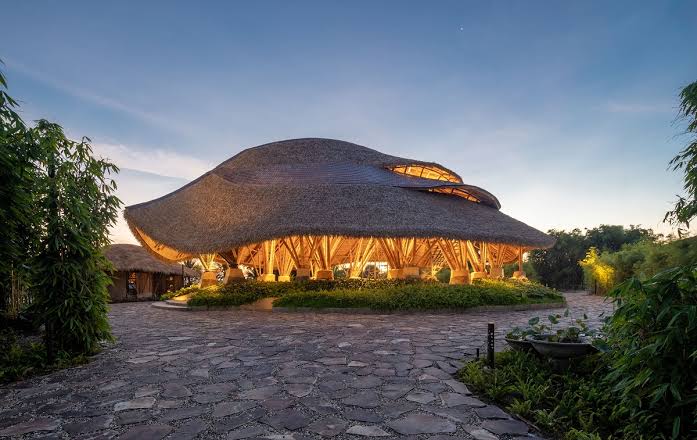
The centerpiece of the park is the Marilag Grand Pavilion.
Kaway’an EcoPark describes itself as home to Luzon’s biggest bamboo pavilion, while TIME reported that the open-air pavilion covers around 4,900 square feet. Its design combines bamboo with a steel framework intended to provide greater resilience against typhoons.
The pavilion is the kind of structure where you naturally stop for a few minutes before taking your phone out.
Look upward and you’ll see bamboo columns branching and curving toward the roof, creating something that feels halfway between a building and a forest canopy.
The World Architecture Festival’s description of the project says the roughly 25-meter-diameter pavilion was engineered for wind speeds of up to 250 kilometers per hour and can seat around 120 people while remaining naturally ventilated.
That’s part of what makes Kaway’an interesting even if you’re not normally an architecture person.
You’re not simply looking at bamboo furniture or decorative walls. You’re seeing bamboo used at an architectural scale.
Walk Across the Marahuyo Bridge
Another signature structure is the Marahuyo Bridge, a curving bamboo-covered walkway extending over the park’s lagoon.
TIME describes the bridge as swooping over the water, while the World Architecture Festival entry says the approximately 20-meter bridge was designed to slow visitors down and frame views of the surrounding gardens, water and bamboo groves.
And that “slow down” idea makes sense when you’re actually thinking about the purpose of an eco-park.
This isn’t really the kind of attraction where you rush from ride to ride trying to maximize your entrance fee.
A lot of the experience comes from walking.
Looking at the gardens.
Crossing the bridge.
Sitting near the water.
Watching the light change as afternoon turns into evening.
In fact, the park’s lighting design intentionally highlights the pavilion, bridge and pathways after dark, which means the atmosphere changes considerably toward sunset and early evening.
Explore the Gardens and Open Spaces
Away from the large bamboo structures, Kaway’an becomes much quieter.
The site includes gardens, trees, lawns, community planting areas and water features. TIME specifically highlights the park’s permaculture gardens, while the official website describes Philippine fruit and flowering trees growing around community plots and recreational areas.
This is one reason families can spend several hours here even without joining every paid activity.
You can walk.
Sit on the grass.
Have a picnic.
Let the kids enjoy the open space.
Take photos.
And simply enjoy being somewhere green.
For a city like General Trias, which has been urbanizing rapidly, having this kind of space is particularly valuable.
Go Horseback Riding
Horseback riding is one of Kaway’an EcoPark’s most distinctive activities.
There’s also an interesting story behind the horses.
According to the park, its horses were rescued following the 2020 Taal Volcano eruption and are now cared for by local horse handlers. The activity therefore supports both animal care and livelihoods in the surrounding community.
The official 2026 rates page currently lists two options: ₱80 for a photo-only experience and ₱200 for an assisted lap around the park. Rates can change, so it’s still worth checking before your visit.
For children especially, this could easily become one of the highlights of the day.
Ride a Bamboo Bike
Yes, even the bicycles fit the theme.
The official rate schedule lists bamboo-bike rental at ₱200 for one hour and kiddie-bike rental at ₱100 for one hour.
It’s another simple activity, but it fits the relaxed atmosphere of the park.
You don’t necessarily need to schedule every minute of your visit. Rent a bike, explore slowly and stop whenever you find a nice area.
Try Rabbit Petting on Weekends
Families traveling with younger children can also look for the park’s rabbit-petting activity.
The official rate page currently lists weekend rabbit petting at ₱100, including a choice of pellets or vegetables for feeding.
As with animal activities anywhere, follow the staff’s instructions and let children interact gently with the animals.
What About Boating and Fishing?
This is one area where it’s especially important to check before visiting.
The park’s current rates page lists boating at ₱200 for one to two passengers for 30 minutes and ₱300 for a group of up to four consisting of two adults and two children. Fishing is listed at ₱200 for a four-hour rod rental, with the option of returning tilapia or paying by weight if you want to take your catch home.
However, the park’s attractions page still labels boating and fishing as “coming soon.”
Because those two official pages aren’t completely synchronized, I wouldn’t go to Kaway’an specifically for boating or fishing without contacting the park first.
If they’re available on the day of your visit, great.
If not, there are already enough other things to enjoy.
Have a Picnic
Sometimes the best attraction is lunch on the grass.
Kaway’an has large lawns suitable for picnics, and its current rate schedule lists picnic-table rental at ₱250 for four hours and picnic-mat or banig rental at ₱100 for four hours. Tent pitching on the lawn is listed at ₱150 for full-day use if you bring your own tent.
The park also lists grilling options, although specific fees and policies can change. Open flames are generally restricted except in designated or approved arrangements, so don’t simply arrive with a grill and light it anywhere you want.
A picnic is probably one of the nicest ways to experience the park if you’re traveling with a group.
Come early.
Bring food.
Rent a mat or table.
Let the day unfold without rushing.
Kaway’an EcoPark Entrance Fee
As of the park’s current 2026 rate schedule, regular admission is ₱150 per person for full-day access to the park grounds and structures. The site lists a concession price of ₱120 for seniors, students and persons with disabilities, while infants below two years old are indicated as free.
Those rates make Kaway’an relatively affordable compared with many commercial attractions around Cavite and Tagaytay.
Just remember that optional activities such as horseback riding, bikes, rabbit petting, boating or fishing carry separate charges.
That means your total budget really depends on what you want to do.
If you’re simply coming to explore the architecture, gardens and lawns, the basic entrance fee may already be enough for a pleasant visit.
Kaway’an EcoPark Opening Hours
The current regular schedule is straightforward.
Tuesday to Thursday, the park opens from 9:00 AM to 7:00 PM.
Friday, Saturday, Sunday and holidays, it opens earlier at 7:00 AM and closes at 7:00 PM.
Monday is normally the park’s rest day. The official site notes that when Monday falls on a holiday, the park may instead close on Tuesday. Special events and holidays can also affect operating hours.
If you’re making a long drive from Manila or another province, check the official schedule shortly before leaving.
What Is the Best Time to Visit?
Personally, I’d choose either early morning or mid-to-late afternoon.
An early visit gives you cooler weather, fewer people and softer light for photos.
But late afternoon has another advantage.
You can experience the park in daylight, watch the sunset and then see the bamboo structures illuminated as evening approaches. The park’s lighting was specifically designed to emphasize the textures and forms of its pavilion, bridge and paths after dark.
If you’re primarily coming for photography, I’d lean toward the afternoon.
If you’re bringing small children and want to do several activities, arrive early.
Is Kaway’an EcoPark Pet-Friendly?
Yes.
The park’s official rates and policies state that pets are welcome as long as they remain leashed and wear diapers, with owners expected to supervise them throughout the visit.
That’s good news for families who don’t want to leave their pets behind during a weekend trip.
Just remember that you’re entering landscaped gardens and spaces shared with other visitors and animals, so responsible pet handling matters.
Can You Hold Weddings and Events Here?
Absolutely—and this is actually a major part of the park.
The Marilag Grand Pavilion, Marahuyo Bridge and Marikit Garden can be rented for weddings, corporate gatherings, celebrations and professional shoots.
The park’s current published rates list full exclusive Grand Pavilion rental at ₱120,000, while a package including the Pavilion and Marikit Garden is listed at ₱180,000. Separate rates are published for Marikit and Marahuyo as well.
The location is easy to imagine as a wedding venue.
You already have dramatic architecture, gardens, water and greenery, so you don’t need to manufacture the entire atmosphere from scratch.
For professional photography and video shoots, separate commercial rates apply rather than the regular entrance fee.
Why TIME Named It One of the World’s Greatest Places
The international attention isn’t simply because the park photographs well.
TIME’s 2026 selection focused heavily on how Kaway’an combines architecture and experience.
The publication highlighted the Grand Pavilion, Marahuyo Bridge, gardens, lawns and activities while explaining how the project attempts to rethink bamboo as a serious climate-resilient construction material rather than something associated only with low-cost traditional buildings.
That idea is probably the strongest reason Kaway’an stands apart from many new attractions.
There’s a concept behind it.
The architecture isn’t just decoration for Instagram.
The landscaping isn’t merely there to fill empty space around a restaurant.
The park is trying to make a larger point about Filipino materials, sustainability and how public recreational spaces can be designed.
Whether every visitor thinks deeply about that is another matter.
Some people will simply come for the photos.
And that’s fine too.
But knowing the story makes the place more interesting.
How to Get to Kaway’an EcoPark
The park is in Barangay Panungyanan in General Trias City, Cavite. Its own contact information identifies the location as Barangay Panungyanan, while park documentation places it within Sabella Village along Crisanto M. De Los Reyes Avenue.
Driving is the easiest option, especially if you’re traveling with a family or planning to bring picnic supplies.
From Metro Manila, travel time varies considerably depending on your starting point and Cavite traffic. TIME estimated the trip at around 90 minutes from Manila, although anyone familiar with Cavite knows that actual travel time can be much longer during rush hour.
For commuters, reaching the general Manggahan/Panungyanan area is possible through Cavite public transportation, with local jeepneys and tricycles serving Panungyanan. Because routes and terminals can change, I recommend entering “Kaway’an EcoPark” into your navigation app and confirming your final connection with the park or local drivers rather than relying on an old step-by-step commute guide. Public records confirm Panungyanan is served by local tricycle routes.
How Long Should You Spend at Kaway’an EcoPark?
Two to four hours should be enough for a casual first visit.
If you’re mainly interested in the architecture and photography, you could walk around, cross the bridge, explore the gardens and relax for a couple of hours.
Families planning to go horseback riding, rent bikes, picnic and participate in other activities could easily stay half a day or longer.
Since the standard entrance ticket provides full-day access, there isn’t much reason to rush.
Suggested Half-Day Itinerary
For a relaxed visit, arrive around 2:00 PM and begin by walking through the gardens before the afternoon gets too late. Spend some time around the Marilag Pavilion and Marahuyo Bridge, then try horseback riding or rent a bamboo bike.
Around 4:00 PM, find somewhere to sit for merienda or enjoy a picnic on the lawn. Afterward, explore any areas you missed and return to the bridge and pavilion toward sunset.
Stay until early evening if possible. The warm architectural lighting gives the park an entirely different look after daylight fades.
It’s one of those rare situations where arriving later in the day can actually improve the experience.
Travel Tips Before Visiting
The most useful thing to do is check the official park website or social channels shortly before your trip. Hours can change around holidays and events, and some activities may not operate every day.
Wear comfortable footwear because the experience involves plenty of walking. Bring sun protection and water, particularly if you’re visiting around midday. Families should supervise children carefully around the lagoon, horses and other activity areas.
If boating or fishing is important to you, contact the park first because the official rates page currently publishes prices while the attractions page still describes those activities as coming soon. Pets can join the trip, but they need to remain leashed and wear diapers.
Who Will Enjoy Kaway’an EcoPark Most?
Families are probably the most obvious audience.
There are open spaces for children, animals, bikes and activities without the sensory overload you sometimes get at amusement parks.
Couples will also find plenty of quiet areas for walking and taking photos.
Architecture enthusiasts may actually get more out of the destination than anyone else because the pavilion and bridge aren’t typical structures you’ll find elsewhere in Cavite.
Photographers will love the curves of the bamboo against the water and gardens, particularly in late afternoon.
And for Cavite residents, there’s the simple appeal of having a green destination nearby without automatically heading to Tagaytay.
Is Kaway’an EcoPark Worth Visiting?
I think it is.
And not just because TIME put it on a global list.
Kaway’an feels different from the usual weekend attraction.
There are no giant artificial landmarks trying desperately to become Instagram backgrounds. The landscape itself is part of the attraction, and the bamboo architecture provides more than enough visual drama.
At the same time, the place doesn’t take itself too seriously.
You can admire sustainable architecture one minute and ride a horse or sit on a banig eating merienda the next.
That’s probably the best thing about it.
Kaway’an can be educational without feeling like a museum.
Beautiful without feeling overly formal.
Modern without losing its connection to Filipino materials.
And peaceful without requiring a five-hour drive into the mountains.
Final Thoughts
General Trias is changing quickly.
For years, the city was better known for subdivisions, industrial areas, historical sites and its growing commercial centers than for nature-based tourism.
Kaway’an EcoPark adds something new to that story.
Here is a three-hectare green space in the middle of a rapidly urbanizing Cavite city, anchored by some of the country’s most ambitious contemporary bamboo architecture. It opened only in 2025, yet by the following year it had already been recognized by TIME as one of its World’s Greatest Places.
But you don’t have to care about awards to enjoy it.
Come for the bamboo pavilion.
Cross the bridge.
Walk through the gardens.
Ride a horse.
Bring the family.
Have a picnic.
Stay until sunset.
Sometimes that’s enough to make a good weekend.
And if you’ve been looking for somewhere new to visit in Cavite, Kaway’an EcoPark gives you a very good reason to spend a day exploring General Trias.