Traditional dances often tell stories without words. Some tell stories of love. Some show work, ritual, celebration, or community life. Salidsid is one of those dances that tells a simple but charming story: a man trying to win the attention of a woman.
This dance is associated with the Kalinga people of the Cordillera. It is commonly described as a courtship dance where the male dancer imitates a rooster trying to attract a hen, while the female dancer responds with movements inspired by the hen. Dance references describe Salidsid as a Kalinga courtship dance performed by male and female dancers, often using cloth pieces called ayob or allap.
At first, the idea may sound playful, even humorous. But when performed well, Salidsid becomes graceful, expressive, and full of cultural meaning.
Content
What Is Salidsid?
Salidsid is a traditional Kalinga courtship dance. It is usually performed by a male and female pair, although group versions may also be seen in cultural programs.
The male dancer represents a rooster. His movements may be confident, showy, and expressive as he tries to gain the attention of the female dancer. The female dancer represents a hen. Her movements may be graceful, reserved, and responsive.
Together, they create a courtship scene. The male approaches. The female responds. The two dancers move around each other in a rhythmic and symbolic exchange.
Like many traditional courtship dances, Salidsid does not need spoken dialogue. The story is told through movement.
The Meaning Behind the Dance
At its heart, Salidsid is about attraction and courtship.
The rooster-and-hen imagery is important because many folk dances are inspired by nature and daily life. People observed animals, birds, farming activities, rituals, and social relationships, then transformed those observations into dance.
In Salidsid, the rooster’s movement represents the male’s effort to impress. The hen’s movement represents the female’s response. This creates a playful but respectful dance conversation.
The dance also reflects older ideas of courtship, where affection is expressed indirectly. Instead of words, the dancers use steps, gestures, glances, cloth movements, and body language.
Salidsid and Kalinga Culture
Salidsid is part of the rich dance traditions of Kalinga and the Cordillera.
Kalinga culture is known for strong community traditions, gong music, woven textiles, tattoo heritage, rituals, and dances that often reflect social life, celebration, courtship, and community values.
Salidsid gives audiences a glimpse of this cultural world. It is not just a generic love dance. It carries the identity of a specific people and place.
This is why it should be performed with respect. The movements, costumes, music, and props are connected to real cultural traditions. They should not be treated as random stage decorations.
The Use of Cloth in Salidsid
One of the distinctive features of Salidsid is the use of cloth.
Some descriptions mention dancers being given cloth pieces known as ayob or allap before the dance begins.
The cloth adds visual beauty to the performance. It can be used to frame the dancer’s movement, emphasize gestures, or symbolize social connection. In some performances, the cloth may also help distinguish the roles of the dancers.
The cloth is simple, but it gives the dance character. It softens the movement and adds color to the courtship story.
How Salidsid Is Performed
Salidsid is usually performed by a man and a woman.
The male dancer moves with energy and confidence. He may circle the female dancer, extend his arms, and use movements that suggest a rooster showing off. The female dancer responds with graceful steps and gestures, sometimes appearing shy, reserved, or playful.
The dancers may move in patterns that suggest pursuit, attention, hesitation, and response. The dance is not aggressive. It is stylized and symbolic.
A good Salidsid performance should feel expressive but respectful. The dancers need to show the courtship story clearly without overacting. The charm of the dance comes from balance: playful, but graceful; lively, but controlled.
The Music of Salidsid
Salidsid is often performed with traditional Cordilleran music, especially gong rhythms. The beat gives structure to the movement and supports the grounded steps of the dancers.
The music helps create the cultural atmosphere of the dance. It makes the performance feel connected to the Cordillera, rather than to the Spanish-influenced lowland folk dance tradition.
The rhythm also helps guide the courtship exchange. The dancers move with the beat, respond to each other, and maintain the flow of the performance.
Costumes Used in Salidsid
Costumes for Salidsid are usually inspired by Kalinga traditional attire. Male dancers may wear a bahag or woven cloth elements, while female dancers may wear woven skirts, bead accessories, and traditional-inspired ornaments.
The colors and patterns of Cordilleran textiles add visual richness to the dance. They help highlight the cultural identity of the performance.
As always, costume use should be done respectfully. These designs are connected to living communities and should not be treated as generic “tribal” clothing.
Salidsid and Banga
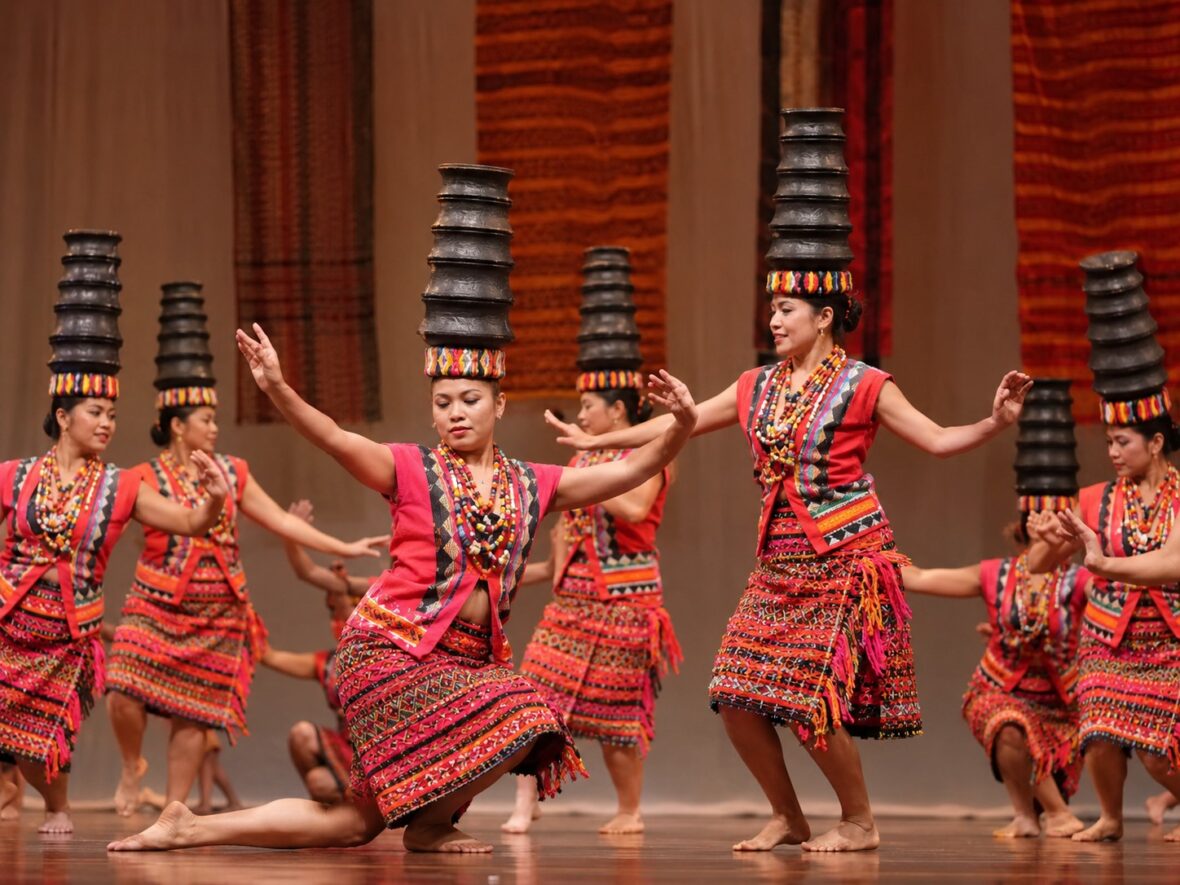
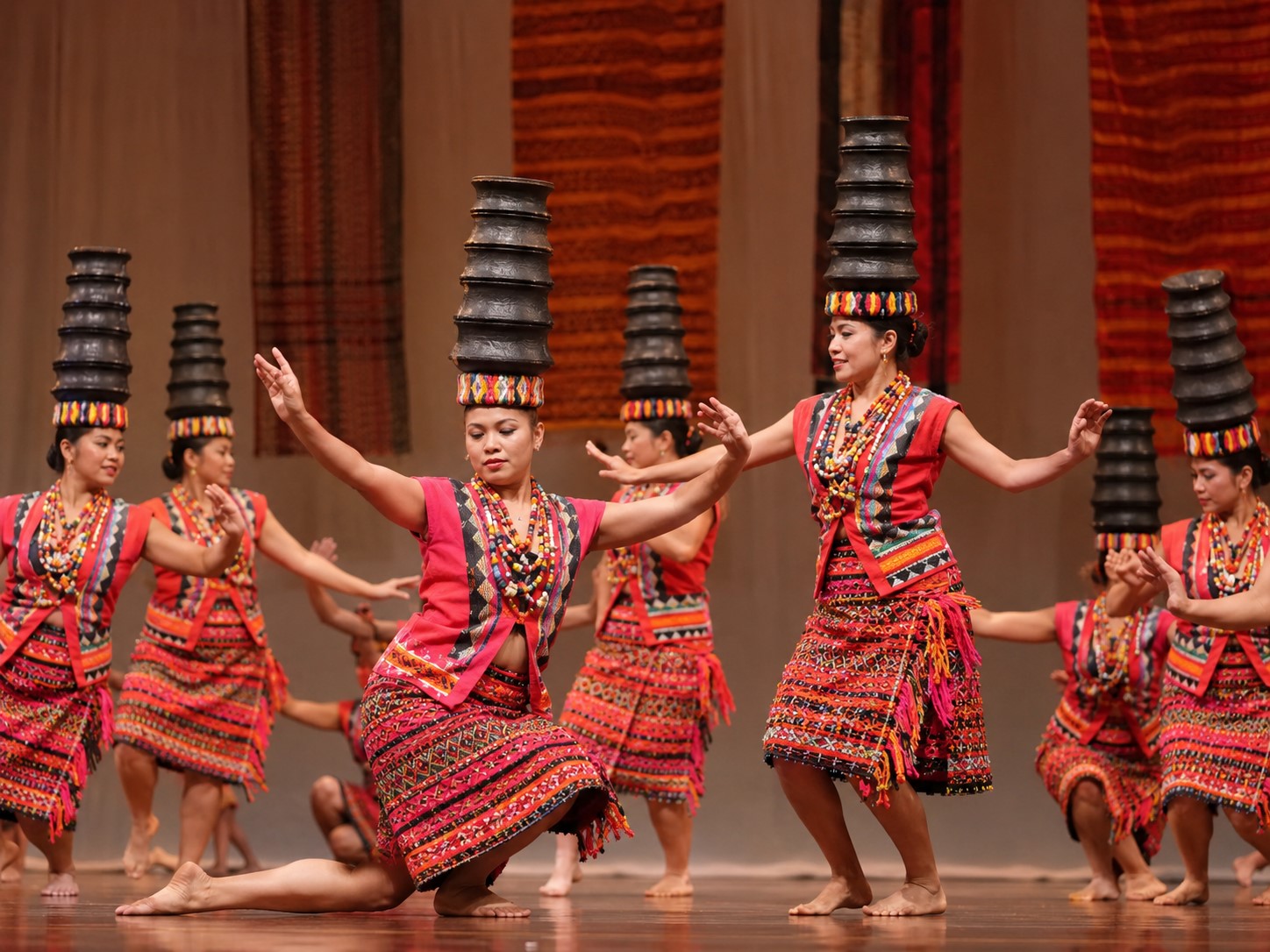
Salidsid is often mentioned together with Banga because both are connected to Kalinga dance traditions. In some staged presentations, audiences may see Banga-Salidsid, where pot-balancing movements are combined with courtship elements.
This pairing makes sense visually and culturally. Banga highlights the strength and grace of women carrying clay pots, while Salidsid adds the courtship story between male and female dancers.
Together, they create a beautiful picture of Kalinga life, identity, and artistry.
Salidsid in Schools and Cultural Programs
Many Filipinos encounter Salidsid in school performances, cultural programs, folk dance competitions, and Cordillera-themed presentations.
For students, Salidsid is a good introduction to Indigenous courtship dances. It teaches that courtship in folk dance is not limited to Spanish-influenced dances like Cariñosa or Pantomina. Indigenous communities also have their own beautiful ways of expressing attraction and social relationships through movement.
Salidsid also teaches body expression. The dancers need to portray animal-inspired movements without making them look silly. The rooster and hen imagery should be stylized, graceful, and culturally grounded.
Why Salidsid Is Important
Salidsid is important because it shows the diversity of Filipino courtship dances.
When many people think of Filipino courtship dances, they imagine fans, handkerchiefs, and Maria Clara dresses. Salidsid offers a different image. It comes from the highlands. It uses different music, costumes, gestures, and symbols.
This helps us understand that Filipino culture is not one single style. Every region and community has its own way of expressing love, admiration, celebration, and identity.
Salidsid also shows how nature inspires folk dance. By observing the movements of a rooster and hen, the community created a dance that is playful, meaningful, and easy to understand.
Why Salidsid Still Matters Today
Salidsid still matters because it keeps Kalinga cultural heritage visible.
In a country as diverse as the Philippines, it is important to learn dances from many regions—not only the most popular ones. Salidsid helps people appreciate Cordilleran culture and the artistry of Kalinga communities.
It also reminds us that traditional dances are not just old performances. They are cultural stories. They carry ideas about relationships, identity, nature, and community life.
When Salidsid is performed with respect and understanding, it becomes more than entertainment. It becomes cultural appreciation.
Final Thoughts
Salidsid is a beautiful Kalinga courtship dance that uses the imagery of a rooster and hen to tell a story of attraction, admiration, and response.
It is playful, but meaningful.
It is simple, but expressive.
It is traditional, but still engaging for modern audiences.
Through its movements, music, costumes, and courtship story, Salidsid reminds us of the richness of Cordilleran culture and the diversity of Philippine folk dance.
Like many traditional dances, Salidsid teaches us that culture can be found in movement. It can be seen in how dancers step, gesture, circle, approach, and respond.
And in this charming Kalinga dance, courtship becomes a graceful story told without words.