There are fiestas in the Philippines that are known for massive street parades and elaborate costumes. Others are famous for food, religious traditions or homecoming celebrations.
Then there are fiestas like the Tuao Patronal Fiesta, where all of these things come together.
Every year, the municipality of Tuao in Cagayan celebrates its patronal fiesta in honor of the Holy Guardian Angels, bringing together religious devotion, local food, community activities, sports, cultural performances and the kind of homecoming atmosphere that makes provincial fiestas special.
The main feast day falls on October 2, the Feast of the Holy Guardian Angels. The Archdiocese of Tuguegarao lists October 2 as the parochial feast of the Holy Guardian Angels Parish in Centro, Tuao.
But if you’re imagining that the Tuao Patronal Fiesta happens only on October 2, that’s not quite how it works.
Like many Philippine fiestas, celebrations can begin several days before the actual feast day. Over the years, the municipality has organized everything from sports competitions and environmental activities to beauty pageants, food contests and cultural events.
And at the center of it all remains something much older: the town’s devotion to the Holy Guardian Angels.
Here’s a closer look at the Tuao Patronal Fiesta—its history, religious significance, food, traditions and what you can expect if you visit this part of Cagayan during fiesta season.
Content
Tuao Patronal Fiesta Quick Guide
| Information | Details |
|---|---|
| Festival | Tuao Patronal Fiesta |
| Location | Tuao, Cagayan |
| Main Feast Day | October 2 |
| Patron | Holy Guardian Angels |
| Main Church | Holy Guardian Angels Parish |
| Major Cultural Highlight | Sukalati/Sukulati en Sinabalu Festival and related cultural activities |
| Famous Local Delicacy | Sinabalu |
| Usual Celebration Period | Late September to early October |
| Province | Cagayan |
| Region | Cagayan Valley |
The specific civic activities change from year to year, so it is always a good idea to check the latest schedule from the local government before traveling.
Where Is Tuao?
Tuao is a municipality located on the southwestern side of Cagayan.
According to the municipal government, Tuao is around 50 kilometers from Tuguegarao City and sits near the boundary between Cagayan and Kalinga. The Chico River runs through the municipality and divides Tuao into eastern and western sections.
Agriculture is deeply connected with life in the municipality.
The town’s own municipal symbols highlight rice and corn as major products, along with farming tools representing the agricultural character of Tuao.
That agricultural identity also finds its way into the fiesta.
Food, farming traditions, community competitions and locally made products are all part of what gives the Tuao celebration its own character.
When Is the Tuao Patronal Fiesta?
The official patronal feast of Tuao is celebrated on October 2.
It coincides with the Catholic Feast of the Holy Guardian Angels.
The Holy Guardian Angels Parish in Tuao is part of the Archdiocese of Tuguegarao, and October 2 is recognized as its feast day.
Historically, some festival listings identify the Tuao Patronal Fiesta around October 1 and 2, although the larger municipal celebration may begin much earlier depending on the year’s program.
In previous celebrations, activities have already been underway by the final week of September.
That means if you’re planning to experience the fiesta, don’t automatically assume October 2 is the only date worth visiting.
Sometimes the most interesting competitions, cultural presentations and food events happen during the days leading up to the feast.
Who Is the Patron Saint of Tuao?
The patron of Tuao is actually represented by the Holy Guardian Angels.
In Catholic tradition, guardian angels are believed to watch over and guide people throughout their lives.
October 2 is observed by Catholics as the Feast of the Holy Guardian Angels, and special Masses are celebrated in parishes dedicated to them—including the Holy Guardian Angels Parish in Tuao.
And here’s where the story of Tuao becomes particularly interesting.
The choice of the Holy Guardian Angels as the town’s patron is closely connected with a local story explaining how Tuao supposedly got its name.
The Legend Behind the Name “Tuao”
This is probably one of the most interesting stories connected with the fiesta.
According to the official municipal history, an old local account tells of missionaries who were trying to establish a church.
A cross had reportedly been placed on a proposed church site when a large black bird landed on it.
The bird caused the cross to fall, flew westward and perched on another tree.
As it flew, people supposedly heard a cry resembling:
“Bat… tu… ao.”
The incident, according to the story, happened more than once.
The missionaries eventually interpreted the bird’s actions as a form of divine guidance and moved the site of the church.
The town’s name was supposedly derived from the bird’s cry, with “Tuao” coming from its final sounds.
Because angels are traditionally depicted with wings and regarded as messengers of God, the mysterious bird was associated with an angelic messenger. The Holy Guardian Angels were subsequently chosen as the town’s patrons.
Since their feast falls on October 2, that date became Tuao’s patronal fiesta.
Of course, this should be understood as Tuao’s traditional origin story rather than treated as something that can be historically proven in every detail.
But stories like this are part of what makes Philippine towns fascinating.
They give us a glimpse into the way religion, folklore and community identity became intertwined over generations.
A Fiesta With Centuries of History
Tuao itself has a long history.
The municipal government traces the town’s recorded history to 1604 during the Spanish colonial period and says the pueblo was ecclesiastically accepted in 1612, opening the area more formally to Christianization.
The Holy Guardian Angels Parish is also one of the old Catholic communities in this part of Cagayan.
That means today’s fiesta isn’t something invented recently for tourism.
Its religious roots stretch back centuries.
Of course, the celebration has changed dramatically over time.
A fiesta centuries ago would have looked very different from today’s celebration with motorcycles, sports events, pageants, sound systems and modern cultural competitions.
But the central idea remains familiar.
People come together.
Families prepare food.
The church becomes the spiritual center of the occasion.
Visitors arrive.
Former residents come home.
And the community celebrates its identity.
The Religious Side of the Tuao Patronal Fiesta
Before anything else, the Tuao Patronal Fiesta is a religious celebration.
The fiesta honors the Holy Guardian Angels, so church activities are naturally an important part of the observance.
Depending on the year’s parish program, these can include prayers, Masses and other religious gatherings leading up to the October 2 feast.
This religious dimension is important because Philippine fiestas sometimes look like purely secular festivals when seen through photos.
We see the street dancing.
We see pageants.
We see food.
We see concerts.
But underneath many town fiestas is a patronal celebration.
That is certainly the case in Tuao.
The civic celebrations organized by the municipality complement the religious observances centered around the parish.
Sukalati en Sinabalu Festival
One of the most interesting cultural components associated with the Tuao Patronal Fiesta is the Sukalati en Sinabalu Festival.
Cagayan’s provincial tourism office identifies the celebration as part of the October 2 patronal fiesta in Tuao West. It has featured street dancing, colorful costumes and performances highlighting local faith, culture and traditions.
You may also encounter variations in the spelling, including “Sukulati en Sinabalu.”
But whichever spelling is used, one thing is clear:
Food plays an important role.
And the star is sinabalu.
What Is Sinabalu?
If there’s one local food you should know when talking about Tuao, it has to be sinabalu.
Sinabalu is a traditional glutinous rice delicacy cooked inside bamboo.
The basic preparation involves glutinous rice and coconut milk placed inside bamboo tubes and slowly cooked over fire.
Information shared through the National Nutrition Council and Tuao Tourism Office describes a traditional preparation involving soaked glutinous rice, coconut milk and fresh arrowroot leaves packed inside bamboo before being slowly cooked.
Think of it as something related to the wider Filipino tradition of cooking sticky rice in natural materials—but with a distinctly local Tuao identity.
The bamboo contributes to the cooking process and presentation.
And when you’re eating something prepared this way during a provincial fiesta, the experience becomes about more than food.
You’re tasting a tradition that families have passed down through generations.
Sinabalu and Sukulati
Sinabalu is often paired during festival activities with sukulati, a hot traditional drink.
Cagayan tourism materials highlight the combination of sinabalu and sukulati as part of Tuao’s cultural celebration.
The pairing has become important enough that cooking competitions have been organized as part of the fiesta.
During the 2025 celebration, for example, barangays participated in a Sinabalu en Sukulati cooking contest, with different versions of sinabalu prepared for judging.
The Provincial Government of Cagayan described sinabalu and sukulati as delicacies that Tuao takes pride in and traditions that continue to be passed through the community.
And this is exactly what I like about food-centered festival activities.
They aren’t just about finding out who cooks the best dish.
They help keep local recipes alive.
Street Dancing and Cultural Performances
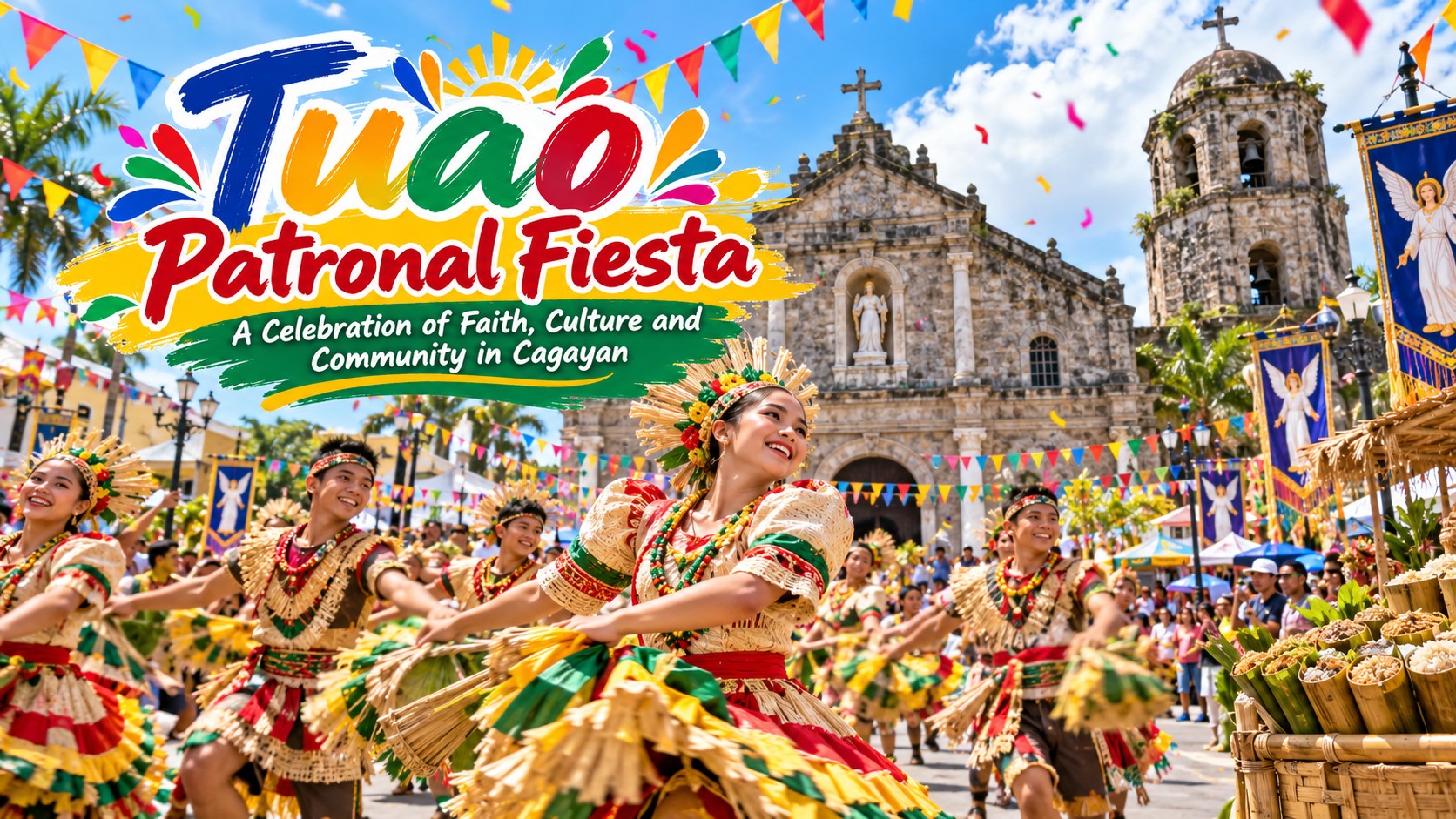
Street dancing is another activity associated with the Sukalati en Sinabalu celebration.
Expect colorful costumes, music and performances inspired by the town’s culture.
For visitors, this is usually one of the most visually exciting parts of a Philippine fiesta.
But behind the costumes is something bigger.
Street dancing allows barangays, young performers and community groups to interpret the traditions of their hometown through movement, music and visual design.
The performances can highlight agriculture, faith, food and everyday community life.
It turns local history into something you can actually see happening in the streets.
Palarong Bayan
Fiesta season in Tuao has also included Palarong Bayan activities.
And Tuao has organized some interesting ones over the years.
A municipal record from the 2015 Patronal Fiesta shows competitions including running events, cycling, BMX, mountain biking, horse racing and even pig hunting.
Programs naturally change from one year to another, but sports continue to fit perfectly into the atmosphere of a town fiesta.
People from different barangays compete.
Families watch.
Friends cheer.
And everyone has another reason to gather together.
Modern Fiesta Events
Like many Philippine town fiestas, Tuao has also added more contemporary activities over time.
Recent celebrations have included events such as motorcycle competitions and pageants.
For example, the 2026 fiesta calendar included a fourth Endurocross competition in Lallayug on September 27 as part of the municipal celebration.
Activities like these show how fiestas evolve.
The religious feast remains rooted in tradition, while the community celebration changes with each generation.
A fiesta doesn’t have to choose between being traditional and modern.
It can be both.
Environmental Activities
Here’s another part of the Tuao fiesta that I find interesting.
Environmental activities have also been incorporated into past celebrations.
In 2015, an environmental program called ENSALADA 5 helped open the patronal festivities with a “Love Mother Earth” theme. The event was initiated by the Holy Guardian Angels Parish and supported by the municipal government.
Tree-growing activities have also been used to mark the beginning of fiesta celebrations.
In September 2025, for example, a tree-growing activity and Mass were held at a new cemetery site in Barangay Cato as an official opening activity for that year’s fiesta.
That gives the fiesta another dimension.
Celebration becomes connected with community service.
Food During the Fiesta
Even if you’re not attending a cooking contest, food is obviously going to be part of the experience.
That’s a universal rule for Philippine fiestas.
The Tuao municipal website itself highlights local products and delicacies including:
- Sinabalu
- Patupat
- Bibingka
along with agricultural and locally produced goods.
During fiesta season, expect family tables to become just as important as the official events.
This is where visitors really get to experience Filipino hospitality.
Someone tells you to eat.
You say you’re already full.
They tell you to eat again.
And somehow you end up holding another plate.
That’s fiesta.
Why the Tuao Fiesta Matters to the Community
It’s easy to look at a fiesta only as entertainment.
But in towns like Tuao, the celebration serves several purposes at the same time.
It preserves religious traditions.
It keeps local food traditions alive.
It provides a venue for local performers and athletes.
It encourages different barangays to participate.
It promotes local products.
And perhaps most importantly, it becomes a homecoming.
People who have moved elsewhere for school, work or family reasons often use fiestas as an opportunity to return home.
That’s why Philippine town fiestas feel different from ordinary festivals.
They aren’t designed purely for tourists.
They are primarily for the community itself.
Visitors are simply invited to join.
Tuao West and Tuao East: Don’t Confuse the Two Fiestas
Here’s something useful to know if you’re researching festivals in Tuao.
The Chico River divides the municipality into eastern and western sections.
The main Tuao Patronal Fiesta discussed in this guide is associated with the Holy Guardian Angels and the October 2 feast.
However, Tuao East also has a San Roque Patronal Fiesta celebrated separately in August.
Cagayan Tourism identifies the San Roque celebration in Tuao East around August 19 and associates it with religious observances and community activities.
So if you encounter a “Tuao fiesta” happening in August, it doesn’t necessarily mean that the October celebration moved dates.
You’re probably looking at the San Roque Patronal Fiesta of Tuao East.
What to Expect When Visiting the Tuao Patronal Fiesta
If you’re planning to experience the celebration, expect a mixture of events rather than one continuous parade.
Depending on the year, you may encounter:
- Religious Masses and parish activities
- Street dancing
- Cultural presentations
- Sinabalu cooking activities
- Food fairs
- Sports competitions
- Pageants
- Motorcycle events
- Community programs
- Environmental activities
- Barangay competitions
- Government-sponsored events
- Evening entertainment
The exact program changes every year.
That’s why checking the official schedule before traveling is important.
Best Time to Visit
If your main purpose is the religious fiesta, October 2 is naturally the most important date.
If you’re more interested in cultural activities, sports competitions and other events, consider arriving during the final days of September.
Recent celebrations demonstrate that municipal activities can begin well before the actual feast.
My suggestion would be to look at the year’s official schedule and identify the events you’re most interested in before choosing your travel date.
How to Get to Tuao
Tuao is located roughly 50 kilometers from Tuguegarao City, according to the municipality.
For travelers coming from outside Cagayan, Tuguegarao is the most practical major gateway to the province.
From there, Tuao can be reached by road.
Public transport arrangements and schedules can change, particularly during holidays and fiesta periods, so it’s better to confirm current transportation options locally before your trip.
If you’re driving, remember that fiesta activities can create heavier traffic around the town center.
Coming earlier in the day is usually the better idea.
Tips for Visitors
A provincial fiesta is easy to enjoy, but a little preparation helps.
Here are a few things worth remembering:
- Check the latest event schedule before traveling.
- Arrive early for major street events.
- Expect traffic around the town center.
- Bring water, especially for daytime activities.
- Wear light and comfortable clothing.
- Bring rain protection because late September and early October can bring unpredictable weather.
- Carry some cash for food and small purchases.
- Try local delicacies, especially sinabalu.
- Respect religious activities happening around the church.
- Ask permission before taking close-up photos of performers or participants when appropriate.
- Support local vendors whenever you can.
Most importantly, remember that this is a community celebration first and a tourist attraction second.
Tuao Patronal Fiesta 2026
Although this guide is meant to be timeless, here’s a quick note for anyone visiting in 2026.
The main feast of the Holy Guardian Angels remains October 2, 2026, and the Archdiocese of Tuguegarao lists the Holy Guardian Angels Parish parochial feast in Tuao on that date.
The Local Government Unit of Tuao also released a wider 2026 Patronal Fiesta calendar featuring several activities leading up to the feast. One confirmed event was the fourth Endurocross held on September 27 in Lallayug, while activities connected with Miss Tuao were also promoted during the fiesta period.
Visitors should still check the latest LGU and parish announcements because individual event times and venues can change.
Frequently Asked Questions
When is the Tuao Patronal Fiesta?
The main Tuao Patronal Fiesta is celebrated in connection with the October 2 Feast of the Holy Guardian Angels. Activities can begin several days before the feast.
Where is the Tuao Patronal Fiesta held?
The celebration takes place in Tuao, Cagayan, particularly around the municipal center and the Holy Guardian Angels Parish, with different activities held at various venues around the municipality.
Who is the patron saint of Tuao?
Tuao’s patrons are the Holy Guardian Angels. Their Catholic feast is celebrated on October 2.
What is Tuao famous for during the fiesta?
One of its best-known cultural traditions is sinabalu, a glutinous rice delicacy cooked inside bamboo. Cultural activities connected with sinabalu and sukulati have become highlights of the fiesta.
What is the Sukalati en Sinabalu Festival?
It is a cultural celebration associated with Tuao’s Patronal Fiesta that highlights local food, traditions and community identity. Street dancing and cultural performances have been among its featured activities.
Is Tuao’s October fiesta the same as the San Roque Fiesta?
No. The main October 2 Tuao Patronal Fiesta honors the Holy Guardian Angels. A separate San Roque Patronal Fiesta is associated with Tuao East and is celebrated in August.
How far is Tuao from Tuguegarao?
The municipal government describes Tuao as approximately 50 kilometers from Tuguegarao City.
More Than Just a Town Fiesta
The more you learn about the Tuao Patronal Fiesta, the more you realize that it is really several celebrations happening at once.
It is a religious feast honoring the Holy Guardian Angels.
It is a cultural celebration.
It is a showcase of local food.
It is a sports event.
It is a community gathering.
And for many families, it is a homecoming.
I also love how the story of Tuao itself connects so naturally with the fiesta—the mysterious bird, the naming of the town and the choice of the Holy Guardian Angels as its patrons.
Whether every detail of that centuries-old story happened exactly as tradition remembers it is almost beside the point.
The story became part of Tuao.
And every October 2, that connection between faith, history and community continues.
If you happen to be exploring Cagayan around late September or early October, the Tuao Patronal Fiesta is one local celebration worth keeping on your radar.
Come for the festivities.
Watch the cultural performances.
Try the sinabalu.
Visit the church.
And most importantly, experience the way the people of Tuao celebrate a tradition that has become part of their identity across generations.