Some festivals celebrate food. Others honor a patron saint, a successful harvest or a town’s founding anniversary. The Wagayway Festival of Imus, Cavite, celebrates something that belongs to every Filipino—the Philippine flag.
Held during the month of May and closely connected with National Flag Day on May 28, Wagayway Festival commemorates the historic Battle of Alapan. This revolutionary victory is remembered as the event during which the newly created Philippine flag received its “baptism of fire.”
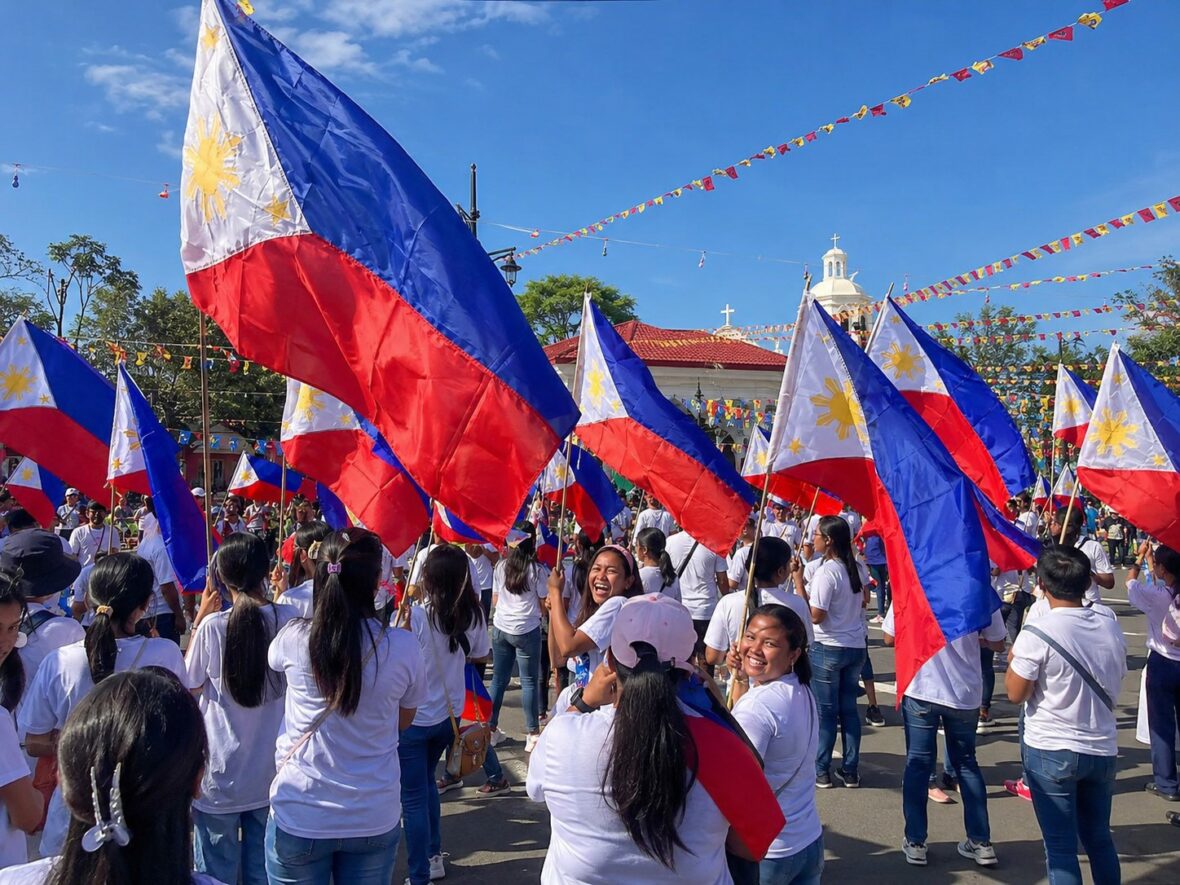
That is why you will see flags almost everywhere during the celebration. They hang above streets, decorate government buildings and appear in the costumes and props used by festival performers. During major ceremonies, hundreds of people may wave Philippine flags at the same time, turning the streets of Imus into a moving sea of red, blue, white and yellow.
Wagayway Festival is colorful and entertaining, but it is also deeply historical. It reminds visitors that the Philippine flag is more than a familiar national symbol. It represents the bravery, sacrifices and dreams of Filipinos who fought for the country’s freedom.
Content
What Is the Wagayway Festival?
The Wagayway Festival is a historical and cultural celebration held in Imus City, Cavite, usually during May.
The Filipino word wagayway describes the waving or fluttering of a flag. It is an appropriate name for a festival that celebrates Imus’ place in the history of the Philippine flag.
The festival is connected to the Battle of Alapan, which took place in Imus on May 28, 1898. Following the Filipino revolutionaries’ victory, the new Philippine flag was raised and proudly displayed. The National Historical Commission of the Philippines describes the event as the flag’s “baptism of fire and glory.”
Imus commemorates the occasion through flag-raising ceremonies, historical programs and activities associated with Wagayway Festival. Depending on the annual program, the celebration may also feature street dancing, flag parades, concerts, community competitions, art exhibits and food bazaars.
Although some festivities may be scheduled earlier in May, the historical centerpiece remains May 28, the anniversary of the Battle of Alapan and the beginning of the country’s National Flag Day observance.
Why Is Imus Called the Flag Capital of the Philippines?
Imus proudly carries the title Flag Capital of the Philippines because of the city’s connection to the first victorious display of the Philippine flag during the revolution.
The Battle of Alapan was fought on May 28, 1898, shortly after Emilio Aguinaldo returned to the Philippines from exile in Hong Kong. It became the first military victory of Aguinaldo’s revolutionary forces following his return.
After the battle, the Philippine flag was raised to celebrate the Filipino victory.
The flag would later be officially unfurled during the proclamation of Philippine independence in Kawit on June 12, 1898. That means Cavite played two closely connected roles in the flag’s early history: Imus became associated with its first victorious raising, while Kawit became the location of its formal presentation during the independence proclamation.
This connection explains why the flag is not merely a decorative element during Wagayway Festival. It is the heart of the entire celebration.
The Battle of Alapan
To appreciate the Wagayway Festival fully, it helps to understand the history behind the Battle of Alapan.
The Philippine Revolution against Spanish colonial rule began in 1896. Although the revolutionaries achieved several victories, they also faced internal divisions, military setbacks and the eventual departure of Emilio Aguinaldo for Hong Kong under the terms of the Pact of Biak-na-Bato.
Aguinaldo returned to the Philippines in May 1898. Filipino revolutionary forces soon resumed military operations in Cavite.
On May 28, Filipino revolutionaries fought Spanish troops in Alapan, Imus. The Filipinos won the battle, strengthening the revived revolution and contributing to the series of events that led to the proclamation of independence a little more than two weeks later. The historical marker at the site describes the victory as an important beginning in the renewed campaign to end Spanish rule and establish the Philippine Republic.
More than a military success, the battle became an important moment in the history of the national flag.
The newly created flag was raised after the victory. From that moment, it became visibly connected with the revolutionaries’ struggle for freedom.
The Story of the Philippine Flag
The Philippine flag displayed after the Battle of Alapan had been created in Hong Kong while Aguinaldo was in exile.
It was sewn by Marcela Agoncillo, with assistance from her daughter Lorenza Agoncillo and Delfina Herbosa de Natividad. The design carried symbols that represented the country, its people and the revolutionary movement.
The white triangle came to represent equality and fraternity. The three stars represented the country’s three major island groups: Luzon, Visayas and Mindanao. The eight rays of the sun represented the provinces first placed under martial law during the Philippine Revolution.
The blue and red fields later became among the flag’s most recognizable features. In normal times, the blue field appears above the red. During a state of war, the flag is displayed with the red field on top.
The same flag was officially unfurled from the Aguinaldo ancestral home in Kawit during the proclamation of independence on June 12, 1898. The Marcha Nacional Filipina, which provided the melody of the Philippine national anthem, was also performed during that historic event.
Wagayway Festival connects these national symbols to the place where the flag first accompanied a victorious revolutionary force.
What to Expect During Wagayway Festival
The exact activities and schedule can change every year. However, the festival usually combines historical ceremonies with community entertainment.
Some events are formal and patriotic, while others feel more like a traditional town festival. Together, they allow people of different ages to participate in the celebration.
Flag-Raising Ceremony
One of the most important activities is the ceremonial raising of the Philippine flag.
Government officials, members of the Armed Forces, representatives from historical and civic organizations, students and local residents may attend the ceremony. National Flag Day commemorations in Imus have also involved the National Historical Commission of the Philippines and other national institutions.
The ceremony becomes especially meaningful because it takes place in the city associated with the flag’s baptism of fire.
As the national anthem plays and the flag rises, people are reminded that the familiar ceremony performed in schools and government offices has roots in real battles and sacrifices.
Mass Flag-Waving
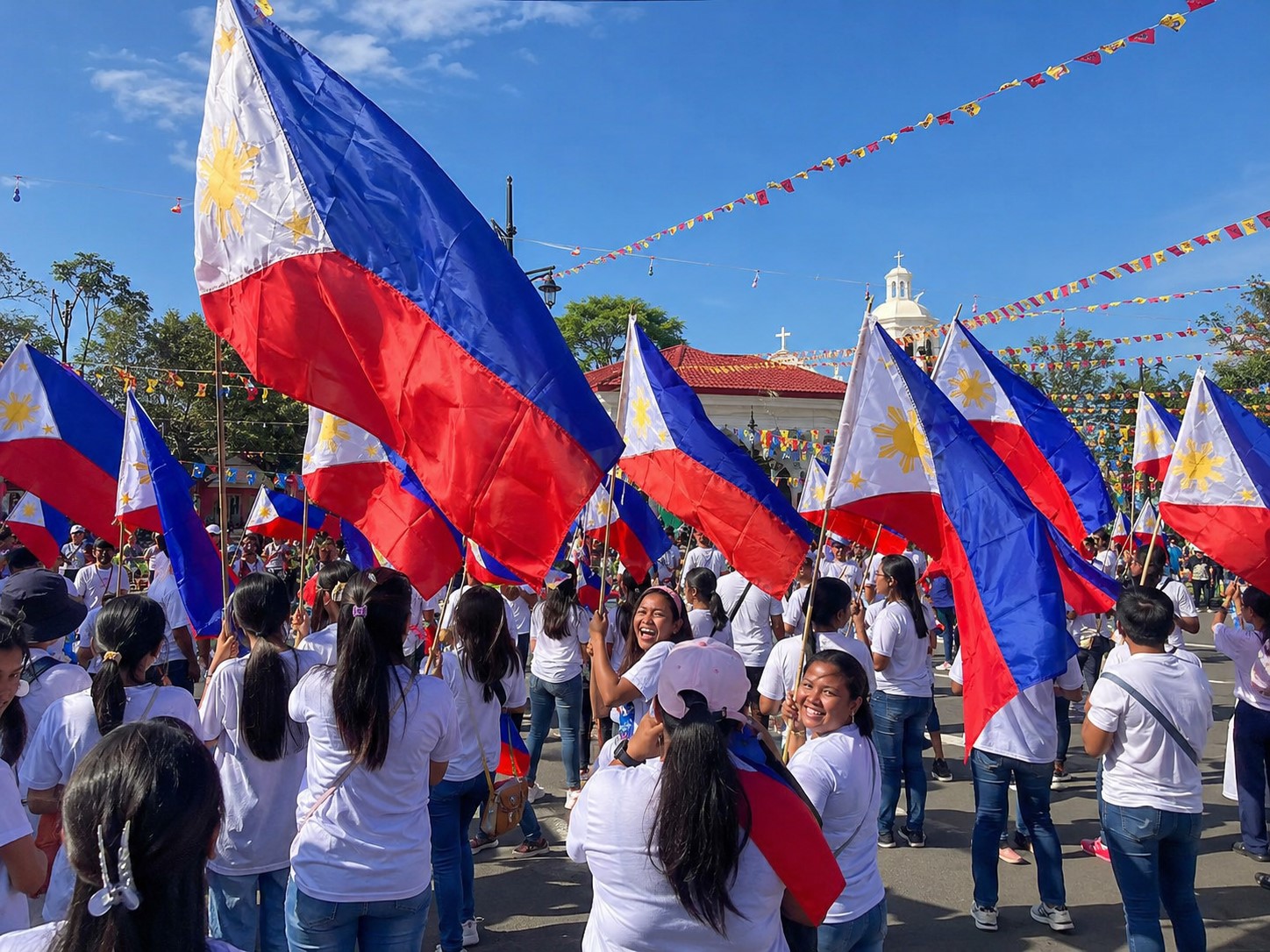
The mass waving of Philippine flags is one of the most recognizable images associated with Wagayway Festival.
Participants gather while holding flags of different sizes. At a given moment, they raise and wave them together, creating a spectacular display of national colors.
The activity explains the festival’s name perfectly. It transforms the simple motion of a flag fluttering in the wind into a collective expression of patriotism.
For photographers, this is one of the best moments to capture. A wide view of the crowd can show hundreds of flags moving together, while closer images reveal the expressions of students, families and veterans participating in the celebration.
Bandera and Street-Dancing Parade
The flag also becomes the central visual element during festival parades.
Past celebrations have included a Bandera or flag parade, accompanied by street-dancing performances. Participants may wear costumes inspired by the Philippine flag, the sun, the revolution and local history.
You can expect energetic dance routines, rhythmic drumbeats and carefully coordinated formations. Some groups carry large flags, while others use banners, fans, fabric panels and props in red, blue, white and yellow.
The performances do more than entertain. Through movement and imagery, they retell the story of the revolution and express pride in Imus’ identity as the Flag Capital.
Historical Reenactments
Historical presentations and reenactments have also formed part of Wagayway celebrations.
Performers may portray Filipino revolutionaries, Spanish troops and personalities connected to the Battle of Alapan. Through costumes, dialogue and staged battle scenes, the events of 1898 become easier for younger audiences to understand.
A reenactment cannot reproduce everything that happened during an actual battle, but it can make history feel more immediate.
Instead of reading only names and dates, visitors can watch the revolutionaries organize, fight and raise the flag after their victory. It becomes easier to imagine what the event meant to Filipinos who had spent centuries living under colonial rule.
Cultural Performances
Schools, barangays and local cultural organizations may present dances, songs, theatrical performances and other programs during the festival.
Many of these performances incorporate patriotic themes. Traditional Filipino clothing, revolutionary costumes and flag-inspired designs are commonly used.
The festival provides a stage for young Imuseños to showcase their talent while learning about their city’s history. Preparing for a performance often requires students to research the meaning of the flag, the personalities involved and the events surrounding the Battle of Alapan.
In that sense, the festival becomes both a cultural activity and a living history lesson.
Thanksgiving Mass
Some Wagayway programs begin with a thanksgiving Mass before the civic and cultural activities.
The Mass allows the community to express gratitude for the sacrifices of earlier generations and pray for the country’s continued peace and progress. A thanksgiving Mass and flag ceremony were among the activities documented in previous festival programs.
This religious component reflects the way many Philippine festivals combine faith, history and community life.
Concerts and Dance Competitions
Once the formal commemorations are finished, the atmosphere may become livelier.
Past editions have featured dance competitions and evening entertainment. One recorded program included the “Hatawata” dance competition following the flag and street-dancing parade.
Concerts may also be staged at public plazas, sports facilities or other city venues. These events attract families and younger festivalgoers who want to enjoy the celebration beyond its historical ceremonies.
The lineup changes each year, so check the official program before planning your visit.
Food Bazaars and Local Products
A festival visit would not feel complete without food.
Previous Wagayway celebrations have included food bazaars at the Imus Sports Complex area. These events have brought together local vendors selling meals, snacks, drinks and Caviteño delicacies.
Imus has a strong culinary identity, so watch for local kakanin and other traditional food products.
One delicacy associated with the city is puto lansong, a steamed rice cake traditionally prepared in a round metal container. It is often served in thick slices and topped with grated coconut.
You may also encounter familiar Caviteño dishes and snacks, including rice cakes, noodle dishes and products from nearby cities and municipalities.
Bring cash in smaller denominations because not all temporary stalls accept digital payments.
When Is the Wagayway Festival Celebrated?
Wagayway Festival is generally celebrated during May, with activities building toward May 28.
May 28 marks both the anniversary of the Battle of Alapan and National Flag Day. The national flag observance continues through June 12, Philippine Independence Day.
Not every festival activity is necessarily held on May 28. Parades, bazaars, competitions and concerts may be scheduled earlier or spread across several days.
For the most historically meaningful experience, visit on or near May 28. This is when the principal flag-raising and Battle of Alapan commemorations are most likely to take place.
The city publishes a new program for each celebration. Always verify dates, venues and public-access arrangements through the City Government of Imus or the Office of the City Tourism and Heritage Officer before traveling.
Where Is the Festival Held?
Wagayway Festival activities may be held across several parts of Imus.
Previous programs have used locations such as the Imus City Plaza, streets near Imus Cathedral, city sports facilities and historical sites associated with the Battle of Alapan.
Major National Flag Day ceremonies have also been conducted at the Dambana ng Pambansang Watawat within the Imus Heritage Park area in Barangay Alapan II-B. The city has continued developing this memorial site as a location connected to the commemoration of the flag and the Battle of Alapan.
The historical Battle of Alapan marker is associated with the Alapan I Elementary School area. The City of Imus identifies this site as being around a 10- to 15-minute drive from the city proper and notes its prominent flagpole.
Because ceremonies may use more than one location, check the official schedule carefully. Do not assume that every activity will happen at the same venue.
Visiting the Dambana ng Pambansang Watawat
The Dambana ng Pambansang Watawat, or Shrine of the National Flag, is one of the most relevant places to visit during the festival.
The memorial area was developed to honor the Philippine flag and the revolutionary victory at Alapan. A towering flagpole and national symbols make it immediately recognizable.
Even outside festival dates, the site gives visitors a place to reflect on the importance of May 28, 1898.
During official ceremonies, access to some areas may be controlled. Arrive early, follow security instructions and avoid entering spaces reserved for performers, veterans, government officials or invited guests.
What the Festival Feels Like
Wagayway has a different atmosphere from a typical street fiesta.
There is music, dancing and excitement, but the Philippine flag gives the celebration a more patriotic character. You may see children carrying miniature flags, dancers wearing sun-shaped headpieces and families taking photos in front of historical monuments.
Marching bands play while flags flutter above the road. Government buildings are decorated in national colors. Students gather in costumes inspired by the revolution.
Then the national anthem begins.
People stop moving. Hats are removed, conversations become quiet and everyone turns toward the flag.
That combination of celebration and solemnity makes Wagayway special. You can enjoy the dancing and festivities while still feeling the weight of the history being remembered.
How to Get to Imus
From Metro Manila by Public Transportation
Travelers coming from Metro Manila can begin their journey at the Parañaque Integrated Terminal Exchange.
PITX accommodates numerous Cavite-bound buses and other public-transport services. Check its live route information or ask at the terminal which vehicle currently serves Imus or destinations passing through the city.
Buses bound for Imus, Dasmariñas, Silang or Tagaytay commonly travel through parts of the Aguinaldo Highway corridor. Tell the conductor your specific destination, such as Imus proper, the city plaza, Imus Cathedral or the festival’s announced venue.
You may need to transfer to a jeepney, multicab or tricycle for locations in Alapan or streets away from the highway.
Do not rely only on the festival name when asking for directions. Show the driver the exact venue listed in the official program because activities may be spread around the city.
By Private Vehicle
Drivers from Metro Manila may reach Imus through Cavitex and roads connecting to the northern Cavite area, or through the Aguinaldo Highway corridor.
Traffic can become heavy during festivals, particularly around road closures, parade routes and city-center venues.
Use the parking areas designated by the local government. Avoid leaving your vehicle along narrow streets or blocking residential entrances.
Arriving early is strongly recommended, especially on May 28.
Practical Tips for Festival Visitors
Check the Official Program
The festival does not follow exactly the same schedule every year. Confirm the dates, starting times, routes and venues before leaving home.
Arrive Before the Main Ceremony
Flag-raising events are often held in the morning. Early arrival gives you time to find the venue and pass through any security checks.
Prepare for Hot Weather
May is one of the hottest periods of the year in the Philippines. Wear lightweight clothing, apply sunscreen and carry an umbrella or hat.
Bring Drinking Water
Parades and ceremonies may last for several hours. Stay hydrated, particularly when standing in an open area.
Wear Comfortable Shoes
Some streets may be closed to vehicles, requiring visitors to walk between the drop-off point and the activity area.
Carry Cash
Food bazaars, small stores, tricycles and street vendors may accept cash only.
Be Respectful of the Flag
Do not allow handheld flags to touch the ground. Avoid stepping on flag-themed decorations and follow proper behavior during the national anthem and flag-raising ceremony.
Expect Road Closures
Festival parades may affect streets around the city center. Allow extra travel time and follow local traffic personnel.
Protect Your Belongings
Large crowds can become tightly packed. Keep your phone, wallet and other valuables secure.
Other Places to Visit in Imus
You can combine your Wagayway Festival experience with a short tour of the city.
Imus Cathedral
The Cathedral of Our Lady of the Pillar is one of the city’s major religious landmarks. It stands near the historic center of Imus and is closely connected with the city’s community life.
Imus City Plaza
The plaza is surrounded by important civic and religious structures. Festival programs, public gatherings and cultural activities may be held in this area.
Imus Historical Museum
The museum helps visitors learn more about the city’s role in the Philippine Revolution, its local heroes and its development through the years. Imus promotes its historical sites, including the museum, plaza and cathedral, as part of the city’s cultural tourism.
Battle of Imus Sites
Imus was the setting of another major revolutionary victory in September 1896. Historical markers and sites around the city provide a wider view of its importance during the revolution.
Isabel Bridge
This historic bridge in Palico is associated with fighting during the Philippine-Spanish conflict and carries a historical marker.
A visit to these places makes it easier to understand why Imus became one of the most historically significant cities in Cavite.
Why Wagayway Festival Matters
The Philippine flag is something Filipinos see almost every day.
It is raised at schools, government offices, plazas and public events. It appears on uniforms, documents, television programs and social-media posts.
Because it is so familiar, it can be easy to forget the difficult journey behind it.
Wagayway Festival restores that meaning.
It connects the flag with a particular place, date and victory. It reminds people that the flag was once a new and powerful symbol carried by revolutionaries who did not yet know whether their struggle would succeed.
The festival also gives younger generations a more engaging way to learn history.
A child may not remember every paragraph in a textbook, but that child may remember standing beneath hundreds of waving flags, watching a reenactment or hearing the Battle of Alapan story at the site where it happened.
That memory can become the beginning of a deeper interest in Philippine history.
Final Thoughts
Wagayway Festival is more than a parade filled with Philippine flags.
It is Imus City’s tribute to the revolutionaries who fought at the Battle of Alapan and to the national symbol that rose with them after their victory.
The street dancing, colorful costumes, concerts and food bazaars give the celebration its festive energy. However, its most powerful moments are often the simplest—the raising of the flag, the playing of the national anthem and the sight of an entire crowd waving red, blue, white and yellow together.
Visiting the festival gives you an opportunity to see Imus not merely as a busy Cavite city, but as a place where an important chapter of the country’s story unfolded.
And when you watch the Philippine flag flutter above Alapan, the word wagayway begins to mean something deeper. It is not just the movement of fabric in the wind. It is the continuing expression of freedom, courage and Filipino pride.