
Some traditional Filipino dances are known for exciting footwork. Some are remembered because of props like bamboo poles, oil lamps, coconut shells, or glasses. But Kappa Malong-Malong is special because it highlights something simple, beautiful, and deeply meaningful in Mindanao culture: the malong.
At first glance, the dance may look like a graceful costume demonstration. Dancers move while showing different ways to wear and use a colorful tubular cloth. But once you understand the cultural meaning of the malong, you realize that Kappa Malong-Malong is more than just a dance. It is a celebration of identity, tradition, creativity, and everyday life.
The malong is not just clothing. It can be a skirt, dress, shawl, blanket, head covering, baby carrier, prayer mat, and so much more. Through Kappa Malong-Malong, the audience gets to see how one piece of cloth can become many things depending on the need, occasion, and imagination of the wearer.
Content
What Is Kappa Malong-Malong?
Kappa Malong-Malong, also called Sambi sa Malong, is a traditional dance associated with the Maranao people of Mindanao. The dance showcases the many ways a malong can be worn, folded, wrapped, and used. Folk dance references commonly describe it as a Maranao dance that highlights the function and beauty of the malong, a tubular piece of cloth used in daily life and special occasions.
Unlike dances that tell a dramatic story of war or courtship, Kappa Malong-Malong is more of a cultural presentation. It shows how the malong is part of life, especially among Muslim communities in Mindanao. Through graceful movement, dancers demonstrate how this fabric can transform into different garments and useful items.
That is what makes the dance charming. It does not need complicated tricks to impress the audience. Its beauty comes from the creativity of the cloth, the elegance of the dancers, and the cultural story behind every fold.
What Is a Malong?
To appreciate Kappa Malong-Malong, you first need to understand the malong.
A malong is a large tubular garment commonly used by the Maranao and Maguindanao people of southern Philippines. The Ayala Museum describes it as a large wrap-around tubular garment, measuring at least 165 by 165 centimeters, used by the Maranao and Maguindanao communities. It can be worn by women as a dress and by men over trousers as formal wear.
The malong is usually colorful and may feature geometric patterns, decorative bands, and traditional motifs. Some malongs are simple and used for everyday needs, while others are more elaborate and worn for special occasions.
What makes the malong so interesting is its versatility. It is not limited to one use. It can change depending on the person wearing it, the situation, and the purpose. That is exactly what Kappa Malong-Malong brings to life on stage.
The Meaning of the Dance
Kappa Malong-Malong is often understood as a dance of transformation.
Throughout the performance, the malong changes form again and again. It may become a skirt, a dress, a shawl, a head covering, a cape, or a wrap. The dancer uses the cloth with confidence and grace, showing how something simple can be both practical and beautiful.
The dance also reflects the resourcefulness of Filipino culture. In many traditional communities, everyday objects are designed to be useful in many ways. The malong is a perfect example. It is clothing, protection, decoration, and utility all in one.
So while the dance may look gentle and simple, its message is actually very rich. It shows how culture lives in everyday things.
Maranao Culture and the Malong
The Maranao people are one of the major Muslim ethnolinguistic groups in the Philippines, with deep cultural roots in Mindanao, especially around Lanao. Their culture is known for beautiful weaving, metalwork, wood carving, music, dance, and decorative designs.
The malong is one of the most recognizable items connected to Maranao and other Mindanao cultures. Traditional malongs may include decorative woven panels and motifs that reflect identity, status, artistry, and heritage. The Bangsamoro Commission for the Preservation of Cultural Heritage describes langkit, the decorative woven strip used in Meranaw textiles, as a tradition that reflects creativity and the splendor of Meranaw heritage.
This is why the malong should not be seen as just a “costume.” It is a textile with cultural meaning. It carries patterns, craftsmanship, and community knowledge passed down through generations.
Kappa Malong-Malong helps audiences appreciate that meaning through movement.
How Kappa Malong-Malong Is Performed
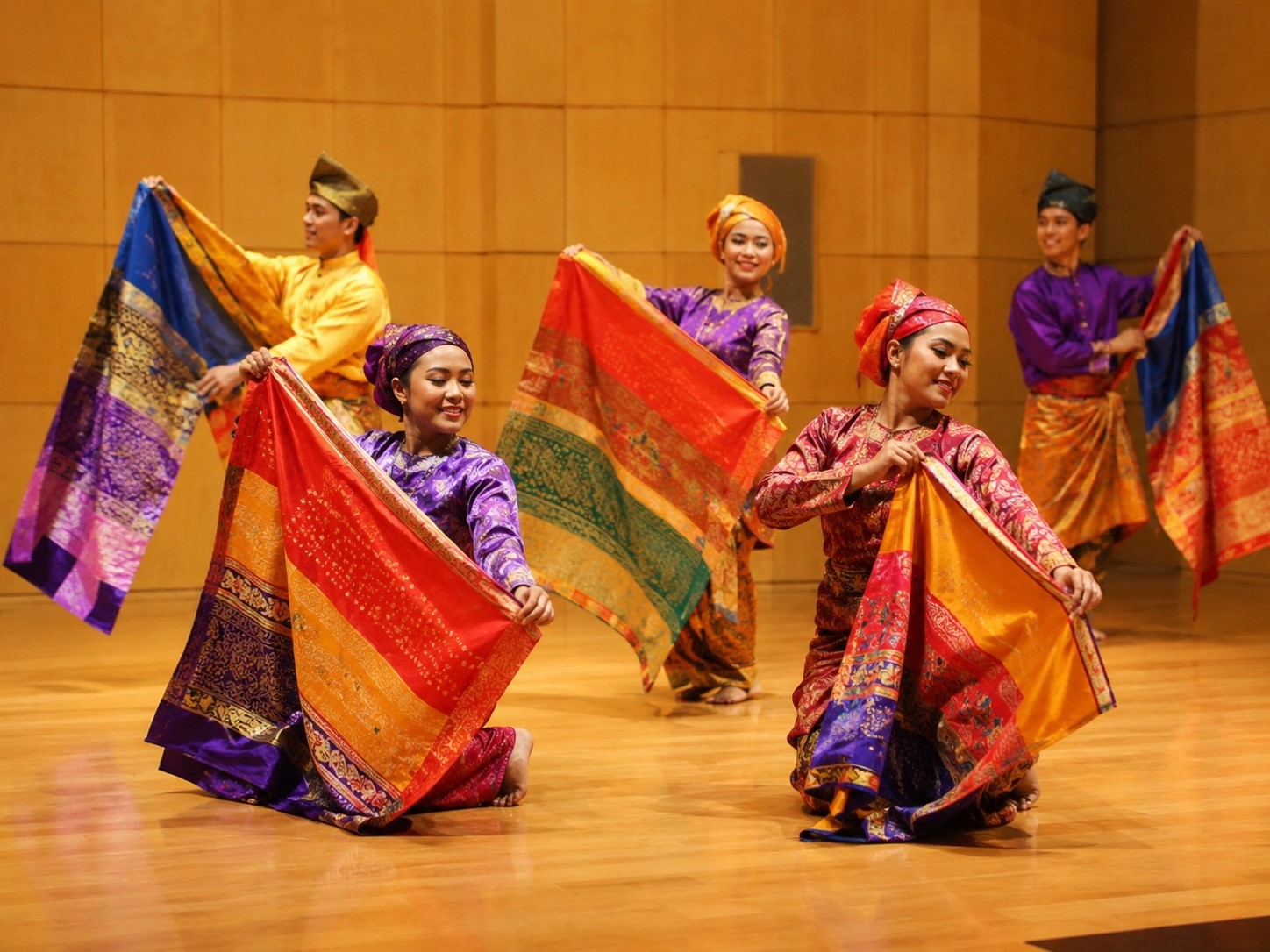
Kappa Malong-Malong is usually performed by women, although some versions may include men as well. The dancers wear or carry malongs and demonstrate different ways of using them while moving gracefully to the music.
The choreography often includes slow, flowing movements that allow the audience to clearly see each transformation of the cloth. The dancers may wrap the malong around the body, drape it over the shoulder, place it over the head, or fold it into different shapes.
The dance does not rely on speed. Instead, it focuses on elegance, control, and presentation. Every movement should look smooth and intentional. The dancer must make the malong appear natural, not awkward or forced.
A good performance makes the audience feel like the malong is alive—moving, changing, and telling a story through fabric.
The Many Uses of the Malong
One of the most fascinating parts of Kappa Malong-Malong is seeing how many uses the malong can have.
It can be worn as a skirt.
It can be worn as a dress.
It can be used as a shawl.
It can be used as a head covering.
It can become a blanket.
It can serve as a baby carrier.
It can be used as a prayer mat.
It can offer protection from the sun.
It can even be used as a temporary changing cover or sleeping cloth.
This everyday versatility is part of what makes the malong so important. The Ayala Museum notes that the malong is a famous Filipino textile used by communities in Mindanao, and folk descriptions often emphasize how it can be worn and repurposed in many ways.
In Kappa Malong-Malong, these uses are not just explained. They are shown beautifully through dance.
The Beauty of the Malong as Textile Art
The malong is not only practical. It can also be a work of art.
Many malongs feature bright colors, geometric patterns, and designs inspired by traditional Mindanao aesthetics. Some are handwoven and may carry special decorative details, while others are simpler and used for daily life.
In Maranao culture, textile design is closely connected to identity and artistry. Decorative patterns may reflect regional styles, family traditions, or cultural symbols. The malong can be humble or elegant, everyday or ceremonial.
This is why the dance has visual power. When dancers move with colorful malongs, the fabric creates flowing shapes on stage. The colors and patterns catch the eye, while the movements show the cloth’s flexibility.
It is fashion, function, and folk dance all at once.
The Music of Kappa Malong-Malong
Kappa Malong-Malong is often performed with music inspired by Mindanao traditions. In cultural presentations, the music may include sounds associated with kulintang ensembles or other traditional Muslim Filipino musical styles.
The music usually supports graceful and flowing movement. It does not need to be too fast because the focus is on the malong and how it changes form. The rhythm gives the dancers enough space to demonstrate each use clearly.
In school and stage performances, recorded music is commonly used. In more traditional or formal cultural presentations, live music can make the dance feel richer and more authentic.
The music helps set the mood. It gives the dance a dignified, cultural, and elegant atmosphere.
Costumes Used in the Dance
The most important costume element in Kappa Malong-Malong is, of course, the malong.
Female dancers may wear a malong as a dress, skirt, shawl, or mantle. They may also use additional cloth pieces or accessories to complete the look. Male dancers, when included, may wear the malong as a sash, waistband, or lower garment, depending on the version of the performance.
Because the dance is about showing the many uses of the malong, the costume is also the main prop. The dancer must know how to handle it well. The cloth should move naturally, and each transformation should look smooth.
The costume is not only for decoration. It is part of the dance’s message.
Why Kappa Malong-Malong Is Different from Other Folk Dances
Kappa Malong-Malong is different because it does not focus on courtship, battle, or physical tricks. Instead, it focuses on cultural demonstration.
Tinikling shows agility with bamboo poles.
Pandanggo sa Ilaw shows balance with lights.
Maglalatik shows rhythm with coconut shells.
Binasuan shows control with glasses.
Kappa Malong-Malong shows creativity through cloth.
That makes it unique. It teaches the audience about a cultural object while still being beautiful to watch. It is educational, but not boring. It is graceful, but also practical. It shows that a simple textile can hold a lot of meaning.
Kappa Malong-Malong in Schools and Cultural Programs
Many Filipinos encounter Kappa Malong-Malong through school programs, folk dance lessons, cultural presentations, and Buwan ng Wika celebrations.
It is a good dance for cultural education because it introduces students to Mindanao traditions. Many students may have heard of the malong, but seeing it used in different ways through dance makes the lesson more memorable.
This is especially important because Philippine culture is very diverse. Learning dances like Kappa Malong-Malong helps students understand that Filipino identity is not only Tagalog, Visayan, or Spanish-influenced. It also includes the rich traditions of Muslim Mindanao and many other cultural communities.
Through this dance, audiences get a glimpse of Maranao culture in a way that is visual, graceful, and easy to appreciate.
Respecting the Culture Behind the Dance
Because Kappa Malong-Malong is connected to Maranao and Muslim Filipino culture, it should be performed with respect.
The malong should not be treated as a random costume piece. It is a meaningful textile connected to real communities, traditions, and ways of life. When students or performers dance Kappa Malong-Malong, it is good to understand the background of the malong and the people who use it.
This does not mean the dance cannot be performed in schools or cultural programs. In fact, performing it can be a beautiful way to share and appreciate culture. But the performance becomes much better when it is done with awareness.
A respectful performance does not just show the fabric. It honors the culture behind it.
Why Kappa Malong-Malong Is Popular
Kappa Malong-Malong is popular because it is visually beautiful and easy to understand.
The audience can immediately see the idea: one cloth, many uses. That simple concept makes the dance engaging. People enjoy watching the malong transform from one form to another.
It is also popular because of the colors. A group of dancers wearing bright malongs can create a very beautiful stage picture. The fabric moves gracefully, and the different patterns add richness to the performance.
Most importantly, the dance is meaningful. It helps people appreciate the practical intelligence and artistic beauty of Mindanao culture.
What the Dance Teaches Us
Kappa Malong-Malong teaches us that culture is not always found in grand monuments or formal ceremonies. Sometimes, culture is found in everyday objects.
A piece of cloth can tell a story.
A garment can show identity.
A dance can teach history.
A simple malong can represent creativity, modesty, beauty, practicality, and heritage.
That is the power of this dance. It reminds us that Filipino traditions are rich because they come from real life. They come from how people dress, move, celebrate, work, pray, and care for their families.
Why Kappa Malong-Malong Still Matters Today
Kappa Malong-Malong still matters because it keeps Maranao and Mindanao culture visible.
In many discussions about Philippine folk dance, people often focus on dances from Luzon and the Visayas. But Mindanao has a very rich cultural heritage that deserves equal attention and appreciation. Dances like Kappa Malong-Malong help show that richness.
It also matters because it introduces younger generations to the malong. In a modern world where many people wear Western-style clothing every day, traditional garments can sometimes feel distant. But through dance, the malong becomes alive and relevant again.
The dance reminds us that tradition can still be beautiful, practical, and meaningful today.
Final Thoughts
Kappa Malong-Malong is one of the most beautiful cultural dances of the Philippines because it celebrates the malong, a simple yet powerful symbol of Mindanao heritage.
Through graceful movement, the dance shows how one piece of cloth can become many things—a dress, skirt, shawl, blanket, head covering, prayer mat, and more. But beyond these practical uses, the dance also shows the creativity and elegance of Maranao culture.
It is not a dance of tricks or dramatic conflict. It is a dance of identity, artistry, and everyday beauty.
Kappa Malong-Malong reminds us that Filipino culture is incredibly diverse. From bamboo dances in the Visayas to devotional dances in Batangas, from courtship dances in Bicol to textile dances in Mindanao, every region has something meaningful to share.
And in the case of Kappa Malong-Malong, that meaning is wrapped beautifully in the folds of a malong.


