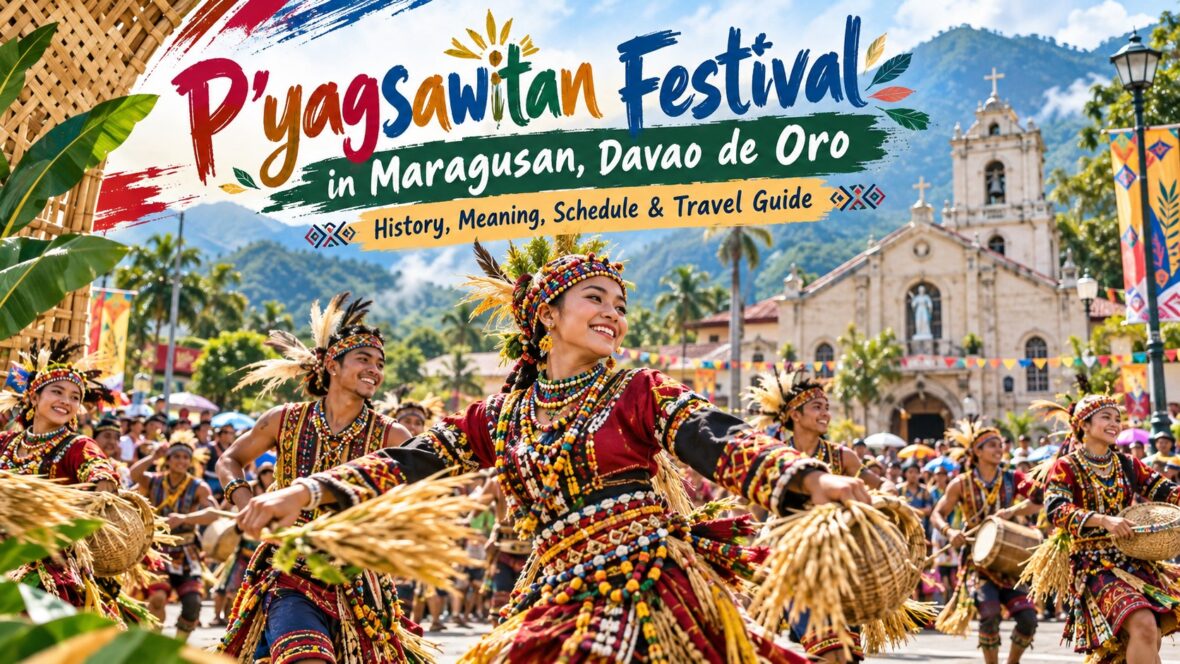
Every November, the quiet mountain town of Maragusan in Davao de Oro transforms into a lively celebration of culture, tradition, and thanksgiving.
Colorful costumes fill the streets, traditional music echoes through the community, and residents come together to celebrate the blessings of nature and the heritage passed down through generations.
This is the P’yagsawitan Festival, one of the Philippines’ lesser-known but culturally meaningful celebrations.
While festivals like Sinulog, Ati-Atihan, and Kadayawan attract thousands of tourists every year, P’yagsawitan offers a different experience. It’s deeply connected to the lives of the Mansaka people, the indigenous community whose traditions form an important part of Maragusan’s identity.
At its heart, the festival is a celebration of gratitude for a bountiful harvest. But beyond the thanksgiving rituals, it also brings together local communities through cultural performances, street dancing, and activities that showcase the beauty and heritage of this part of Mindanao.
And here’s what makes it even more interesting: Maragusan is known for its beautiful waterfalls, lush mountains, and refreshingly cool climate.
So, if you’re looking for a Philippine festival that combines indigenous culture, colorful celebrations, and a nature getaway, P’yagsawitan is worth discovering.
Here’s everything you need to know about the P’yagsawitan Festival, from its history and cultural significance to its traditional activities, celebration dates, and how to experience it yourself.
Content
What Is the P’yagsawitan Festival?
The P’yagsawitan Festival is an annual harvest thanksgiving and cultural celebration held in the municipality of Maragusan, Davao de Oro, in the Davao Region of Mindanao.
It highlights the traditions of the Mansaka indigenous people, particularly their expressions of gratitude for a successful harvest and the blessings received from the land.
The festival is traditionally associated with the third week of November and the town’s annual founding anniversary celebration, known as Araw ng Maragusan.
The Tourism Promotions Board of the Philippines officially recognizes P’yagsawitan as a festival featuring indigenous cultural performances and harvest-related thanksgiving rituals.
But the celebration is more than an occasion to showcase traditional dances or colorful costumes.
For the Mansaka community, the thanksgiving tradition reflects a deep relationship between agriculture, spirituality, nature, and community life.
It is a reminder that the harvest is not simply the result of hard work. Within traditional Mansaka beliefs, it is also a blessing that deserves acknowledgment and gratitude.
Over time, the celebration has developed into a broader community festival that helps preserve indigenous culture while promoting Maragusan’s identity as a destination in Davao de Oro.
P’yagsawitan Festival at a Glance
| Details | Information |
|---|---|
| Festival name | P’yagsawitan Festival |
| Location | Maragusan, Davao de Oro |
| Region | Davao Region, Mindanao |
| Month celebrated | November |
| Traditional schedule | Third week of November |
| Associated celebration | Araw ng Maragusan, November 25 |
| Main theme | Harvest thanksgiving and indigenous cultural heritage |
| Indigenous community | Mansaka |
| Main attractions | Cultural performances, traditional rituals, street dancing, and community festivities |
The exact dates and activities can vary from year to year, so visitors planning to attend should check the latest announcements from the Municipal Government of Maragusan.
What Does P’yagsawitan Mean?
One of the most fascinating things about the festival is the meaning behind its name.
According to the National Commission for Culture and the Arts (NCCA), the term pyagsawitan refers to the first meal prepared from farm produce after a harvest.
In traditional Mansaka culture, the harvest is an occasion for thanksgiving and community gathering.
The NCCA explains that a ceremony is performed to offer part of the harvest to Magbabaya, the Supreme Being in traditional Mansaka belief.
The ritual is traditionally conducted by a baylan, an indigenous ritual practitioner who performs ceremonies during important occasions such as planting and harvesting.
During harvest celebrations, relatives, neighbors, and other community members gather to participate.
Food and traditional drinks are shared, while singing, dancing, and indigenous musical instruments accompany the occasion.
In the traditional account documented by the NCCA, guests also leave with a portion of farm produce.
This shows that P’yagsawitan isn’t simply about giving thanks for a successful harvest.
It’s also about sharing the blessings of the land with others.
And when you think about it, that’s a beautiful tradition.
It reflects values that are still familiar to many Filipino communities today: gratitude, generosity, family, and togetherness.
History and Origins of the P’yagsawitan Festival
To understand the origins of P’yagsawitan, we need to look at the history and traditional way of life of the Mansaka people.
The Mansaka are among the indigenous peoples of southeastern Mindanao, with communities in what is now Davao de Oro and nearby areas.
Long before modern municipalities and tourism festivals became part of the region’s landscape, Mansaka communities were already practicing agriculture, weaving, traditional ceremonies, and other customs shaped by their relationship with nature.
Farming played an essential role in everyday life.
Families cultivated the land, gathered produce, and depended on successful harvests to sustain their households and communities.
Naturally, the changing agricultural seasons were important occasions.
Planting marked a period of hope and preparation, while harvesting represented the results of months of work.
But in traditional Mansaka beliefs, agriculture was also connected to the spiritual world.
Ceremonies led by the baylan sought blessings for the crops and protection against harmful spirits, pests, and other threats to the harvest.
When the crops were ready, the community expressed its gratitude through the pyagsawitan tradition.
From Indigenous Thanksgiving to Community Festival
As Maragusan developed into a municipality, traditional harvest thanksgiving became part of a larger annual celebration.
The modern P’yagsawitan Festival is associated with Araw ng Maragusan, the town’s founding anniversary commemorated every November 25.
Cultural performances, public festivities, and community gatherings provide opportunities for residents to celebrate both their indigenous heritage and the municipality’s development.
This is an important distinction.
The traditional thanksgiving ceremony has indigenous roots that predate the modern festival, while the organized public celebration reflects how these traditions have been incorporated into Maragusan’s contemporary identity.
Today, the festival serves as a cultural bridge between generations.
It allows younger residents to learn about traditional practices while introducing visitors to a part of Mindanao’s heritage that deserves greater recognition.
The Mansaka People: The Heart of P’yagsawitan
You really can’t talk about P’yagsawitan without talking about the Mansaka people.
Their cultural heritage gives the festival its meaning.
The Mansaka are an indigenous ethnolinguistic community whose traditions include farming, weaving, customary leadership, spiritual beliefs, music, and community rituals.
Their knowledge and practices have developed through generations of living in the landscapes of southeastern Mindanao.
Agriculture and the Land
Agriculture has traditionally been central to Mansaka life.
The NCCA describes farming methods that involve moving cultivation areas to maintain soil fertility and help prevent erosion.
Planting, weeding, and harvesting are important parts of community life.
Women have also traditionally participated in farming while producing clothing and woven mats.
These activities demonstrate how the community’s daily needs, skills, and cultural traditions are interconnected.
Traditional Beliefs and Thanksgiving
In traditional Mansaka spirituality, Magbabaya is recognized as the Supreme Being.
Rituals conducted by the baylan accompany important agricultural activities, including planting and harvesting.
These ceremonies seek blessings and express gratitude.
The pyagsawitan harvest thanksgiving reflects these beliefs.
It’s important to remember, however, that the Mansaka are a living community whose beliefs and practices may differ among families and localities.
The traditional rituals documented in cultural accounts should not be assumed to be practiced identically by every Mansaka person today.
Cultural Preservation
For younger generations, celebrations like P’yagsawitan help make indigenous heritage visible.
Traditional dances, music, attire, and stories can be shared with the wider community.
At the same time, visitors should remember that indigenous culture is more than something performed onstage.
Its deeper meaning belongs to the people who continue to practice, preserve, and interpret these traditions.
That is why respectful participation is particularly important during cultural celebrations.
When Is the P’yagsawitan Festival Celebrated?
P’yagsawitan is celebrated annually in November.
The Tourism Promotions Board lists the festival during the third week of the month.
However, the celebration is also associated with important municipal events taking place later in November.
These traditionally include:
| Occasion | Traditional date |
|---|---|
| P’yagsawitan Festival | Third week of November, with activities varying by year |
| Maragusan Town Fiesta | November 24 |
| Araw ng Maragusan | November 25 |
Festival activities may be spread across several days, depending on the municipality’s annual program.
The street dancing, cultural presentations, and major public activities do not necessarily take place on the same dates every year.
For this reason, it’s best to treat the third week of November as a general planning guide rather than a fixed schedule for every festival activity.
If you want to witness a particular performance, confirm the final program before booking your trip.
P’yagsawitan Festival Highlights: What to Expect
Now, let’s talk about the exciting part.
What actually happens during P’yagsawitan?
Although the official program changes from year to year, the festival has been associated with several cultural and community activities.
1. Street Dancing and Cultural Presentations
Street dancing is one of the most visually exciting aspects of many Philippine festivals, and P’yagsawitan has featured dance activities that celebrate Maragusan’s cultural identity.
Local festival accounts mention presentations such as Indak-Indak sa Kadalanan and Indak-Hudyaka sa P’yagsawitan.
These activities bring performers together through coordinated dances, colorful costumes, music, and creative interpretations of community traditions.
It’s the kind of celebration where visitors can appreciate the energy and creativity of local performers.
But there’s also an important cultural dimension.
Many performances are inspired by indigenous heritage, agricultural life, and the history of the community.
Rather than viewing them simply as entertainment, it’s worth appreciating the stories and traditions that inspire the presentations.
2. Mansaka Traditional Rituals
The harvest thanksgiving tradition is one of the festival’s defining cultural foundations.
Traditional ceremonies recognize the blessings received from the land and the Supreme Being.
In indigenous practice, these rituals carry meanings that go beyond the public celebration.
Some ceremonies may be shared with visitors through cultural demonstrations, while others may remain private or restricted.
If you encounter a traditional ritual during the festival, respect the instructions of cultural leaders and organizers.
Not every sacred practice is intended to be photographed or treated as a tourist performance.
3. Indigenous Music and Dance
Music and dancing have traditionally accompanied Mansaka gatherings, including harvest celebrations.
The NCCA describes communal ceremonies where participants sing, dance, and play indigenous musical instruments.
During modern festival celebrations, cultural performances can provide an opportunity to appreciate these artistic traditions.
They also create a meaningful connection between older cultural practices and younger generations.
For visitors unfamiliar with Mansaka heritage, these presentations can be among the most memorable experiences of the festival.
4. Dagaday sa Panahon
Dagaday sa Panahon is another cultural activity mentioned in descriptions of P’yagsawitan.
It is associated with celebrating the heritage and traditions of the Mansaka people.
Depending on the festival’s program, activities inspired by indigenous history, identity, and cultural practices may be presented to the public.
For those interested in Philippine indigenous culture, these events are worth looking out for in the official festival schedule.
5. Agricultural Thanksgiving and Community Activities
Given the festival’s roots, agriculture naturally plays an important role in the celebration.
Maragusan’s surrounding mountain communities depend on farming and other local livelihoods.
Through thanksgiving activities and community gatherings, the festival recognizes the importance of harvests and the people who work the land.
Modern celebrations may also feature local products, food, exhibits, and other activities organized by the municipality.
The specific lineup depends on the year.
6. Araw ng Maragusan
The festival also forms part of Maragusan’s broader annual celebrations.
Araw ng Maragusan, observed on November 25, marks the municipality’s founding anniversary.
This occasion brings residents together to commemorate the town’s history, culture, and achievements.
In some years, anniversary festivities include civic programs, performances, community activities, and other public events.
Together with P’yagsawitan, the anniversary provides an opportunity for residents to celebrate what makes Maragusan unique.
Where Is the P’yagsawitan Festival Held?
P’yagsawitan takes place in Maragusan, a municipality in Davao de Oro, in southeastern Mindanao.
Formerly part of Compostela Valley province, Maragusan is surrounded by mountains, forests, agricultural landscapes, and natural attractions.
The town is known for its relatively cool highland climate, earning it recognition as a mountain getaway in the Davao Region.
Its main urban and administrative center is Poblacion, where public gatherings and municipal activities are commonly held.
Festival programs may use streets, public spaces, and other designated venues around the municipality.
The exact locations of performances, parades, and other activities can change from year to year.
If you’re planning to attend, check the official venue information and arrive early for major public events.
Why Maragusan Is Worth Visiting
One of the things that makes P’yagsawitan particularly interesting is its location.
Maragusan isn’t just a festival town.
It’s also a destination known for its natural scenery.
While much of the Davao Region is associated with coastal cities, plantations, and urban attractions, Maragusan offers a different environment.
Here, mountain landscapes, waterfalls, and greenery define the scenery.
Its higher elevation contributes to a cooler atmosphere compared with many lower-lying areas.
And if you’re someone who enjoys combining local culture with outdoor travel, you can easily make the festival part of a longer trip.
Tourist Spots Near the P’yagsawitan Festival
If you’re visiting Maragusan, consider setting aside some time to explore its natural attractions.
Tagbibinta Falls
Tagbibinta Falls is one of Maragusan’s best-known destinations.
Located in Barangay Coronobe, the waterfall system features a series of cascades surrounded by forest scenery.
According to the Provincial Government of Davao de Oro, Tagbibinta consists of 13 cascades, with its final cascade dropping approximately 75 feet into a pool.
Visitors can enjoy the natural surroundings, scenic views, and designated picnic areas where available.
But what makes Tagbibinta particularly special is its cultural significance.
The provincial government identifies the waterfall area as a sacred site for the Mansaka community.
Traditional accounts associate the place with spiritual beliefs and healing rituals.
This makes Tagbibinta more than just a beautiful waterfall.
It’s also part of Maragusan’s indigenous cultural landscape.
When visiting, follow local guidance, avoid excessive noise, and respect the site’s cultural importance.
P’yalitan Falls
For travelers looking for a more adventurous experience, P’yalitan Falls is another destination worth considering.
Located in Barangay Mapawa, the waterfall is known for its multiple tiers and lush natural surroundings.
Provincial tourism information describes P’yalitan as a nine-tier waterfall accessible through trekking routes.
Unlike more developed tourist attractions, visiting P’yalitan may require greater preparation and physical effort.
Depending on current conditions, visitors may need local guidance to navigate the trail safely.
If you’re planning to visit during the festival season, check weather conditions, trail accessibility, and tourism arrangements in advance.
How to Get to Maragusan, Davao de Oro
If you’re traveling from outside Mindanao, Davao City is a practical starting point.
Maragusan is accessible by land from several cities and municipalities in the Davao Region.
From Manila
For travelers coming from Metro Manila, the usual first step is to fly to Davao City.
From Francisco Bangoy International Airport, you can continue toward Maragusan through available provincial transportation or a private vehicle.
If you’re unfamiliar with the region, allow sufficient time for transfers and possible road delays.
From Davao City
Travelers coming from Davao City can travel toward Davao de Oro through the provincial road network.
Public transportation arrangements may involve buses or vans heading toward Tagum, Nabunturan, or other connecting terminals.
From there, travelers can transfer to available services bound for Maragusan.
Exact routes, departure points, and schedules should be confirmed with operators before traveling.
From Tagum City
Tagum City is another useful gateway for travelers heading to Maragusan.
According to provincial tourism information, Maragusan is approximately 86 kilometers from Tagum City.
Transportation options may include provincial buses, vans, or private vehicles, depending on current operations.
From Nabunturan
Nabunturan, the capital of Davao de Oro, is another important access point.
Provincial tourism information places Maragusan approximately 53 kilometers from Nabunturan.
Traveling by private vehicle can be more convenient if you plan to visit several attractions.
If you’re taking public transportation, confirm the current services and transfer arrangements at the local terminal.
Travel Tips
Maragusan is a mountainous destination, so road conditions and travel times may be affected by weather.
If you’re driving, take additional care on winding roads and unfamiliar sections.
During heavy rainfall, check for local advisories concerning landslides, road closures, and other travel disruptions.
Whenever possible, plan your arrival during daylight hours.
What to Eat During the P’yagsawitan Festival
A visit to a festival wouldn’t be complete without enjoying the local food.
Maragusan’s agricultural setting means that fresh produce and locally prepared snacks are an important part of the area’s food culture.
During your visit, you can explore local eateries, markets, and food establishments.
One delicacy associated with Maragusan is salbaro.
The Provincial Government of Davao de Oro describes Salbaro de Maragusan as a local treat made from deep-fried cassava with chocolate syrup.
It’s an interesting example of how local ingredients can become a distinctive snack.
You can also look for locally grown produce and traditional Filipino food sold around town.
Food stalls and temporary festival vendors, when included in the annual program, may provide additional choices.
For the best experience, ask local residents about specialties they recommend.
Travel Tips for Attending the P’yagsawitan Festival
If you’re planning to attend P’yagsawitan for the first time, here are some practical things to remember.
1. Check the Official Festival Schedule
P’yagsawitan has a traditional November celebration period, but activity dates can change.
If you want to watch street dancing or a particular cultural presentation, make sure you know the confirmed schedule and venue.
2. Arrange Your Accommodation in Advance
Maragusan is a smaller municipality compared with major tourist destinations.
Accommodation choices may be limited, particularly during celebrations when visitors and returning residents arrive in town.
Booking ahead can help you secure a convenient place to stay.
3. Bring Comfortable Clothes
November falls within a period when rain can occur in parts of Mindanao.
Bring comfortable clothing, walking shoes, and a lightweight rain jacket.
Since Maragusan is located in the highlands, an extra layer can also be useful during cooler evenings.
4. Respect Indigenous Customs
This is particularly important during P’yagsawitan.
Some cultural activities and rituals may involve beliefs or practices considered sacred by community members.
Always ask permission before photographing people during traditional ceremonies, and follow restrictions on entering ceremonial areas.
5. Support Local Businesses
One of the simplest ways to support the community is by spending responsibly at locally owned establishments.
Consider buying food, locally produced goods, or services from residents.
If you hire a local guide, follow agreed rates and treat their knowledge and time with respect.
6. Keep the Environment Clean
Maragusan’s natural scenery is part of what makes the town special.
Avoid littering, especially when visiting waterfalls and forested areas.
Follow local environmental rules and leave natural attractions as you found them.
Suggested Two-Day Maragusan Festival Itinerary
If you have a weekend or two days available, here’s a simple way to combine the festival with sightseeing.
Day 1: Experience the Festival
Arrive in Maragusan and settle into your accommodation.
Spend the day exploring the town center, enjoying local food, and attending the P’yagsawitan activities scheduled for that day.
If a cultural performance or street dancing event is taking place, make it the highlight of your visit.
In the evening, enjoy a relaxed meal at a local eatery and experience the atmosphere of the town.
Day 2: Explore Maragusan’s Natural Attractions
Start the day with breakfast before heading to Tagbibinta Falls.
Take time to enjoy the scenery while respecting the site’s cultural and environmental rules.
If you’re an experienced trekker and have arranged local assistance, consider P’yalitan Falls as an alternative excursion, depending on trail conditions.
After sightseeing, return to town and prepare for your onward journey.
This itinerary is flexible and should be adjusted according to the official festival program, transportation availability, and weather.
Why the P’yagsawitan Festival Matters
The Philippines is home to hundreds of festivals, each reflecting the history, traditions, and identity of a particular community.
Some celebrate religious devotion. Others commemorate historical events, agricultural harvests, or important cultural practices.
P’yagsawitan is especially meaningful because it brings attention to the heritage of the Mansaka people.
It reminds us that festivals aren’t simply occasions for colorful costumes and public celebrations.
They are also opportunities to preserve traditional knowledge, recognize the importance of local communities, and pass cultural values from one generation to another.
For Maragusan, P’yagsawitan represents a connection between the town’s indigenous roots and its modern identity.
For travelers, it offers a chance to discover a destination beyond the usual tourist attractions.
And for the local community, it remains an expression of gratitude, belonging, and cultural pride.
Frequently Asked Questions About the P’yagsawitan Festival
Where is the P’yagsawitan Festival celebrated?
The festival is celebrated in Maragusan, Davao de Oro, in the Davao Region of Mindanao, Philippines.
When is the P’yagsawitan Festival held?
P’yagsawitan is traditionally celebrated during the third week of November. It is also associated with Maragusan’s annual founding anniversary on November 25. The exact program may change every year.
What is the meaning of P’yagsawitan?
According to the National Commission for Culture and the Arts, pyagsawitan refers to the first meal prepared from farm produce. The tradition is associated with Mansaka harvest thanksgiving ceremonies.
Why is the P’yagsawitan Festival celebrated?
The festival celebrates thanksgiving for a successful harvest, honors Mansaka cultural heritage, and forms part of Maragusan’s annual community and founding anniversary festivities.
What indigenous group is associated with the festival?
The festival is closely associated with the Mansaka people, an indigenous community of southeastern Mindanao.
What are the main activities during P’yagsawitan?
Traditional highlights include indigenous cultural performances and harvest thanksgiving ceremonies. Some editions also feature street dancing, competitions, and community events.
Is P’yagsawitan a religious festival?
P’yagsawitan has roots in traditional Mansaka spiritual beliefs and thanksgiving rituals. The modern celebration also has broader cultural, agricultural, and community significance.
What is the difference between P’yagsawitan and Araw ng Maragusan?
P’yagsawitan refers to the harvest thanksgiving and cultural celebration, while Araw ng Maragusan commemorates the municipality’s founding anniversary. The two occasions are closely connected in the town’s annual November festivities.
Is P’yagsawitan worth visiting?
Yes, particularly if you’re interested in indigenous culture, Philippine festivals, and lesser-known destinations.
The celebration provides an opportunity to appreciate Mansaka heritage while discovering Maragusan’s mountain scenery and natural attractions.
What other attractions can I visit in Maragusan?
Two well-known attractions are Tagbibinta Falls and P’yalitan Falls, both promoted by the Provincial Government of Davao de Oro.
P’yagsawitan Festival 2026: Latest Schedule Information
For visitors planning to attend the upcoming celebration, the P’yagsawitan Festival is expected to take place in November 2026.
The festival is traditionally listed during the third week of November, with the Maragusan Town Fiesta on November 24 and Araw ng Maragusan on November 25.
Municipal preparations for the 2026 celebration have referenced opening and culmination activities around November 19 and November 25.
However, as of October 18, 2026, a complete official public timetable covering all performances, street dancing events, venues, and starting times has not been independently confirmed.
Visitors should consult the official announcements of the Municipal Government of Maragusan and its tourism office before finalizing their plans.

Final Thoughts
There are festivals that impress you with grand parades and massive crowds. And then there are celebrations that become memorable because of the stories and traditions behind them.
The P’yagsawitan Festival belongs to the latter.
At its heart is a simple but meaningful idea: giving thanks for the blessings of the land and sharing those blessings with the community.
Through its connection to the Mansaka people, the festival preserves important aspects of Maragusan’s cultural identity while bringing residents together in an annual celebration.
And with the town’s beautiful waterfalls, mountain scenery, and cool highland atmosphere, a visit to P’yagsawitan can also become a rewarding travel experience.
If you’re looking for a festival in Mindanao that offers something beyond the usual tourist trail, consider visiting Maragusan during its annual thanksgiving celebration.
Come for the culture, enjoy the natural beauty, and take the opportunity to learn about the traditions that make this community special.
Because sometimes, the most meaningful travel experiences aren’t found in the biggest celebrations, but in the places where local traditions continue to bring people together.