For many Filipinos, tahong is simple comfort food.
It can be cooked in a hot ginger broth, baked with garlic and cheese or sautéed with tomatoes and vegetables. A large bowl placed in the middle of the table can feed an entire family without requiring an expensive list of ingredients.
In Bacoor, Cavite, however, tahong represents much more than an affordable meal.
The green mussel has supported farmers, boat operators, vendors, processors and coastal families for generations. It has shaped the identity of communities facing Bacoor Bay and has inspired everything from cooking competitions to seafood-processing businesses.
This livelihood is celebrated through the Tahong Festival, a culinary and coastal tradition associated with Bacoor’s September festivities.
Visitors may see enormous trays of mussels prepared in different styles, cooks racing to create creative dishes and fisherfolk participating in boat races and practical competitions. The activities honor the people whose work begins in the bay long before the finished tahong reaches a restaurant, public market or family kitchen.
Today, tahong-related events are commonly incorporated into the larger Bakood Festival and Mandaragat Olympics rather than always being promoted as a completely separate standalone festival.
The name and format may evolve, but the purpose remains important: to celebrate Bacoor’s coastal livelihood, promote value-added mussel products and remind the public that the city’s story is connected not only to roads, subdivisions and shopping centers but also to the waters of Manila Bay.
Content
What Is the Tahong Festival?
The Tahong Festival is a food and livelihood celebration associated with Bacoor City, Cavite.
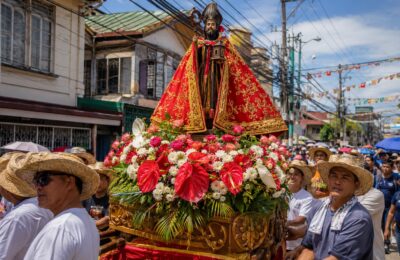
Traditional provincial festival listings place it on September 29, coinciding with Bacoor’s founding-anniversary season and the feast of St. Michael the Archangel. Activities historically featured mussel-based food exhibits, culinary competitions, product demonstrations and educational programs about mussel culture.
The festival’s central attraction is naturally the food.
Cooks demonstrate that tahong can become far more than a basic soup. Students, culinary trainees, home cooks and community groups prepare dishes that transform the humble green mussel into appetizers, snacks, rice meals and commercially packaged products.
However, the festival also celebrates the people behind the ingredient.
Mussel growers, coastal workers and fisherfolk participate through trade booths, boat activities, livelihood programs and the Mandaragat Olympics, a Bacoor celebration featuring competitions inspired by coastal work.
Is the Tahong Festival Still Held Separately?
This is an important question because older tourism lists often present Tahong Festival as an independent September 29 event.
In more recent city programs, tahong-centered activities have usually appeared as part of the wider Bakood Festival, Bacoor’s founding-anniversary celebration.
For example, the 2018 Tahong Gourmet Cook-Off was officially included under the 347th Bakood Festival. The same anniversary calendar featured the Mandaragat Olympics, a coastal cleanup and other community events.
The Mandaragat Olympics has continued in recent years. Its seventh edition in 2022 included a tahong recipe cook-off, swimming races, decorated fishing boats and an oyster-opening competition. The tenth edition was held in Barangay Sinbanali on September 30, 2025.
This means it is more accurate to treat Tahong Festival as Bacoor’s established mussel-centered celebration and culinary tradition, whose activities may now be presented under Bakood Festival or Mandaragat Olympics branding.
As of July 2026, I did not find a newly published official calendar for a separately branded 2026 Tahong Festival. Visitors should monitor Bacoor’s September announcements and look specifically for the Mandaragat Olympics, tahong cook-offs, coastal fairs and Bakood Festival activities.
Why Is Bacoor Known for Tahong?
Bacoor developed beside coastal waters connected to Manila Bay.
Before the city became heavily urbanized, many families in its coastal barangays depended on fishing, salt-making, oysters and green mussels. Even Bacoor’s official city hymn mentions tahong, asin, talaba at iba pang lamang-dagat among the products representing the community.
Green mussels are naturally suited to protected bays and inlets where they can attach themselves to poles, ropes and other surfaces.
The national Shellfish Industry Roadmap identifies Cavite as one of the Philippines’ important shellfish-producing provinces. It also notes that the Asian green mussel, Perna viridis, is strongly associated with Bacoor Bay and Manila Bay.
Mussel cultivation expanded in Cavite during the development of commercial Philippine mussel farming in the mid-20th century. BFAR records identify a 1955 demonstration farm in Binakayan, Cavite, as an important step in recognizing mussels as a commercially valuable crop rather than merely a nuisance growing in oyster farms.
Over time, mussel culture became part of the wider coastal economy around Bacoor Bay.
Families learned when and where young mussels would attach, how to install bamboo stakes or ropes and how to harvest the shells without damaging the entire growing structure.
What Is Tahong?
Tahong is the Filipino name commonly used for the Asian green mussel, scientifically known as Perna viridis.
Its shell may appear dark green, brownish green or nearly black depending on age and growing conditions. Inside is soft orange, cream or yellowish meat with a salty and slightly sweet marine flavor.
Mussels are bivalves, meaning their bodies are protected by two hinged shells.
Unlike fish, they do not chase food. They feed by filtering microscopic organisms and particles from the surrounding water.
This feeding method allows mussels to grow without being given commercial feeds in the same way that farmed fish or livestock are fed.
However, their filter-feeding behavior also makes water quality extremely important.
Mussels can accumulate bacteria, harmful microorganisms and toxins present in the water. This is why responsible cultivation, water monitoring, proper handling and food-safety systems are essential parts of a sustainable tahong industry.
How Tahong Is Farmed
Mussel farming does not look like ordinary crop farming.
Instead of preparing soil and planting seeds, growers install structures in suitable coastal waters where young mussels—called spat—can attach and develop.
Several cultivation methods are used in the Philippines.
Stake or Tulos Method
Bamboo poles are driven into the muddy bottom of shallow coastal waters.
Naturally occurring mussel spat attaches to the poles. The shellfish then grow in clusters until they are large enough to harvest.
This traditional system is relatively simple and uses locally available materials.
However, large numbers of closely spaced stakes may interfere with water circulation and contribute to sediment buildup in some farming areas. BFAR has promoted alternative systems where conditions make them more suitable.
Rope-Web Method
Polypropylene ropes are arranged into web-like structures and tied between bamboo supports.
The ropes provide surfaces where young mussels can attach. The method can use the water column more efficiently than depending only on individual bamboo stakes.
Raft Method
A floating bamboo raft supports ropes hanging into the water.
Mussels grow along the submerged ropes, allowing farmers to raise shellfish in areas that may be deeper than traditional stake-farming zones.
Longline Method
Long ropes are suspended across suitable waters using floats and anchors.
Shorter mussel-growing ropes hang beneath the main line. This method can reduce some of the problems associated with dense bamboo stakes and may be more suitable for selected offshore or deeper-water areas.
The appropriate method depends on currents, depth, water quality, wave exposure, available space and the natural supply of mussel spat.
The Life of a Magtatahong
A mussel farmer is sometimes called a magtatahong.
The work requires knowledge of tides, water conditions, weather and the behavior of shellfish.
Farmers need to install and maintain growing structures. Bamboo poles can break, ropes can loosen and storms can damage an entire section of a farm.
They must also monitor the development of the mussels.
Harvesting too early produces small meat and lower value. Waiting too long can increase losses from poor weather, theft, pollution or harmful algal blooms.
When the shells are ready, workers travel by boat to gather heavy clusters. The mussels must then be cleaned, separated, sorted and transported while still fresh.
The physical work is demanding.
Wet mussel clusters are heavy, and farmers spend long periods exposed to sunlight, saltwater and unpredictable weather.
Festival visitors usually see the finished food. The Tahong Festival helps bring attention to everything that happened before the mussels reached the cooking pot.
Bacoor’s Coastal Barangays
Tahong culture is particularly associated with Bacoor’s coastal communities.
Barangays such as Sineguelasan, Alima and Sinbanali have been connected with seafood livelihoods, processing facilities and fisherfolk activities.
Sineguelasan has hosted seafood operations and the Bacoor Food Processing Center. A city-organized learning visit in 2023 brought participants to the community to see Bacoor’s tahong and talaba, the food-processing center and a mangrove area managed as part of local coastal programs.
Barangay Alima became the location of Bacoor’s mussel depuration facility, which was developed through cooperation among DOST-PCAARRD, the city government and Cavite State University–Naic.
The 2025 Mandaragat Olympics was held in Barangay Sinbanali, reflecting the continued role of Bacoor’s coastal communities in the city’s anniversary celebration.
What to Expect During Tahong-Related Festival Activities
The program changes every year, especially now that the activities may appear under the larger Bakood Festival calendar.
Still, several events are strongly associated with the tahong celebration.
Tahong Gourmet Cook-Off
The cook-off is one of the festival’s most enjoyable attractions.
Participants are challenged to create dishes featuring tahong as the principal ingredient.
In the 2018 Bacoor Tahong Gourmet Cook-Off, students from Cavite State University, St. Dominic College, ISHRM and ACTEC competed without knowing all the ingredients they would receive in advance. They were required to develop creative dishes once the competition began.
This format tests more than a contestant’s ability to follow a prepared recipe.
The cooks must think quickly, understand the texture of tahong and decide how to balance its salty marine flavor with the mystery ingredients available.
Judges may consider:
- Taste
- Creativity
- Presentation
- Proper preparation
- Use of tahong
- Food safety
- Practicality
- Potential for commercial production
The strongest entries do not hide the mussel beneath too many competing flavors.
They allow tahong to remain recognizable while presenting it in a fresh and interesting way.
Mandaragat Olympics
The Mandaragat Olympics celebrates the skills, strength and teamwork of Bacoor’s coastal workers.
Earlier editions have included:
- Fluvial parades
- Banca races
- Swimming competitions
- Tug-of-war
- Boat-decoration contests
- Oyster-opening contests
- Tahong recipe cook-offs
The 2017 event included a fluvial parade, banca race, swimming contest, tug-of-war and tahong cook-off.
By 2022, the program still featured practical coastal competitions such as fast oyster opening, decorated fishing boats and a tahong recipe cook-off.
The event continued with its tenth edition in 2025, organized with the participation of the Bacoor Agriculture Office, Philippine Coast Guard, cooperatives and other partner organizations.
The activities may appear entertaining, but many are based on abilities used in real coastal work.
Boat handling, swimming, shell opening and teamwork are part of the knowledge developed by people who spend their lives near the water.
Fluvial Parade and Decorated Boats
A fluvial parade brings the festival directly onto Bacoor’s coastal waters.
Boats are decorated with flags, plants, banners and colorful materials before traveling together through an approved route.
The procession allows fishermen and boat owners to participate visibly in the celebration.
In an ordinary parade, they might simply stand on a float built over a truck. In a fluvial procession, their actual working boats become the festival vehicles.
The event also highlights Bacoor’s geography.
Visitors who know only the city’s highways and shopping centers are reminded that Bacoor remains a coastal community connected with Manila Bay.
Spectators should watch only from approved areas and avoid entering restricted waterfront zones.
Boat passengers should follow Coast Guard and organizer requirements regarding life jackets, passenger capacity and weather conditions.
Banca Races
Banca races test speed, coordination and boat-handling ability.
Competitors must paddle or operate their vessels efficiently while following a marked course. Water conditions can change quickly, so the strongest team is not always the one with the greatest physical strength.
Timing and teamwork matter.
The crew must move together, maintain direction and avoid interfering with other participants.
These races also honor the ordinary boats used by fishing families.
A banca may carry workers to a tahong farm, transport harvested shells or support coastal maintenance. During the festival, it becomes part of a public sporting event.
Oyster- and Shell-Opening Competitions
Opening shellfish quickly requires practice.
Competitors must separate the shells while protecting the meat and avoiding injury from sharp edges or knives.
An oyster-opening contest featured in the 2022 Mandaragat Olympics reflected the skills used by seafood vendors and processors.
Speed should never come at the expense of safety or cleanliness.
Festival contests should use proper tools, stable work surfaces and sanitary handling procedures. Participants should also be trained to avoid cuts and cross-contamination.
Seafood Displays and Culinary Exhibits
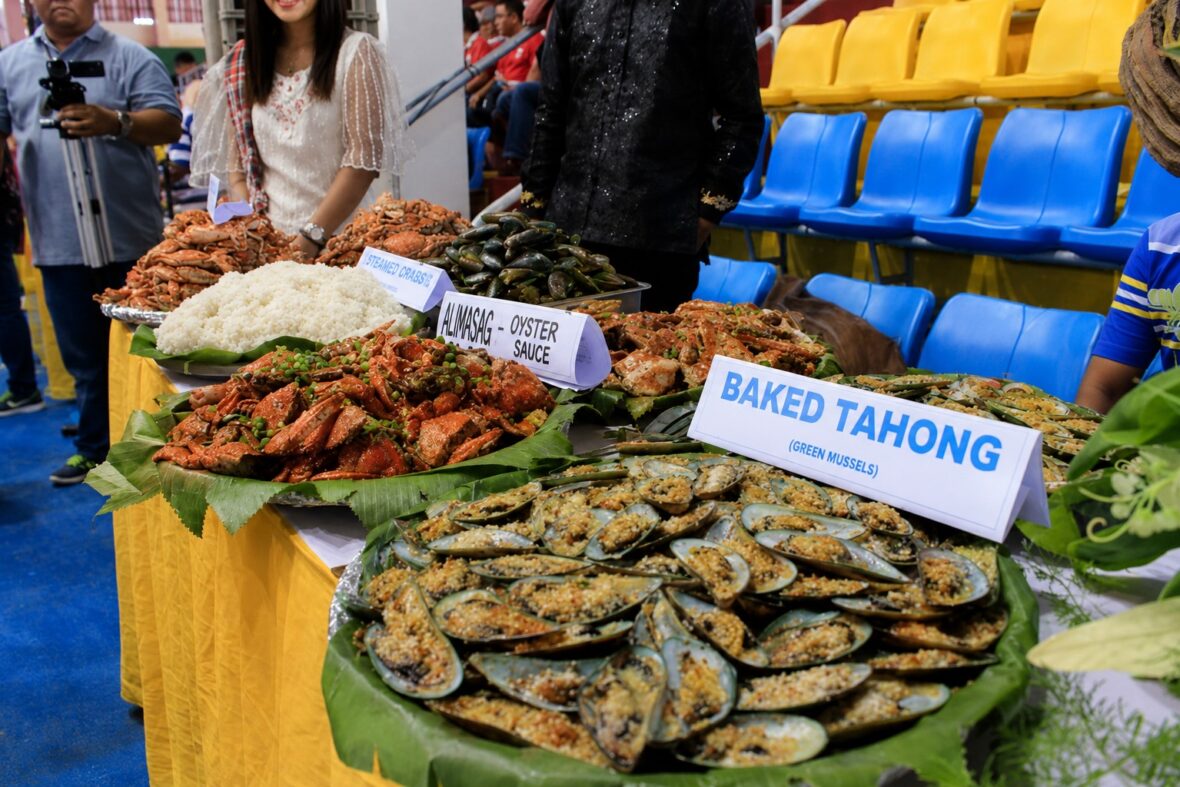
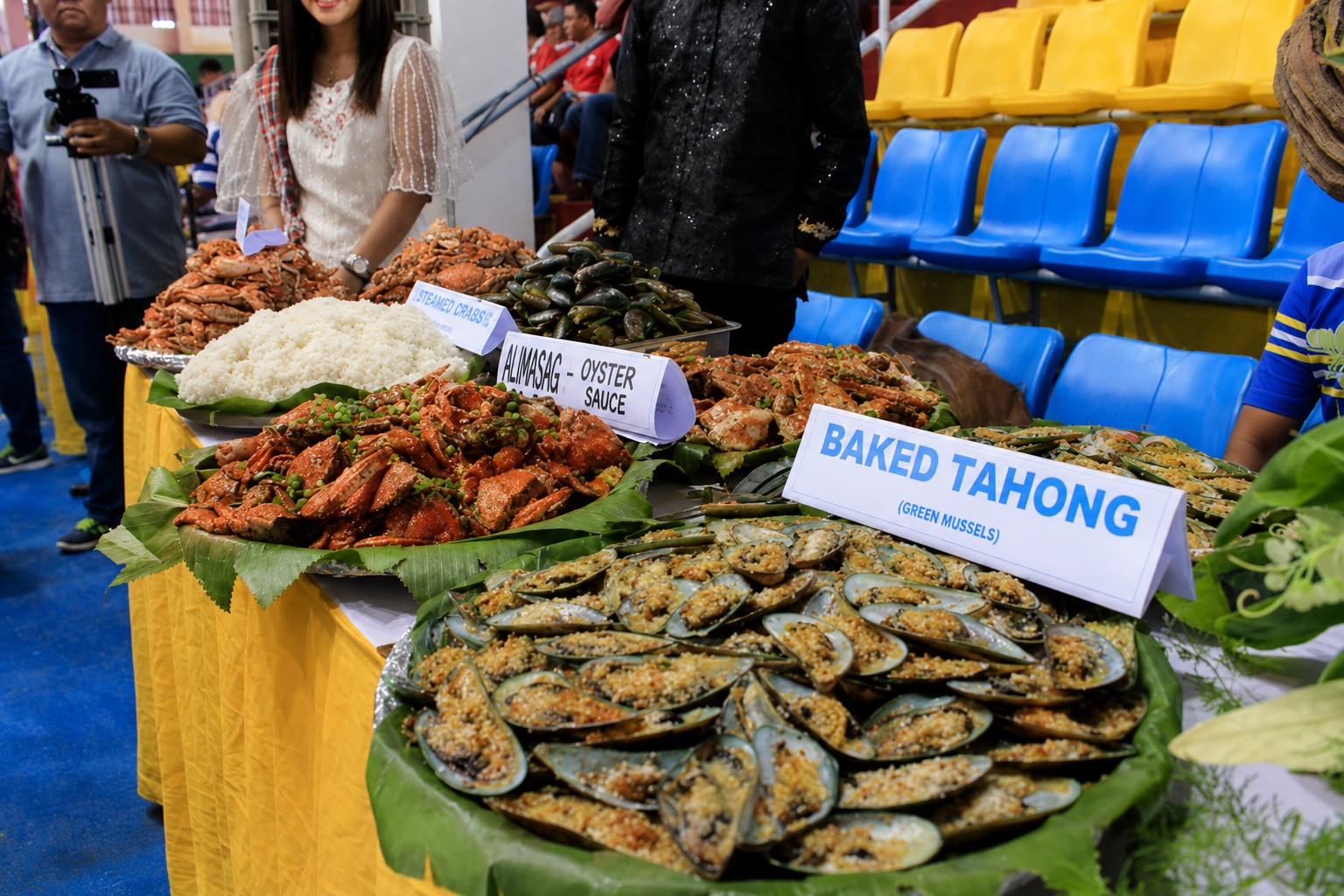
Festival exhibits present tahong in different cooked forms.
Large trays may contain baked mussels, steamed tahong, seafood rice and dishes combined with crab, vegetables or sauces.
The display itself becomes part of the attraction.
Green shells contrast beautifully with orange mussel meat, white rice and colorful toppings. Banana leaves may be used to create a more traditional presentation.
Visitors should not assume every display item is available for unrestricted tasting.
Some dishes may be prepared only for judging, demonstration or photography. Wait for the organizer or vendor to confirm that food may be served.
Boodle Fights and Community Meals
Tahong is naturally suited to communal dining.
Mussels can be cooked in large quantities and served with rice, vegetables, seafood and dipping sauces over banana leaves.
Some Tahong Festival celebrations have featured extremely long boodle-fight arrangements, including a reported 400-meter communal spread.
The visual impact is exciting, but food safety remains important.
Hot dishes should not remain exposed for an unnecessarily long time. Participants should wash their hands, use gloves or utensils when required and avoid touching sections intended for other diners.
A communal meal is most enjoyable when organizers control serving times, crowd flow and sanitation.
Bacoor Food Processing Center
One of the most important developments in Bacoor’s tahong industry is the creation of value-added products.
Fresh mussels spoil relatively quickly. This can limit how far they can be transported and how long producers have to sell them.
Processing creates alternatives.
The Bacoor Food Processing Center has developed several tahong-based products, including:
- Empanadang tahong
- Adobong tahong
- Tahongganisa
- Tahong putopao
- Crispy tahong
- Lumpiang tahong
- Siomai tahong
These products were showcased during an official science-and-technology visit to the center in 2019.
Processing can increase the value of each harvest and create additional livelihood for people who are not directly involved in raising the shellfish.
Workers are needed for cooking, packing, labeling, quality control, sales and product development.
Tahong Chips
Tahong chips are one of Bacoor’s best-known processed mussel products.
The concept transforms mussel meat into a seasoned, crispy snack that is easier to transport and store than fresh shellfish.
DOST-CALABARZON assisted a Bacoor producer in commercializing tahong chips as early as 2009.
The city continued investing in product improvement. In April 2025, Bacoor and DOST-CALABARZON signed an agreement intended to improve the quality of tahong chips and strengthen the processing capabilities of the Bacoor Food Processing Center.
This demonstrates that the tahong industry is not being preserved only as a nostalgic tradition.
Science, equipment, packaging and product testing are being used to help local goods compete in modern markets.
Other Tahong Products to Try
Baked Tahong
The mussels are topped with garlic, butter, cheese or breadcrumbs before being baked.
It is one of the easiest tahong dishes for first-time visitors because the rich topping balances the shellfish flavor.
Tinolang Tahong
Tahong is simmered in a light broth with ginger, garlic, onions and leafy vegetables.
The result is warm, refreshing and especially satisfying during rainy weather.
Adobong Tahong
Mussel meat is cooked with vinegar, soy sauce, garlic and spices.
The concentrated sauce works well with hot rice.
Tahong Sisig
Chopped mussel meat is combined with onions, chili and savory seasoning.
Some versions are served on a hot plate and finished with egg or mayonnaise.
Lumpiang Tahong
Mussel meat is mixed with vegetables and seasonings before being wrapped and fried.
It makes tahong easier to serve as a snack or appetizer.
Empanadang Tahong
A savory mussel filling is enclosed inside pastry and fried or baked.
The product is convenient for travelers because it can be eaten without carrying a bowl of shells.
Tahongganisa
Tahong is processed into a sausage-style product with seasonings.
This is an example of how local processors adapt a familiar Filipino food format to the city’s coastal ingredient.
Crispy Tahong
Mussel meat is seasoned and fried until crisp.
It may be served as a snack or packaged as a take-home product.
Tahong Siomai
Mussel meat becomes part of a steamed dumpling filling.
The dish combines Bacoor’s seafood heritage with a widely popular street-food format.
Mussel Depuration: Making Tahong Safer
Because mussels filter water to obtain food, they may collect microorganisms present in their growing environment.
Depuration is a controlled process in which live shellfish are placed in clean, treated seawater. As they continue filtering, they expel some bacteria and contaminants from their digestive systems.
A DOST-PCAARRD-supported depuration facility was launched in Barangay Alima in 2018.
The model could hold approximately 60 to 90 kilograms of mussels in each tank and reduce bacterial content over a period of around six to 18 hours.
A later pilot evaluation found that Bacoor Bay mussels undergoing the protocol could meet relevant bacterial standards after approximately 12 hours of operation under the tested conditions.
Depuration is an important food-safety measure, but it should not be misunderstood.
It does not make shellfish from every contaminated source automatically safe, and it does not replace regular water-quality monitoring, proper refrigeration and adequate cooking.
Red Tide and Shellfish Safety
Harmful algal blooms—often called red tide—are a major concern for shellfish-producing communities.
Certain microscopic algae produce toxins that can accumulate in shellfish. People who eat contaminated tahong, oysters or other shellfish may become seriously ill.
Cooking does not make every marine toxin harmless.
Consumers should follow official BFAR shellfish bulletins and obey collection or consumption bans affecting particular coastal waters.
BFAR continues to publish updated national shellfish bulletins throughout the year. The bulletin archive lists current advisories and affected bays or coastal areas.
A festival date does not guarantee that shellfish from every source is safe.
Responsible organizers and vendors should obtain their products from approved suppliers and follow current government advisories.
Raw and Undercooked Tahong
Eating raw or lightly cooked mussels carries microbial risks.
The Philippine FDA identifies raw or undercooked molluscan shellfish—including mussels, oysters and clams—as common foods associated with Vibrio parahaemolyticus infection.
Festival visitors should choose tahong that has been handled properly and cooked thoroughly.
People who are pregnant, elderly, immunocompromised or living with serious underlying conditions should be especially cautious with raw and undercooked shellfish.
When uncertain about the source or handling, choose a freshly cooked dish from a reputable vendor rather than consuming raw shellfish.
How to Buy Fresh Tahong
Fresh live mussels should generally smell like the sea rather than producing a strong rotten or sour odor.
Look for shells that are closed or that close when gently tapped. A permanently open shell may indicate that the mussel is no longer alive.
Avoid buying tahong when:
- The shells are badly broken
- The smell is unpleasant
- The mussels have been sitting in direct sunlight
- The seller cannot explain their source
- A government shellfish ban applies to the harvest area
- The product has not been kept under appropriate conditions
Purchase only from trusted markets, processors or festival vendors following local food-safety rules.
How to Clean Tahong
Rinse the shells under clean running water.
Scrub away mud and attached debris using a brush. Remove the fibrous material—often called the beard—protruding from some shells.
Do not soak live mussels in ordinary fresh water for an extended period because they are marine organisms and may die.
Clean them shortly before cooking.
Discard shells that are badly damaged or remain clearly open and unresponsive before cooking.
After cooking, discard mussels that remain tightly closed rather than forcing them open for eating.
Storing Fresh Tahong
Fresh live mussels should be cooked as soon as practical.
Keep them chilled and allow some airflow. Do not seal live mussels inside an airtight plastic container for a prolonged period.
Avoid storing them submerged in tap water.
Processed products should be handled according to the manufacturer’s label. Some tahong snacks may be shelf-stable before opening, while cooked fillings, sausages and pastries may require refrigeration.
When traveling from Bacoor, bring an insulated bag for perishable purchases.
Do not leave cooked seafood inside a hot vehicle for several hours.
When Is Tahong Festival Celebrated?
Traditional references identify September 29 as Tahong Festival day. This coincides with Bacoor’s founding-anniversary and patronal-feast season.
In practice, tahong-related activities may take place on different dates during September.
The 2018 gourmet cook-off was held on September 29, while that year’s Mandaragat Olympics was held on September 26.
The 2025 Mandaragat Olympics was moved to September 30 in Barangay Sinbanali.
Visitors should therefore check Bacoor’s full Bakood Festival calendar rather than relying only on September 29.
Look for activities titled:
- Tahong Cook-Off
- Tahong Gourmet Competition
- Mandaragat Olympics
- Seafood Trade Fair
- Coastal Livelihood Fair
- Fisherfolk Program
- Bakood Festival Culinary Event
Where Is the Festival Held?
Tahong activities have used several locations around Bacoor.
Cook-offs and anniversary events may take place at city facilities, public plazas or covered venues.
The Mandaragat Olympics has been held in coastal barangays including Sineguelasan and Sinbanali.
The Bacoor Food Processing Center and seafood communities are associated with Sineguelasan, while the mussel depuration facility is located in Barangay Alima.
Do not assume every tahong activity will be held at Bacoor City Hall or Bacoor Town Plaza.
Check the official schedule for:
- Cooking-contest venue
- Mandaragat Olympics location
- Waterfront assembly area
- Food-fair venue
- Parking instructions
- Road closures
- Boat-participant requirements
- Public-transport drop-off points
How to Get to Bacoor from Metro Manila
From PITX
PITX is a convenient transport hub for travelers going to Bacoor and other parts of Cavite.
The best route depends on the specific festival venue.
For locations near Aguinaldo Highway, Zapote, SM City Bacoor or the older city center, take a Cavite-bound bus or modern jeepney passing through northern Bacoor.
For coastal communities such as Sineguelasan, Alima or Sinbanali, you may need to transfer to a local jeepney, multicab or tricycle after reaching an appropriate Bacoor stop.
Show the driver the exact barangay and event venue rather than simply saying “Tahong Festival.”
From Las Piñas
Bacoor is accessible through Alabang–Zapote Road and the Zapote area.
Jeepneys and other public vehicles connect Las Piñas with different parts of Bacoor.
Confirm whether the vehicle travels toward Bacoor Bayan, Talaba, Molino or another area because the city’s neighborhoods are spread across a large area.
From Manila or Pasay
Travelers can first reach PITX before taking a Cavite-bound service.
Some buses and vans also travel through Coastal Road or CAVITEX, but operating routes may change.
By Private Vehicle
Drivers commonly enter Bacoor through CAVITEX, Aguinaldo Highway, Molino Boulevard, Daang Hari or Alabang–Zapote Road.
For coastal festival venues, check the current access route because road works, local closures and waterfront traffic may affect navigation.
Parking can be limited in old coastal barangays. Use designated areas and avoid blocking narrow streets, boat access points or residents’ gates.
Practical Tips for Festival Visitors
Confirm Whether the Event Is Branded as Tahong Festival
Recent programs may list the activity under Bakood Festival or Mandaragat Olympics.
Search the full September calendar rather than looking only for the words “Tahong Festival.”
Check the Exact Barangay
Bacoor City Hall, Bacoor Bayan and the coastal venues are not all in the same location.
Arrive Early
Cooking contests, boat competitions and waterfront activities may begin in the morning.
Early arrival also helps you avoid the heaviest traffic.
Bring Cash
Seafood vendors, local transport providers and temporary booths may not accept cards or digital payments.
Carry an Insulated Bag
Use one when buying fresh tahong or chilled processed products.
Wear Appropriate Footwear
Coastal areas can be wet, muddy and slippery.
Closed shoes or secure sandals are safer than loose flip-flops around boats and seafood work areas.
Follow Food-Safety Advisories
Do not eat shellfish affected by an official collection or consumption ban.
Respect Working Communities
A seafood landing area is not simply a photo attraction.
Avoid blocking workers, touching products without permission or entering private processing facilities.
Keep the Waterfront Clean
Dispose of shells, plastic containers and food packaging properly.
The tahong industry depends on healthy coastal water, so festival waste should never be allowed to return to the bay.
Bringing Children to the Festival
The Tahong Festival can teach children where seafood comes from.
Many young visitors see mussels only after they have been cleaned, cooked and placed on a restaurant table.
At the festival, they can learn that tahong grows in the water, attaches to ropes or poles and must be harvested and handled carefully.
Explain the livelihood chain:
- Farmers maintain the mussel-growing structures.
- Mussels develop in the bay.
- Workers harvest and clean them.
- Processors create food products.
- Vendors and restaurants bring them to consumers.
Keep children away from slippery waterfront edges, moving boats, knives and shell-opening stations.
Mussel shells can be sharp, so children should not play with discarded shells or walk barefoot around seafood-processing areas.
Nearby Places to Visit
St. Michael the Archangel Parish
The historic parish is the spiritual center of Bacoor’s September feast.
September 29 is the feast of St. Michael the Archangel, connecting the city’s religious calendar with its founding-anniversary and festival season.
Attend respectfully and avoid disturbing Masses and parish activities.
Bacoor Town Plaza
The plaza is part of Bacoor’s traditional civic center and may host concerts, anniversary programs and public gatherings.
Sineguelasan Seafood Community
Sineguelasan is closely connected with Bacoor’s tahong and talaba industry.
Visits to markets, processing facilities or coastal areas should be coordinated properly because these remain active workplaces rather than formal tourist attractions with guaranteed public access.
Zapote Bridge
Zapote Bridge is one of Bacoor’s most important historical landmarks.
The area witnessed major battles during both the Philippine Revolution and the Philippine-American War.
A visit allows travelers to combine Bacoor’s coastal food heritage with its national-historical significance.
Digman Halo-Halo
Barangay Digman is known for its long-running halo-halo tradition.
A cold dessert is an excellent way to finish a day spent walking around warm and busy festival venues.
Environmental Challenges Facing the Tahong Industry
Bacoor’s mussel farmers operate beside one of the country’s most heavily urbanized metropolitan regions.
This creates serious challenges.
Poor water quality, pollution, harmful algal blooms, changing coastlines and competition for coastal space can affect mussel production.
Bacoor’s recent planning documents recognize fisheries as an important source of food and livelihood while also noting declining production and pressures connected with coastal development. The city’s land-use planning includes an aquaculture zone intended to account for the continuing tahong industry.
The national shellfish roadmap likewise identifies harmful algal blooms, sanitation concerns, inconsistent seed supply, severe weather and market limitations among the major challenges facing Philippine mussel and oyster growers.
The Tahong Festival cannot solve these problems by itself.
However, it can make the public care about what happens to the coastal communities behind the food.
The Importance of Mangroves and Healthy Coastal Water
Mussel farming depends on the condition of the surrounding ecosystem.
Polluted water can create food-safety problems and reduce public confidence. Destructive coastal development can remove spaces used for farming, fishing and boat access.
Mangrove areas contribute to coastal protection and provide habitats for fish, crustaceans and other marine organisms.
Bacoor’s city programs have included mangrove areas in learning visits connected with coastal livelihood and tourism.
Visitors can support these efforts by avoiding littering, joining authorized cleanups and respecting restricted restoration areas.
A festival celebrating tahong should also promote the waters that make mussel farming possible.
Why Value-Added Products Matter
Selling only fresh tahong leaves farmers and vendors vulnerable.
A large harvest must be sold quickly before the shellfish deteriorates. When supply is high, prices may fall. Storms, transport problems and temporary market closures can also create losses.
Processed products provide another path.
Tahong can become chips, pastries, dumplings, sausages, bottled preparations and frozen ready-to-cook items.
These products may have a longer selling period and can reach customers who do not normally purchase live shellfish.
They also create different kinds of jobs.
Someone who cannot work on a boat may participate in cooking, packaging, marketing or bookkeeping. Women, young entrepreneurs and home-based businesses can become part of the industry.
The 2025 partnership between Bacoor and DOST-CALABARZON to improve tahong chips reflects this effort to strengthen quality and expand the market for local mussel products.
Why the Tahong Festival Matters
Bacoor has changed dramatically.
What was once a collection of farming, fishing and coastal communities has become one of Cavite’s largest and most urbanized cities.
New residents may know Bacoor mainly through traffic, malls, subdivisions and access roads connecting Cavite with Metro Manila.
The Tahong Festival preserves another side of the city.
It reminds people that Bacoor grew beside the bay and that many families built their livelihoods through seafood, salt and fishing.
The festival also gives dignity to an ingredient often considered ordinary.
Tahong is inexpensive compared with luxury seafood, but affordability does not make it unimportant. It provides food, livelihood and the starting point for creative local enterprises.
More Than a Bowl of Mussels
A bowl of tahong soup can be prepared in only a few minutes.
The mussels inside it, however, may have taken months to grow.
A farmer installed poles or ropes and waited for young shellfish to attach. Workers maintained the site, watched the weather and protected the crop.
The harvest was gathered by boat, cleaned, transported and sold.
When you understand that process, the meal becomes more meaningful.
You begin to see the person behind the shell.
Final Thoughts
The Tahong Festival celebrates one of Bacoor’s most important coastal traditions.
Its cooking competitions and seafood displays prove that tahong can be transformed into far more than a basic soup. The Mandaragat Olympics brings attention to fisherfolk skills, while the city’s food-processing projects demonstrate how a traditional livelihood can adapt to modern markets.
Today, tahong events may be incorporated into Bakood Festival rather than promoted under a separate festival name every year.
That does not make the tradition less valuable.
The green mussel remains part of Bacoor’s culinary identity, official city culture and coastal economy.
Attend the festival activities to taste creative tahong dishes and support local producers. Watch the boat competitions, explore the food booths and learn how mussels are raised and processed.
At the same time, pay attention to food-safety advisories and respect Bacoor’s coastal communities as working environments.
Most importantly, remember that the future of the tahong industry depends on more than festival-day enthusiasm.
It requires clean water, safe production, responsible coastal planning and continued support for the farmers, processors and vendors who keep the tradition alive.
In Bacoor, tahong is not simply seafood.
It is a taste of the bay, a family livelihood and a reminder that even a rapidly growing city can remain connected to the waters that helped create it.